Medically reviewed by the emergency care team at Aether Health – Spring Cypress ER, a freestanding 24/7 emergency room in Spring, TX
| Good news first. Sinus arrhythmia in adults is often harmless. The term describes a normal cycle-based variation in heart rate, not a disease. Still, certain patterns warrant a quick EKG to rule out something more. This guide explains the causes, when to worry, and when to visit the ER. |
What causes sinus arrhythmia in adults? Most of the time, the answer is nothing serious. Sinus arrhythmia is a cycle-based variation in heart rate that follows your breathing and reflects a healthy autonomic nervous system. In some adults, however, the pattern reflects an underlying issue like thyroid imbalance, electrolyte disturbance, or heart disease. Knowing which category you fall into makes it clear whether to monitor at home or schedule an evaluation.
What causes sinus arrhythmia in adults?
Sinus arrhythmia in adults is caused by changes in autonomic nervous system activity, breathing patterns, thyroid or electrolyte imbalance, certain medications, and in rare cases underlying heart disease. According to the MedlinePlus arrhythmia reference, most rhythm variations seen on EKG are benign, especially when they match the breathing cycle.¹
The heart’s natural pacemaker (the sinus node) does not fire at a perfectly uniform tempo. It responds to oxygen demand, physical activity, and vagus nerve signaling. The result is a gentle beat-to-beat variation that is actually a sign of a healthy heart.
What a healthy heart rhythm looks like on an EKG
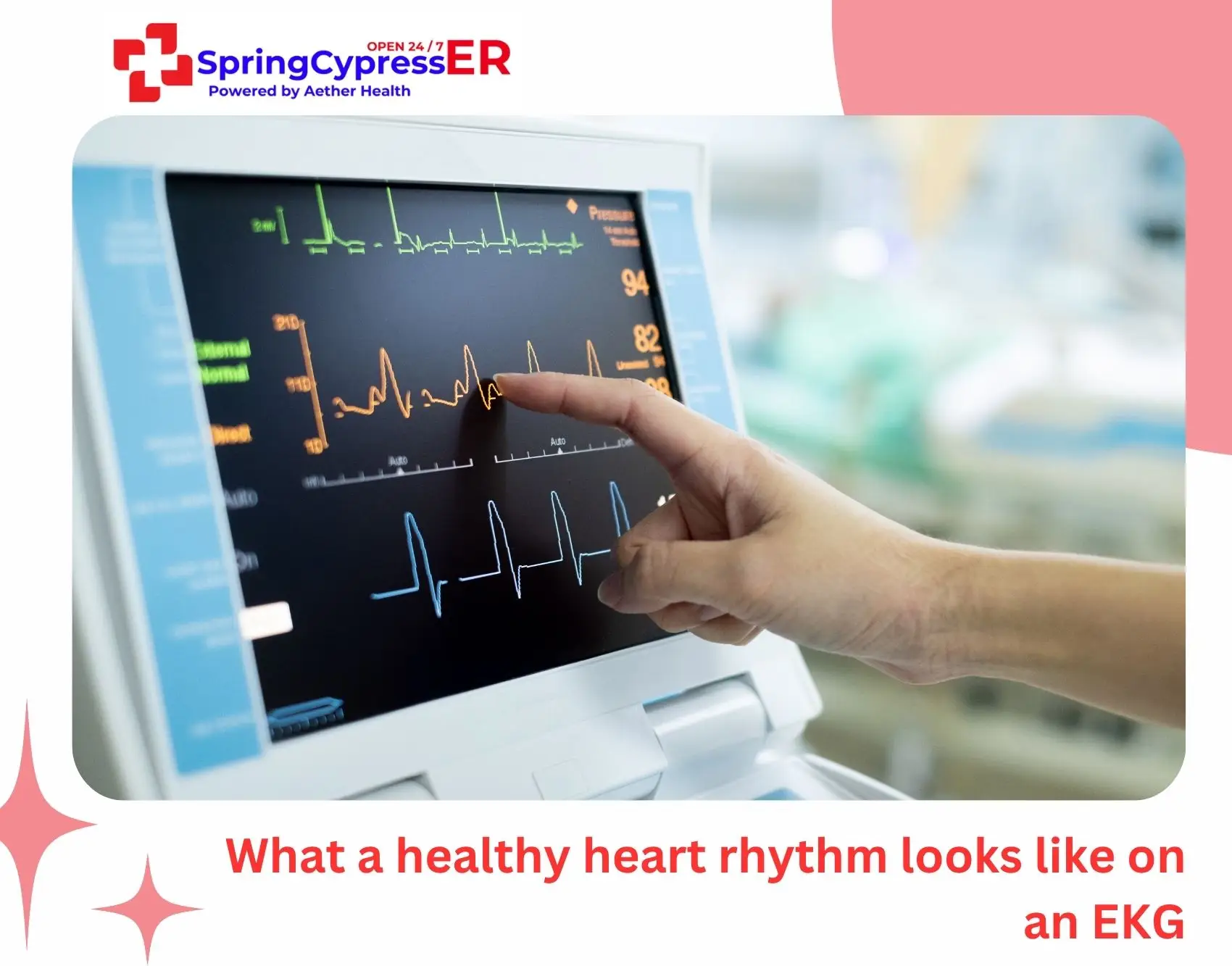
A standard heartbeat on an EKG has five components: P, Q, R, S, and T. These letters mark the electrical phases as the heart contracts and relaxes. At Aether Health – Spring Cypress ER, our emergency physicians review these five waves in minutes using on-site 12-lead EKG. In sinus arrhythmia, these waves still appear in the correct order, but the time between beats varies slightly.
| P | Q | R | S | T | P | Q | R | S | T |
A healthy heartbeat on an EKG shows five waves (P-Q-R-S-T) that repeat with each beat.
The pattern is called sinus arrhythmia because the sinus node is firing normally but at a varying rate. The variation itself is not the problem. Only when the rhythm becomes chaotic, extremely fast, or extremely slow does the term shift to a more serious diagnosis.
The 6 main causes of sinus arrhythmia in adults
Doctors group the causes of sinus arrhythmia into six categories. The first two are almost always harmless. The last four may need evaluation depending on the pattern and your overall health.
| A Respiratory variation
The most common cause. Heart rate rises on inhale and falls on exhale as part of normal vagus nerve activity. Harmless in healthy adults. |
B Autonomic nervous system
Stress, anxiety, fatigue, and poor sleep shift the balance between sympathetic and parasympathetic drive, creating rhythm variability. |
| C Thyroid imbalance
An underactive thyroid can slow the heart; an overactive thyroid can speed it up. Both can create irregular rhythm patterns. |
D Electrolyte problems
Low potassium, magnesium, or calcium alters cardiac cell electrical activity and can produce arrhythmia. |
| E Medications and substances
Caffeine, decongestants, alcohol, and some prescriptions affect the heart’s electrical pacemaker and may provoke an irregular rhythm. |
F Underlying heart disease
Coronary artery disease, cardiomyopathy, or past heart attack can disrupt the sinus node. Less common but more serious. |
| Not sure if your symptoms need the ER? Call or message our care team. We help you decide. 24/7, no appointment. |
When sinus arrhythmia in adults is a reason to worry
Most sinus arrhythmia needs no treatment at all. The question of when you should be worried about an irregular heartbeat comes down to the pattern, your age, and your associated symptoms. Rhythm variations without any symptoms are usually safe. Rhythm variations combined with chest pain, fainting, or severe shortness of breath are not.
| STEP 1 | Watch and monitor at home
✓ Mild occasional palpitations with no other symptoms ✓ Rhythm change linked clearly to breathing ✓ Resolves within minutes of rest or deep breathing |
| STEP 2 | See a primary care provider this week
✓ Palpitations lasting more than a few minutes ✓ Mild dizziness or shortness of breath with palpitations ✓ New rhythm pattern in someone over 50 |
| STEP 3 | Walk in to the ER today
✓ Chest pain or pressure with palpitations ✓ Fainting or near-fainting episode ✓ Severe shortness of breath ✓ Rapid pounding heart that will not slow down |
Use the step chart to match your current symptoms to the right action. If any Step 3 sign appears, do not drive yourself. Call 911 or have someone bring you in. A sudden rhythm change in someone with known heart disease always deserves emergency evaluation.
Lifestyle and medical triggers worth knowing
The NHLBI guide to arrhythmias and conduction disorders lists several everyday factors that can trigger or worsen sinus arrhythmia. Trimming or treating these often resolves the pattern without medical intervention.²
- Caffeine excess: Over 400 mg a day (about 4 cups of coffee) can trigger palpitations and rhythm irregularity in sensitive adults.
- Alcohol: Even moderate drinking can disturb the rhythm the day after. This pattern is often called holiday heart syndrome.
- Poor sleep or sleep apnea: Interrupted or shallow sleep raises nighttime vagal tone and can produce pronounced rhythm variation.
- Dehydration: Low circulating volume shifts electrolyte balance and makes the heart more rhythm-sensitive.
- Fever and acute illness: Temporarily raises heart rate variability. Resolves as the illness clears.
- New medications: Some decongestants, inhalers, thyroid medications, and antidepressants affect the rhythm. Report any new palpitations to the prescribing provider.
How a freestanding ER evaluates a suspicious rhythm
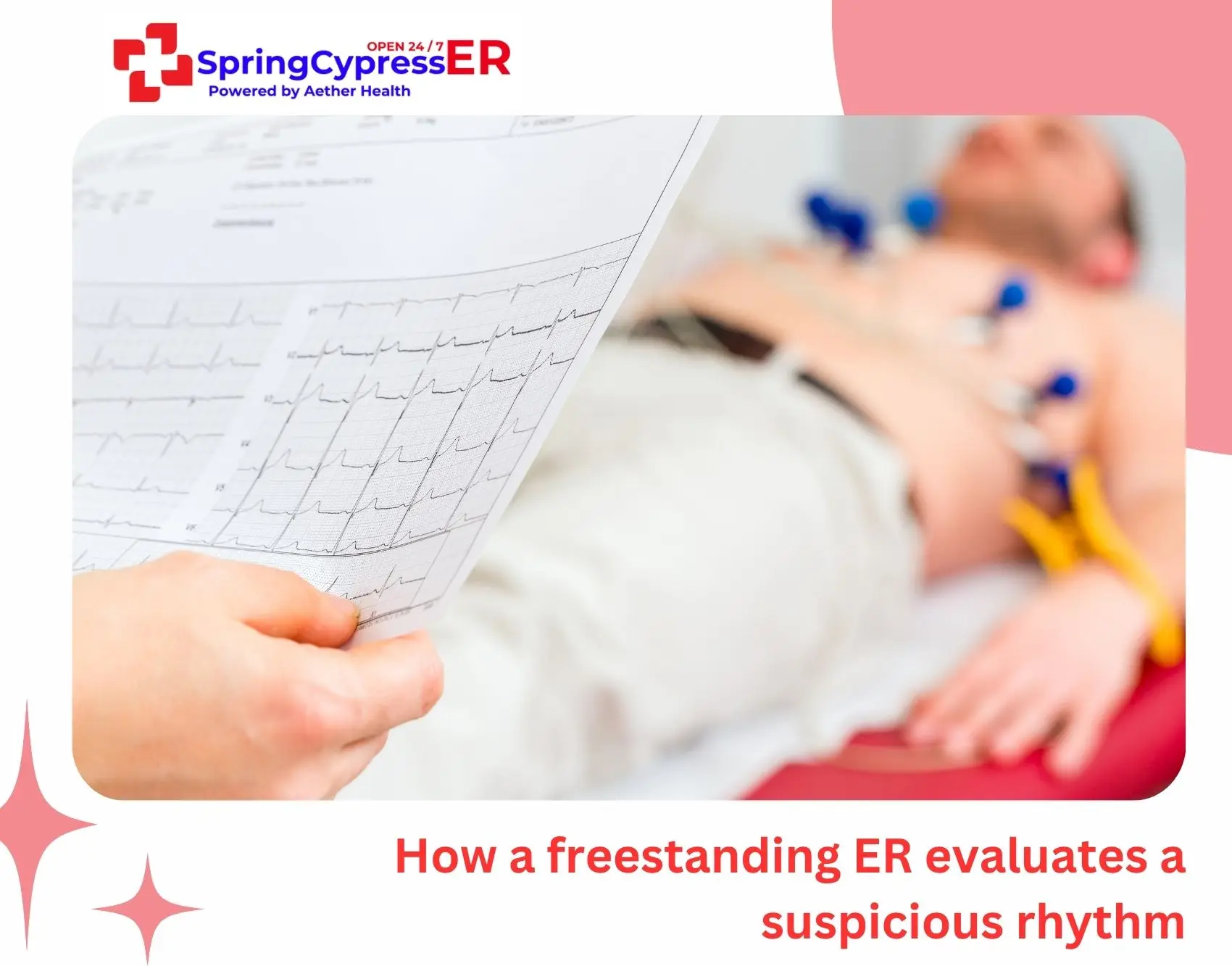
A freestanding ER is the fastest route to a definitive answer when sinus arrhythmia symptoms become worrying. Rather than waiting for an outpatient cardiology appointment, you can be scanned, tested, and interpreted in a single short visit.
| At our freestanding ER
Our emergency irregular heartbeat treatment program includes on-site 12-lead EKG, continuous rhythm monitoring, point-of-care troponin testing, and board-certified emergency physicians available 24 hours a day. Confirmation and interpretation typically happen within 30 minutes of arrival. |
The visit typically includes a focused history, a 12-lead EKG, blood work including thyroid and electrolyte panels, and continuous monitoring during the stay. When findings warrant specialty follow-up, we coordinate directly with cardiology partners.
Common questions
Q1. Is sinus arrhythmia the same as atrial fibrillation?
No. Sinus arrhythmia is a normal variation from the sinus node. Atrial fibrillation is a chaotic rhythm from the atria. On an EKG they look very different, and only atrial fibrillation raises stroke risk.
Q2. What causes sinus arrhythmia in adults who exercise a lot?
Trained athletes often have strong vagal tone, which produces a pronounced respiratory sinus arrhythmia pattern. This is a mark of cardiovascular fitness, not disease.
Q3. Does sinus arrhythmia need treatment?
Most of the time, no. Treatment is reserved for cases where the rhythm reflects an underlying condition like thyroid disease, electrolyte imbalance, or structural heart disease. Fixing the root cause fixes the rhythm.
Q4. Can anxiety cause sinus arrhythmia?
Yes. Anxiety and panic shift autonomic balance, which can produce noticeable rhythm variability. The pattern is harmless, but if palpitations join chest pain or fainting, get evaluated to rule out other causes.
Q5. At what age does sinus arrhythmia stop being normal?
There is no sharp cutoff. Marked rhythm variation is more common in children and healthy young adults. New sinus arrhythmia appearing after age 50, especially with symptoms, deserves an EKG and basic lab work.
Rhythm concerns in Spring, TX? We can confirm it in one visit
When a heart rhythm pattern worries you, a quick EKG tells you nearly everything you need to know. Walk in to our freestanding ER for same-visit interpretation by a board-certified physician.
Aether Health – Spring Cypress ER | Freestanding 24/7 Emergency Room
8929 Spring Cypress Rd, Spring, TX 77379 | (713) 528-8703
No appointment. Walk in any time.