

Medically reviewed by the emergency care team at Aether Health – Spring Cypress ER
| Serious breathing symptoms right now? If you are struggling to breathe, coughing up blood, running a fever above 103°F, or noticing bluish lips or fingertips, call 911 or come to Aether Health – Spring Cypress ER at 8929 Spring Cypress Rd. Open 24 hours a day. Call (713) 528-8703. |
Can bronchitis turn into pneumonia? Yes. What starts as a nagging chest infection can shift into a deeper lung problem when bacteria take hold or when your immune system cannot clear the initial irritation. The transition often unfolds quietly across several days, which is why so many pneumonia cases begin with a bronchitis diagnosis that seemed to be improving. Recognizing the shift early can be the difference between a week of oral treatment and a hospital admission.
What happens when bronchitis turns into pneumonia

The short answer to whether bronchitis can turn into pneumonia is yes, and the mechanism is worth understanding. Bronchitis inflames the airways that carry air into your lungs. When that inflammation lingers or a new pathogen enters, infection can spread from the bronchial tubes down into the alveoli, the tiny air sacs where oxygen exchange happens. Once those sacs fill with fluid or pus, pneumonia has taken hold.
Not every bronchitis case progresses this way. Most viral bronchitis resolves within one to three weeks on its own. But when symptoms drag past that window or worsen after seeming to improve, the risk of progression rises sharply.
The typical progression, stage by stage
Bronchitis rarely jumps to pneumonia overnight. The transition follows a fairly predictable sequence, and each stage offers a chance to catch things before the infection settles deeper.
- Bronchitis starts, usually from a viral trigger like influenza, RSV, or a common cold virus. Airway lining becomes inflamed and produces excess mucus.
- Symptoms drag past 10 to 14 days. Weakened airway defenses create an opening for opportunistic bacteria to move in.
- A secondary bacterial infection takes root, often Streptococcus pneumoniae or Haemophilus influenzae. Fever climbs, chills appear, and cough becomes more productive.
- The infection descends into the alveoli. Fluid or pus fills the air sacs, oxygen exchange drops, and you meet the clinical definition of pneumonia.
Warning signs the shift is happening

Pneumonia produces symptoms that go beyond typical bronchitis. Any respiratory symptom that worsens after several days of illness, or returns after seeming to fade, deserves attention. The American Lung Association flags several of the same red flags below as reasons to seek medical evaluation without delay.¹
- Fever above 102°F, especially with shaking chills
- Cough producing green, yellow, brown, or blood-tinged mucus
- Sharp chest pain that gets worse with a deep breath or cough
- Shortness of breath at rest or with light activity
- Rapid, shallow breathing
- Unusual fatigue or confusion, especially in older adults
- Bluish tint to the lips or fingernail beds
- A second wave of symptoms after a period of feeling better
Bronchitis vs. pneumonia: how to tell the difference
People often ask can bronchitis turn into pneumonia because the two feel similar at the start. They share early symptoms but differ in how deep they run and how sick you feel. Bronchitis irritates the airways; pneumonia infects the tissue where you actually breathe. That distinction changes almost everything about treatment and urgency.
| Feature | Bronchitis | Pneumonia |
|---|---|---|
| Location | Bronchial tubes (airways) | Alveoli (lung air sacs) |
| Fever | Low-grade or none | Often high with chills |
| Cough | Persistent, dry then mucus-producing | Productive with colored or blood-tinged mucus |
| Breathing | Usually normal at rest | Shortness of breath, rapid breathing |
| Chest pain | Chest soreness from coughing | Sharp pain that worsens with breathing |
| Recovery | 1 to 3 weeks | Days to weeks, sometimes hospitalization |
Who faces higher risk of progression
Some people move from bronchitis to pneumonia much more easily than others. If you fall into any of the groups below, take respiratory symptoms seriously and seek evaluation sooner rather than later.
- Adults over 65 and infants under 2
- Anyone with COPD, asthma, or another chronic lung condition
- Current smokers and heavy vapers
- People with heart disease, diabetes, or kidney disease
- Anyone with a weakened immune system, whether from chemotherapy, long-term steroid use, HIV, or an organ transplant
- Pregnant women in the second or third trimester
The U.S. Centers for Disease Control and Prevention identifies these same groups as facing the highest risk of severe pneumonia complications, which is why respiratory symptoms in these categories get evaluated more aggressively.²
When bronchitis becomes an emergency
Certain symptoms mean skip the wait-and-see approach and head to the emergency room. These signal that respiratory infection has reached a point where delay can mean hospitalization, oxygen support, or worse.
Struggling to breathe. If you feel like you cannot catch your breath at rest or while speaking a full sentence, lung function has dropped and needs immediate evaluation.
Bluish lips, fingertips, or skin. This visible color change is a sign of low blood oxygen and requires emergency care right away.
Coughing up blood. Any amount of blood in the mucus warrants same-day evaluation. It can point to pneumonia, a lung abscess, or pulmonary embolism.
Chest pain that persists between coughs. Sharp, constant chest pain can indicate pleurisy or another complication that needs imaging.
High fever that will not come down. A fever above 103°F in an adult, especially with breathing difficulty or confusion, is an emergency.
What Aether Health – Spring Cypress ER does for respiratory infections
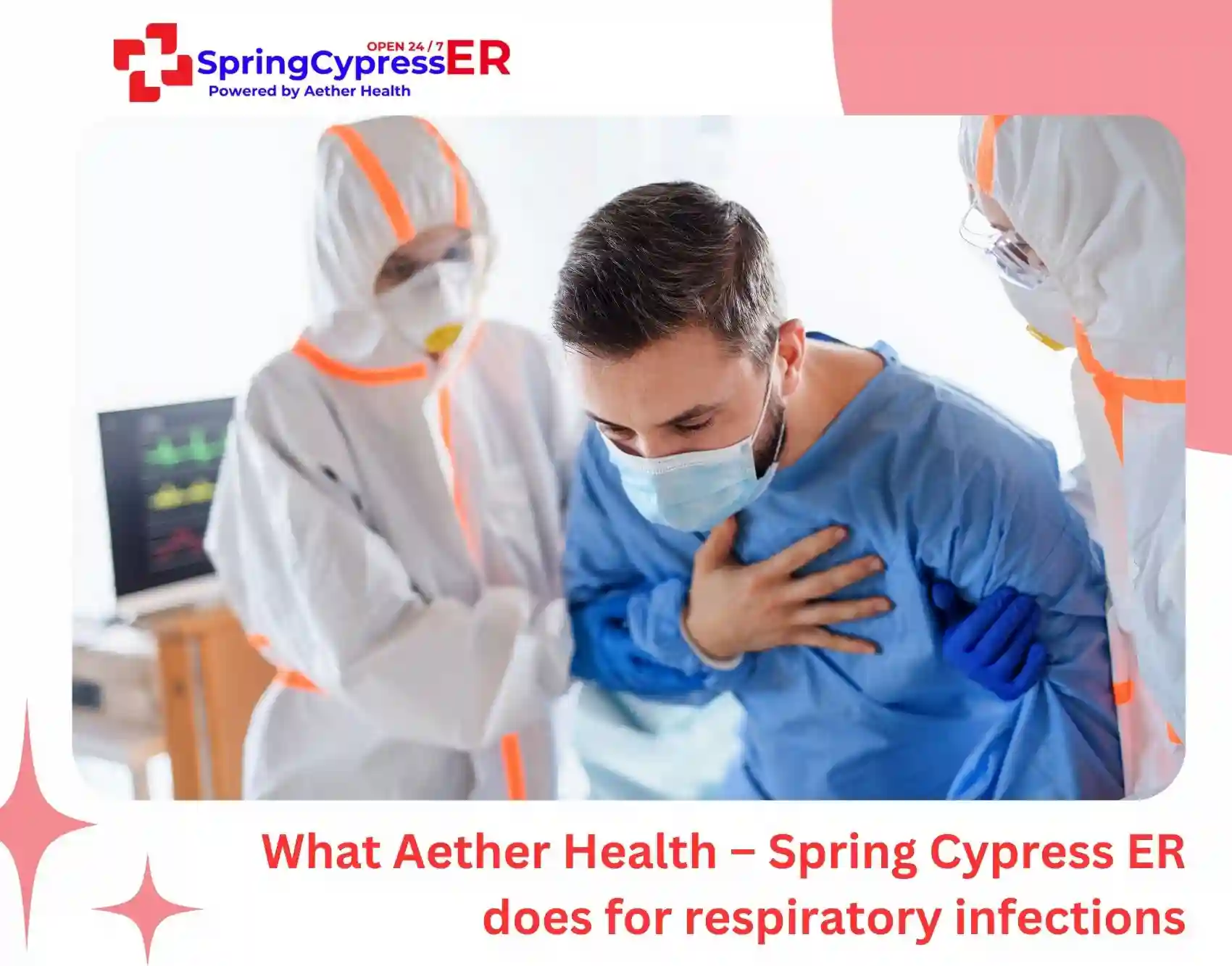
At Aether Health – Spring Cypress ER, emergency care for breathing problems starts within minutes of arrival. Board-certified emergency physicians assess your breathing on arrival, order chest imaging and lab work on site, and start any needed IV medication without the multi-hour waits typical of hospital emergency departments.
When patients ask, “can bronchitis turn into pneumonia in my case,” we can often answer within an hour. Every visit for suspected pneumonia or severe bronchitis includes vital sign monitoring, oxygen saturation checks, and rapid diagnostic testing to identify the specific infection. An on-site chest X-ray shows whether the infection has reached the alveoli. Lab work identifies bacterial infection markers within minutes, and rapid pathogen testing screens for flu, RSV, and COVID during the same visit.
For patients who need more support, we provide oxygen therapy, nebulizer treatments, IV fluids, and IV antibiotics. When a hospital admission is needed, our team coordinates direct transfer with full documentation, so the receiving facility has your complete clinical picture on arrival.
Common questions
How long does it take for bronchitis to turn into pneumonia?
For those wondering can bronchitis turn into pneumonia quickly, the answer is usually no. Progression typically happens between day 5 and day 14 if it happens at all. Most viral bronchitis clears without becoming pneumonia. Symptoms lasting past two weeks with worsening fever or cough deserve prompt evaluation.
Is bronchitis-to-pneumonia progression always bacterial?
Not always. Bacterial secondary infection is the most common driver, but viruses like influenza and RSV can also cause primary viral pneumonia. Rapid testing at the ER identifies which type is present and shapes the treatment plan.
Can pneumonia develop without a bronchitis phase?
Yes. Pneumonia often develops directly from viral or bacterial exposure with no earlier bronchitis. Aspiration pneumonia and fungal pneumonia skip the bronchitis stage entirely, arising from inhaled foreign material or specific environmental exposures.
How does the ER treat pneumonia that started as bronchitis?
Treatment depends on the cause and severity. Most bacterial pneumonia responds to oral or IV antibiotic therapy started at the ER. Severe cases may need oxygen support, respiratory therapy, or admission to a hospital for continued care.
When should I go to the ER instead of waiting it out?
Go to the ER for breathing difficulty, high fever, chest pain, coughing blood, confusion, or bluish lips. Understanding how long bronchitis typically lasts also helps you decide when your symptoms have gone on too long.
Walk in for fast breathing evaluation in Spring, TX
Respiratory infections that keep getting worse do not get better on their own. Fast evaluation makes the difference between a short visit and a hospital stay. Board-certified emergency physicians. On-site chest imaging and lab work. No appointment needed. Open 24 hours a day, 7 days a week.
Aether Health – Spring Cypress ER | Open 24/7
8929 Spring Cypress Rd, Spring, TX 77379 | (713) 528-8703
No appointment. Walk in any time.
External References Links :