
Reviewed by the emergency care team at Aether Health – Spring Cypress ER | 8929 Spring Cypress Rd, Spring, TX 77379 | +1 (713) 528-8703
You’ve been coughing for a week. Maybe two. The fever’s finally gone, but the cough is still there, sometimes worse at night, sometimes when you laugh, always exhausting. You started treatment, took it seriously, and yet here you are still hacking. The honest question on every patient’s mind: how long does bronchitis last with treatment, and is mine taking too long?
The short answer is that bronchitis recovery is a multi-stage process, and the cough almost always lingers longer than people expect even with proper treatment. This guide walks through the exact recovery timeline, what each stage looks like, what’s normal versus concerning, and when a lingering cough means it’s time to see a doctor at Aether Health – Spring Cypress ER.
Quick Answer: How Long Does Bronchitis Last With Treatment?
With treatment, most cases of acute bronchitis improve significantly within 10 to 14 days, though a residual dry cough often lingers for 2 to 4 more weeks. Fever and chest tightness usually resolve in the first week. The total recovery period from first symptom to fully cough-free typically runs 3 to 4 weeks with proper treatment, compared to 4 to 8 weeks without. Chronic bronchitis is a long-term condition that does not fully “go away” but is managed indefinitely with bronchodilators, inhaled steroids, and lifestyle changes. A cough lasting longer than 8 weeks is no longer normal bronchitis and warrants medical evaluation.
Worried your bronchitis isn’t improving?: A cough that worsens after a week of improvement, a fever returning after it had broken, or new shortness of breath are all signs to come in. Aether Health – Spring Cypress ER is open 24/7 with on-site chest X-ray and breathing treatments. Call +1 (713) 528-8703 or visit 8929 Spring Cypress Rd, Spring, TX 77379.
Why Bronchitis Takes Longer to Heal Than People Expect
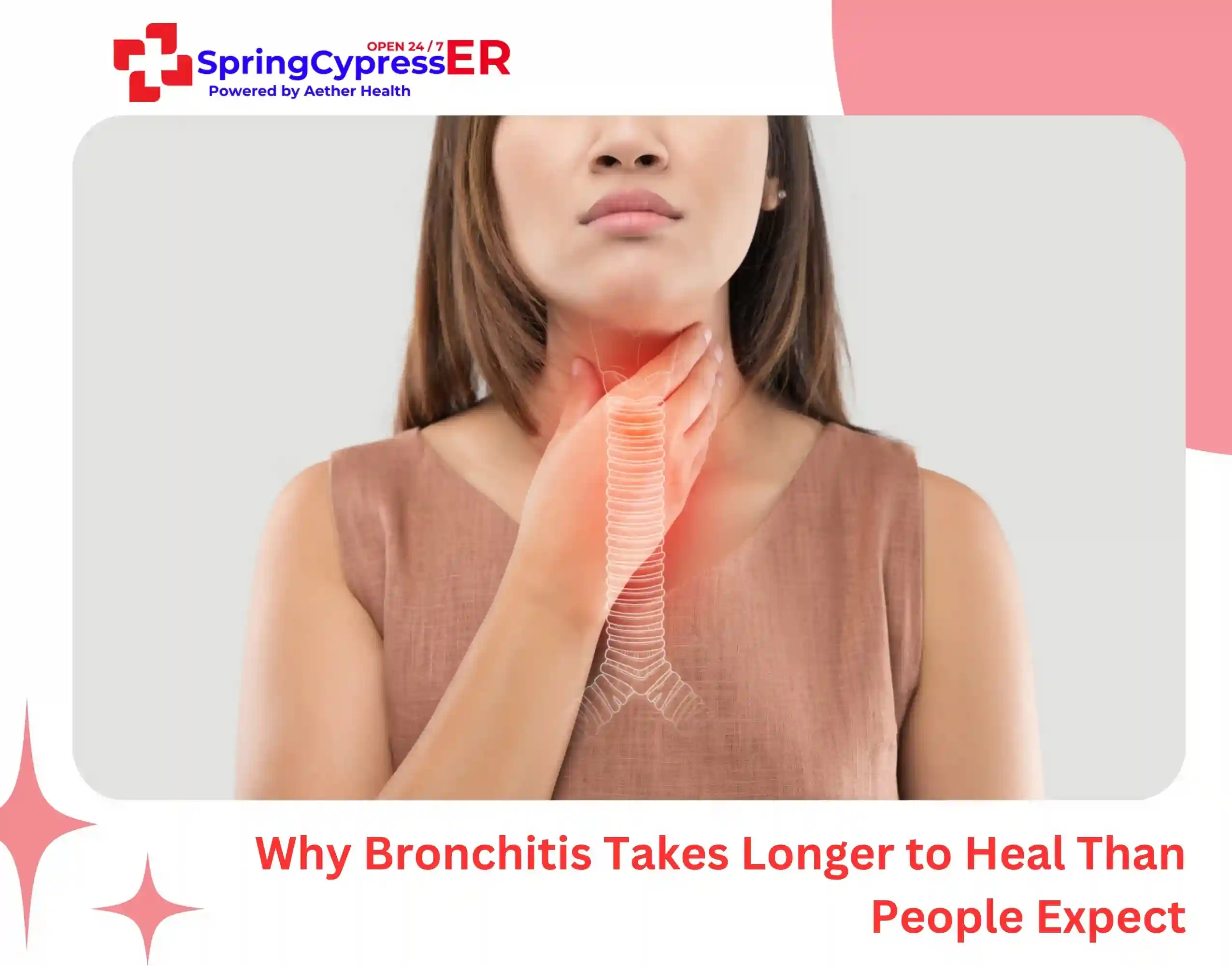
Most respiratory infections like a cold or flu resolve within a week. Bronchitis is different because the inflammation happens deeper in the airways, in the bronchial tubes that carry air to the lungs. These tubes need time to physically heal, even after the virus or bacteria are gone.
Three things make bronchitis recovery slower than expected. First, the lining of the airways is irritated and sheds during infection; it takes weeks to fully regenerate. Second, inflammation makes the airways twitchy and sensitive long after the infection clears, which keeps the cough going. Third, mucus production stays elevated even when the underlying cause has been resolved. This is why the cough is almost always the last symptom to leave.
The Bronchitis Recovery Timeline: Stage by Stage
Recovery happens in distinct phases. Knowing what to expect at each stage helps you identify when things are progressing normally and when they are not.
Days 1 to 3 Onset
Symptoms appear suddenly. A dry, hacking cough sets in, often along with fever (100°F–102°F), body aches, sore throat, and fatigue. Chest tightness or burning is common. This is when most patients begin home care or start treatment with a clinician. The cough is exhausting but not yet productive.
Days 4 to 7 Peak Symptoms
The infection is at its most intense. Fever typically peaks in the first 3 to 5 days, then resolves. The cough usually shifts from dry to productive, bringing up clear, white, yellow, or green mucus. This color change is not a sign of bacterial infection on its own; it simply reflects the body’s immune response. Fatigue is significant. Rest, fluids, and humidified air are essential.
Days 7 to 14 Improvement Phase
Most patients on appropriate treatment notice real improvement during this window. Fever has resolved. Chest tightness eases. Energy starts returning. The cough is still present but becomes less frequent and less painful. Mucus production starts decreasing. Many patients begin to feel “mostly better” by day 10.
Weeks 2 to 4 The Lingering Cough Phase
This is the stage that surprises and frustrates most people. The bronchitis is essentially over but the cough remains. It is typically dry, comes in fits, and is triggered by cold air, deep breaths, exercise, or laughing. This is called post-bronchitis airway hyperresponsiveness, and it is normal. Cough suppressants at night, humidified air, and gradual return to activity help.
Beyond Week 4
By the end of week 4, the cough should be clearly fading. Most patients are cough-free by week 4 to 6. A cough that persists past 8 weeks is no longer routine bronchitis and needs an evaluation to rule out post-infectious asthma, pneumonia, chronic bronchitis, allergies, GERD, or another underlying cause.
Recovery With Treatment vs. Without: Side-by-Side
Proper treatment cannot magically erase bronchitis, but it consistently shortens the duration of symptoms and prevents complications. Here is what the numbers actually look like.
| Symptom | Without Treatment | With Treatment | Red Flag If… |
| Fever | 3 to 5 days | 1 to 3 days | > 3 days or > 102°F |
| Chest tightness | 1 to 2 weeks | 4 to 7 days | Worsening after week 1 |
| Productive cough | 2 to 3 weeks | 10 to 14 days | Blood-tinged mucus |
| Lingering dry cough | 3 to 8 weeks | 2 to 4 weeks | > 8 weeks total |
| Fatigue | 2 to 4 weeks | 1 to 2 weeks | Severe weakness |
| Shortness of breath | Variable | Resolves with inhalers | Not resolving ER |
Why the difference matters: Shaving 1–2 weeks off the cough means returning to work, sleep, and exercise sooner. Proper treatment also reduces the risk of bronchitis turning into pneumonia which adds weeks of recovery and can require hospitalization.
Acute vs. Chronic Bronchitis: Very Different Timelines
The duration question depends entirely on which type of bronchitis you have. Mixing them up is one of the most common reasons patients feel like “my bronchitis won’t go away.”
Acute Bronchitis
Caused almost entirely by viral infection. Lasts under 3 weeks for symptoms in most cases, with the cough sometimes lingering up to 8 weeks total. Fully resolves with rest, hydration, and supportive treatment. About 9 out of 10 cases do not need antibiotics. Once it clears, it clears completely.
Chronic Bronchitis
A long-term condition defined as a productive cough on most days for at least 3 months in a row, occurring 2 years in a row. Caused by chronic airway irritation most commonly smoking, but also occupational exposures, severe air pollution, and repeated respiratory infections. Chronic bronchitis is a form of chronic obstructive pulmonary disease (COPD). It cannot be cured, but symptoms are controlled long-term with inhalers, pulmonary rehab, and lifestyle change. Flare-ups can last weeks at a time and may require ER care.
What Makes Bronchitis Last Longer Than It Should
Several factors slow bronchitis recovery. Knowing which apply to you helps you adjust your plan.
- Smoking or vaping is the single biggest reason bronchitis lingers. Smoke continuously re-irritates the airways and prevents them from healing. Even one cigarette during recovery sets you back days.
- Secondhand smoke or vape exposure if anyone in the household smokes indoors, recovery slows for everyone.
- Underlying asthma or allergies uncontrolled allergies and asthma keep airways inflamed long after the bronchitis itself has cleared.
- Acid reflux (GERD) stomach acid reaching the throat at night triggers airway irritation and prolongs cough.
- Returning to exercise too quickly intense exercise during recovery causes airway spasm and can extend the cough by weeks.
- Not enough rest is when the body repairs damaged tissue. Pushing through without rest delays healing.
- Poor hydration thick mucus is harder to clear, leaving the airways inflamed longer.
- Indoor air irritants candles, strong cleaning products, perfume, and HVAC filters that haven’t been changed all slow recovery.
- Diabetes, COPD, heart failure, or immune compromise underlying conditions can extend the recovery window significantly.
- Young children and adults over 65 generally take longer to recover.
How to Recover From Bronchitis Faster
There is no shortcut that skips the healing time entirely, but these proven steps consistently shorten the duration of symptoms.
- Rest sleep at least 8 to 10 hours per night, and rest during the day if you can.
- Hydrate water, broths, and warm tea steadily throughout the day to thin mucus.
- Use a cool-mist humidifier in your bedroom, especially at night.
- Take prescribed bronchodilator inhalers exactly as directed if wheezing or shortness of breath is part of your symptoms.
- Try 1 to 2 teaspoons of honey for adults and children over 1 year old clinically proven to calm cough.
- Practice pursed-lip breathing inhale through the nose for 2 seconds, exhale slowly through pursed lips for 4 seconds.
- Avoid lung irritants: no smoking, secondhand smoke, vaping, scented candles, strong cleaning products, or perfume.
- Elevate your head with an extra pillow at night to reduce coughing fits.
- Return to activity gradually start with walking, build up over 2 to 3 weeks.
- Keep your follow-up appointment, especially if you were prescribed antibiotics or steroid inhalers.
When a Lingering Bronchitis Cough Is a Red Flag
Most lingering coughs are harmless and resolve on their own. Some are warning signs of a complication or an entirely different diagnosis. Come to Aether Health – Spring Cypress ER if any of the following apply.
- Cough lasting longer than 8 weeks.
- Fever returns after it had resolved.
- New shortness of breath, especially when lying down or with minimal activity.
- Coughing up blood, even small amounts.
- Sharp chest pain that worsens with coughing or deep breathing.
- Symptoms get worse after a few days of improvement (“double-worsening” classic sign of bronchitis turning into pneumonia).
- Wheezing that doesn’t respond to a rescue inhaler.
- Unintentional weight loss along with persistent cough.
- Night sweats or chills alongside the lingering cough.
- Symptoms in infants, older adults, or anyone with COPD, asthma, heart failure, or immune compromise.
Don’t normalize a cough that won’t quit: Persistent cough is one of the most common ways pneumonia, post-infectious asthma, and even early lung disease get missed. At Aether Health – Spring Cypress ER, on-site chest X-ray and lab work give you a definitive answer the same visit. Call +1 (713) 528-8703.
How We Help Patients Recover Faster at SpringCypress ER

When bronchitis isn’t resolving or symptoms escalate, our 24/7 freestanding ER in Spring, TX delivers immediate, on-site care that often shortens recovery time and prevents complications.
- Clinical evaluation: an emergency physician assesses your symptoms, listens to your lungs, and determines whether the cause is still bronchitis, has become pneumonia, or is something else entirely.
- On-site chest X-ray rules out pneumonia, lung masses, and other complications within minutes.
- Pulse oximetry and lab work check oxygen levels and identify underlying issues that might be slowing your recovery.
- Nebulizer breathing treatments deliver fast relief for wheezing, chest tightness, and shortness of breath.
- Prescription inhalers bronchodilators and inhaled steroids when appropriate, with clear instructions on use.
- Targeted antibiotics only when bacterial infection or pneumonia is confirmed. We do not prescribe reflexively.
- Clear discharge plan written instructions on what to do at home, when to return, and how to follow up with your primary care doctor.
Frequently Asked Questions
Why am I still coughing weeks after my bronchitis cleared?
Post-bronchitis cough is normal and can last 2 to 8 weeks even after the infection has resolved. The bronchial tubes remain inflamed and sensitive long after the virus or bacteria are gone. A cough that lasts beyond 8 weeks should be evaluated.
Does antibiotic treatment make bronchitis go away faster?
Most acute bronchitis is viral, and antibiotics do not shorten viral illness. Taking antibiotics unnecessarily causes side effects and contributes to antibiotic resistance. A clinical evaluation determines whether antibiotics will actually help in your specific case.
Can I go back to work or school while still coughing?
Generally yes, once your fever has been gone for 24 hours without medication and your energy has substantially returned. The lingering dry cough alone is not contagious. Light activity is fine; avoid intense exercise until the cough has fully resolved.
Is it normal for the cough to get worse at night?
Yes. Coughing often worsens at night because mucus pools when you lie flat, the airways narrow slightly in cooler air, and post-nasal drip increases. Sleeping with your head elevated and using a humidifier help significantly.
How can I tell if my bronchitis has turned into pneumonia?
Warning signs include fever returning after it has broken, sharp chest pain with breathing, shortness of breath, coughing up blood, and feeling significantly worse after a few days of improvement. Pneumonia requires same-day evaluation to come to the ER.
Will my insurance cover an ER visit for bronchitis?
Aether Health – Spring Cypress ER accepts most commercial insurance plans and works directly with your insurer to avoid surprise billing. We do not currently accept Medicare, Medicaid, or Tricare. Call us before or during your visit if you have coverage questions we are happy to help.
Bronchitis Not Improving? Get Fast Care in Spring, TX
If your cough isn’t improving on schedule, your fever returns, or you develop new shortness of breath you should not wait days for a primary care appointment. At Aether Health – Spring Cypress ER, on-site chest X-ray, breathing treatments, lab work, and prescription care give you relief and answers fast usually within 60 minutes of walking in.
- Address: 8929 Spring Cypress Rd, Spring, TX 77379
- Phone: +1 (713) 528-8703
- Hours: Open 24 hours, every day of the year
- Insurance: Most commercial plans accepted. No surprise billing.
Call Now: +1 (713) 528-8703 speak to our team in under 30 seconds. Or walk in any time at 8929 Spring Cypress Rd, Spring, TX 77379.