
Medically reviewed by the emergency care team at Aether Health – Spring Cypress ER, a freestanding 24/7 emergency room in Spring, TX
| Nutrition is supportive, not a cure. Nutrients can help support a steady heart rhythm, but they do not replace evaluation for true arrhythmia. Any new palpitations, chest pain, or fainting deserves a medical workup. This guide highlights which nutrients matter most and when it makes sense to pair diet with professional care. |
What vitamins help heart rhythm, and which food sources actually deliver enough to matter? The nutrients that most directly support a steady heart rhythm are magnesium, potassium, calcium, vitamin D, and omega-3 fatty acids. CoQ10 plays a supporting role. Each helps the heart in a specific way, and a deficiency in any of them can trigger palpitations or worsen existing rhythm problems. The right food sources make it possible to hit targets without relying on a daily supplement.
What vitamins help heart rhythm?
The vitamins and minerals that most support heart rhythm are magnesium, potassium, calcium, vitamin D, omega-3 fatty acids, and CoQ10. Magnesium and potassium are the two most important because they drive the electrical activity of each heartbeat. The NIH Office of Dietary Supplements consumer fact sheet on magnesium explains how low magnesium levels are linked to arrhythmia risk and how food sources compare.¹
Technically, most of these are minerals rather than vitamins, but the search term groups them together. The practical point is the same: these nutrients support the electrical signaling that creates a normal rhythm, and shortfalls can produce palpitations even in otherwise healthy people.
The 5 key nutrients for a healthy heart rhythm
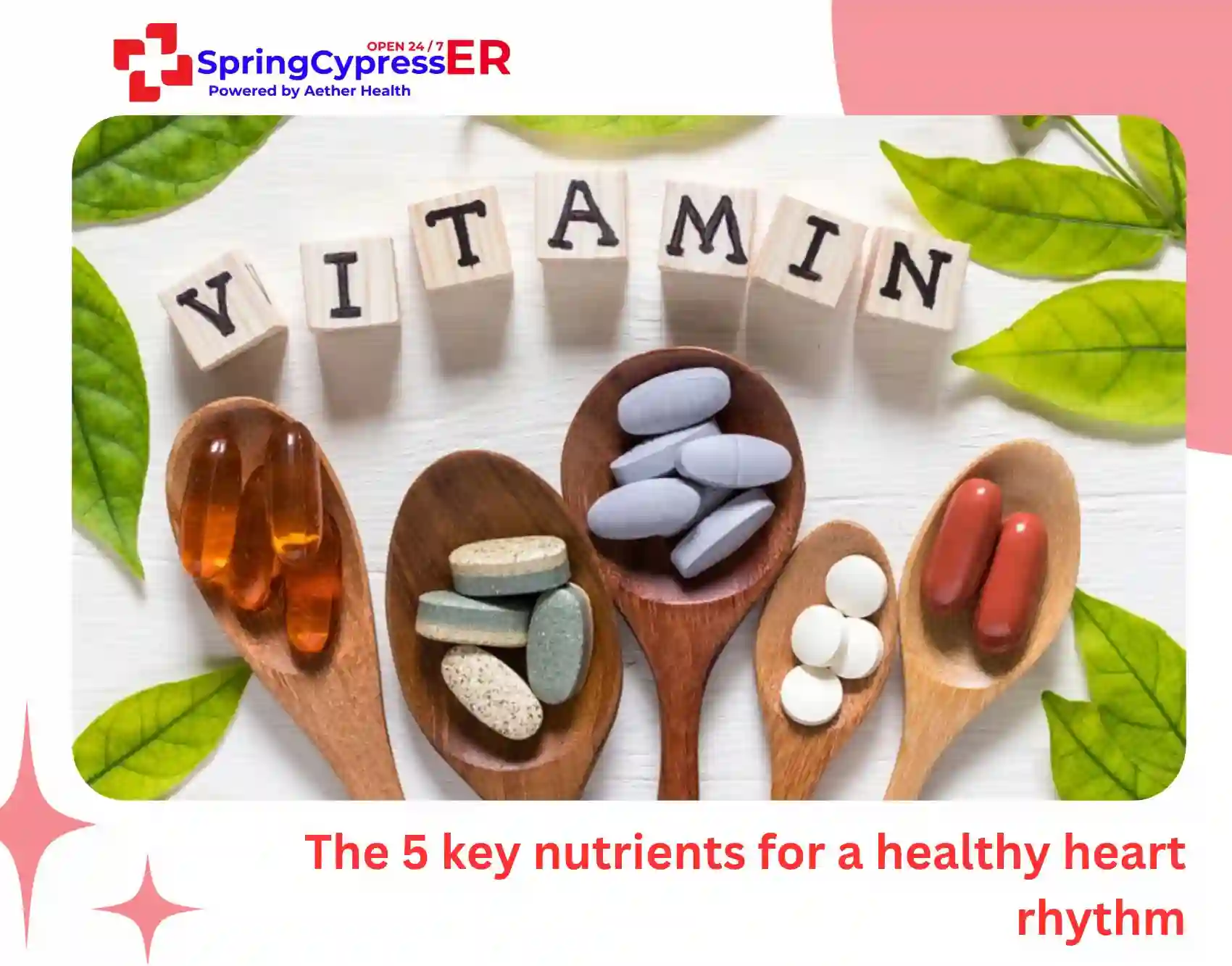
Here is a side-by-side breakdown of what each nutrient does and the easiest ways to get it from food. Food sources deliver these nutrients with other co-factors that supplements often miss, which is why most cardiologists prioritize diet first.
| Nutrient | Why Your Heart Needs It | Top Food Sources |
|---|---|---|
| Magnesium | Stabilizes the electrical signals that trigger each heartbeat. Deficiency is linked to PVCs and AFib. | Pumpkin seeds, almonds, spinach, black beans, dark chocolate |
| Potassium | Balances sodium and supports the voltage changes that drive each contraction. | Bananas, sweet potatoes, lentils, yogurt, white beans, avocado |
| Calcium | Triggers the heart muscle to contract. Balance with magnesium matters more than total amount. | Dairy, fortified plant milk, kale, broccoli, sardines, tofu |
| Vitamin D | Low levels are associated with higher AFib risk. Supports calcium balance. | Sunlight exposure, fatty fish, egg yolks, fortified milk, mushrooms |
| Omega-3 fatty acids | Reduces inflammation and supports cell-membrane health in heart muscle. | Salmon, sardines, mackerel, walnuts, flaxseed, chia seeds |
Best food sources for each nutrient
Food delivers more consistent benefit than high-dose supplements. For fatty acids specifically, Harvard Health on omega-3 supplements for heart health summarizes current evidence on when supplements add value and when food sources alone are enough.²
| Mg (Magnesium)
1 oz pumpkin seeds covers over 40 percent of a daily target. |
K (Potassium)
One baked sweet potato equals two bananas worth. |
Ca (Calcium)
One cup yogurt or fortified plant milk meets a third of daily needs. |
| D (Vitamin D)
15 min midday sun on arms and legs can match a food serving. |
Omega-3
Two servings of fatty fish per week is the standard target. |
CoQ10
Found in beef, herring, and organ meats. Produced by the body too. |
Aim to include at least three of these food groups each day. A simple rule: dark leafy greens plus a handful of nuts or seeds plus one serving of fatty fish per week covers most people’s rhythm-supporting nutrient needs.
How to tell if low nutrients are affecting your rhythm

Deficiencies usually produce patterns, not single symptoms. The side-by-side chart below contrasts common deficiency signs with the signs of sufficient levels. For patients who have had unexplained palpitations, Aether Health Spring Cypress ER can run a same-visit electrolyte panel to confirm whether low nutrients are the trigger.
| DEFICIENCY SIGNS | SUFFICIENCY SIGNS |
| Muscle cramps and twitching | Steady resting heart rate in your typical range |
| Frequent palpitations without a clear trigger | Tolerates exercise without unusual rhythm episodes |
| Fatigue and brain fog | Normal lab potassium, magnesium, and vitamin D values |
| Poor sleep quality and restless legs | Regular bowel movements and reliable energy |
| Numbness or tingling in hands and feet | No recurrent cramping or twitching |
A standard blood test for magnesium, potassium, and vitamin D levels takes a few minutes to run and costs very little. If any value is below range, correcting it often resolves nuisance palpitations within days to weeks.
Who benefits most from heart rhythm nutrient support
Food first works for most healthy adults. Some groups, however, run a higher risk of nutrient shortfalls and may need targeted testing or supplementation. Readers who are not sure whether they already have an arrhythmia can start with the guide on how to know if you have arrhythmia to understand the warning signs before changing their diet.
- Adults over 60: Absorption of magnesium and vitamin D drops with age. Palpitations become more common even without a diagnosed arrhythmia.
- People on diuretics: These medications flush potassium and magnesium along with water. Routine lab checks are standard.
- People with digestive conditions: Crohn’s disease, celiac, and gastric bypass surgery all reduce mineral absorption.
- Endurance athletes: Heavy sweating depletes electrolytes. Athletic palpitations often respond to magnesium and potassium support.
- People with existing arrhythmia: Nutrient optimization does not replace cardiology care but reduces trigger frequency in many patients.
- Pregnant and postpartum patients: Increased fluid volume and hormone shifts make electrolyte balance harder. Discuss supplementation with your OB provider.
Cautions and when nutrition is not enough
Supplements are not automatically safe. High-dose potassium can actually cause dangerous rhythm problems. High-dose vitamin D can push calcium levels too high. These scenarios are real, which is why testing before supplementing matters. Food sources rarely overshoot safe amounts.
Talk to a doctor before supplementing if any of the following apply:
- You take blood pressure medication, heart medication, or diuretics
- You have kidney disease (kidneys regulate potassium and magnesium)
- You take blood thinners (which can interact with high-dose vitamin K or omega-3)
- You have a known arrhythmia and your cardiologist has not cleared supplementation
- Your palpitations are worsening, lasting longer, or come with new symptoms
If any of the following appear, get evaluated the same day, not with a supplement first:
- Palpitations with chest pain or pressure
- Fainting or near-fainting
- Severe shortness of breath at rest
- Sudden rapid heart rate that will not slow
- Any new rhythm change with known heart disease or pregnancy
| When nutrition is not enough
Diet and supplements support rhythm, but they cannot fix a true arrhythmia. Our emergency irregular heartbeat treatment provides a 12-lead EKG, electrolyte panel, and cardiac markers in minutes to confirm the diagnosis and start the right plan. |
| Have a question about palpitations or nutrient testing? Message our care team. Open 24/7. |
Common questions
Q1. What is the best vitamin for heart palpitations?
Magnesium is the most commonly linked nutrient to benign palpitations. When blood levels are low, correcting them often reduces PACs and PVCs within weeks. Confirm with a blood test before supplementing.
Q2. Can low potassium cause an irregular heartbeat?
Yes. Potassium drives the voltage changes that create each heartbeat. Low levels can trigger PACs, PVCs, and more serious rhythms. A simple blood panel confirms it, and food sources usually correct mild shortfalls.
Q3. Does vitamin D affect heart rhythm?
Low vitamin D is associated with higher AFib risk in several large studies. The link is not as direct as magnesium or potassium, but maintaining a normal vitamin D level supports overall cardiovascular health.
Q4. Can I take a heart-rhythm supplement instead of medication?
No. Supplements support the heart’s electrical environment but cannot replace prescription medication for a diagnosed arrhythmia. Always talk to your cardiologist before stopping or adjusting any heart medication.
Q5. How quickly do rhythm-supporting nutrients work?
For nutrient deficiencies, palpitations often improve within 1 to 4 weeks of correction. Omega-3 and vitamin D benefits are slower, measured in months. Nutrition works alongside medical treatment, not instead of it.
Palpitations in Spring, TX? Rule out a rhythm problem first
Before adjusting diet or adding supplements, a quick EKG and electrolyte panel can tell you whether your palpitations are a true arrhythmia or a nutrient-driven pattern. Our freestanding ER opens 24 hours a day with no appointment required.
Aether Health – Spring Cypress ER | Freestanding 24/7 Emergency Room
8929 Spring Cypress Rd, Spring, TX 77379 | (713) 528-8703
No appointment. Walk in any time.
External References Links :
1. NIH Office of Dietary Supplements consumer fact sheet on magnesium
2.Harvard Health on omega-3 supplements for heart health