
An irregular heartbeat can feel alarming, but not every unusual heartbeat means something serious. The challenge is that arrhythmia can be obvious in some people and completely silent in others, making it harder to recognize without proper awareness.
This comprehensive guide explains how to know if you have arrhythmia, what symptoms to watch for, how it feels, and when to seek medical help.
What Is Arrhythmia?
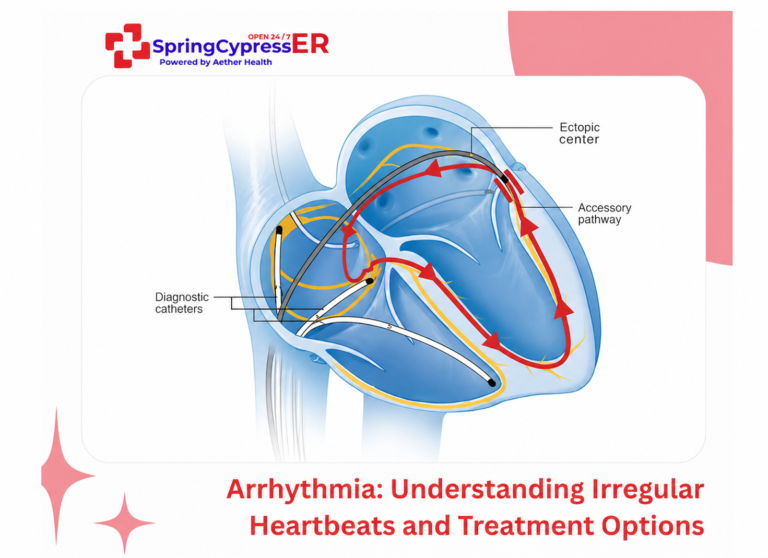
Arrhythmia is a condition where your heart beats too fast, too slow, or irregularly due to a problem in the heart’s electrical system. Arrhythmia occurs when the signals that control your heartbeat don’t function properly, disrupting the normal rhythm.
Instead of a steady, regular beat, the heart may feel like it is racing, skipping beats, or fluttering. Some arrhythmias are harmless, while others can lead to serious complications if not diagnosed and treated properly.
If you feel like your heart beat is too fast or irregular for some time now, it’s better to get yourself checked for Arrhythmia at the nearest emergency room like Spring Cypress ER.
Can You Have Arrhythmia Without Knowing?
Yes, it is entirely possible to have arrhythmia without noticing any symptoms. Some people only discover it during a routine checkup or when being tested for another condition.
This is often referred to as a “silent arrhythmia.” Even without noticeable symptoms, it can still affect heart function and increase the risk of complications like stroke or heart failure. That’s why regular health checkups are important, especially if you have risk factors.
There are also some common signs that answer how to know if you have arrhythmia.
Common Signs You May Have Arrhythmia
Depending on the type and severity of arrhythmia, symptoms can vary widely. For some it can be slightly uncomfortable, others more serious symptoms.
Irregular or Skipped Heartbeats
Some of the most common signs include a sensation that your heart is skipping beats or adding extra beats. It can be frenetic, at times irregular and erratic, even more when you’re coming up for air.
Racing or Slow Heart Rate
You might feel that your heart is beating much faster (tachycardia) or unusually slowly (bradycardia). For example, a resting heart rate higher than 100 or lower than 60 beats per minute may be a concern since it depends on your health.
Fluttering or Pounding Sensation
Many people describe arrhythmia as a fluttering, pounding, or “flip-flopping” feeling in the chest. These sensations are known as palpitations and are one of the most noticeable symptoms.
Dizziness or Lightheadedness
If the heart does not pump blood well enough the brain may not get enough oxygen which can make you feel dizzy or faint.
Shortness of Breath
When the heart doesn’t pump blood effectively in its role as the body’s engine, it may lead to difficulty breathing even while both actively and passively considering real-world conditions.
Chest Pain or Discomfort
Some arrhythmias can cause chest discomfort, which should always be taken seriously, especially if it is sudden or severe.. Most chest pains are also Costochondritis which is inflammation of the cartilage.
Fatigue or Weakness
Irregular heart function can lead to a lack of blood flow from oxygenated blood reaching your body, so you may feel unusually tired.
Fainting or Near Fainting
In serious cases, arrhythmia can lead to fainting (syncope), a symptom indicating the need for immediate medical treatment.
How Does Arrhythmia Feel?
Different people experience arrhythmia in different ways, typically describing it as follows:
- A fluttering sensation in the chest.
- A sudden “thump” or skipped beat.
- A racing heart without physical activity.
- A slow or weak pulse.
- A feeling of the heart “pausing” briefly.
These sensations may come and go, making them harder to detect. Some episodes last only a few seconds, while others may continue for minutes or longer.
Simple Ways to Check for Arrhythmia at Home
A correct diagnosis can only be done by testing for the disease through a medical professional, but you may notice red flags in simpler ways while at home.
Check Your Pulse
Place your fingers on your wrist or neck and feel your heartbeat. A normal pulse should be steady and regular. If it feels irregular, too fast, or too slow, it may indicate a problem.
Pay Attention to Symptoms
Notice patterns such as palpitations, dizziness, or fatigue, especially if they occur repeatedly or without a clear cause.
Use Wearable Devices
Smartwatches and fitness trackers can monitor heart rate and sometimes detect irregular rhythms. While not a replacement for medical tests, they can help identify unusual patterns.
Note: Those methods can only point to some problem. They cannot confirm arrhythmia.
How Healthcare Providers Diagnose Arrhythmia
If you suspect arrhythmia, a healthcare provider will perform tests to confirm it.
Electrocardiogram (ECG)
This is the most common test. It detects the electrical movement of the heart, and it depicts sporadic patterns.
Holter Monitor
A portable 24–48 hours (or preferably longer) heart rhythm recorder that you can wear while doing your everyday activities.
Event Monitor
For extended periods, used to catch irregular heartbeats which are infrequent.
Additional Tests
They may also run blood tests, imaging, or stress tests in search of other issues.
When to Seek Emergency Care
Go to the 24/7 nearest emergency room immediately if you experience:
- Chest pain.
- Severe shortness of breath.
- Fainting or collapsing.
- Rapid or irregular heartbeat with dizziness.
These may be signs of a serious arrhythmia or cardiac emergency.
Risk Factors for Arrhythmia
Certain factors increase the likelihood of developing arrhythmia:
- Heart disease or previous heart attack.
- High blood pressure.
- Diabetes.
- Thyroid disorders.
- Smoking or alcohol use.
- High stress or anxiety.
- Sleep apnea.
Understanding these risk factors can help you take preventive steps.
Can Arrhythmia Be Dangerous?
Some arrhythmias are harmless and may not require treatment. However, others can lead to serious complications such as:
- Stroke.
- Heart failure.
- Sudden cardiac arrest.
The risk depends on the type of arrhythmia and overall heart health, which is why early diagnosis is important.
Final Thoughts
So, how to know if you have arrhythmia?
The answer lies in recognizing symptoms, monitoring your body, and getting proper medical evaluation when needed. While some cases are mild, others can be serious if ignored.
If your heartbeat feels unusual, too fast, too slow, or irregular, don’t ignore it. Get it checked.
FAQs
How do I know if I have an irregular heartbeat?
You may notice symptoms like skipped beats, fluttering, or a racing heart. A doctor can confirm it with tests like an ECG.
Can arrhythmia go unnoticed?
Yes, some people have no symptoms and only discover it during routine checkups.
What does arrhythmia feel like?
It may feel like fluttering, pounding, skipping beats, or a racing heart.
Can I check for arrhythmia at home?
You can check your pulse or use wearable devices, but a medical test is needed for diagnosis.
When should I worry about arrhythmia?
Seek help if symptoms are frequent, severe, or include dizziness, fainting, or chest pain.