Reviewed by the emergency care team at Aether Health – Spring Cypress ER | 8929 Spring Cypress Rd, Spring, TX 77379 | +1 (713) 528-8703
Call 911 immediately: If you or someone near you has crushing chest pain, sudden severe shortness of breath, fainting, or symptoms combined with sweating or nausea call 911 now. Time is muscle. Aether Health – Spring Cypress ER is open 24/7 with on-site cardiac evaluation at 8929 Spring Cypress Rd, Spring, TX 77379.
Heart problems rarely announce themselves with a single dramatic moment. Far more often, the heart sends warning signals for weeks or months before a major cardiac event signals that most people dismiss as “just being tired,” “heartburn,” or “getting older.” Recognizing those early signs and acting on them is one of the most important steps you can take to protect your life.
This guide breaks down the four major signs your heart may be in trouble chest pain, shortness of breath, unexplained fatigue, and irregular heartbeat what each one feels like, why it matters, and when it needs immediate cardiac emergency care at Aether Health – Spring Cypress ER.
Quick Answer: What Are the Four Signs Your Heart Is in Trouble?
The four major warning signs your heart is in trouble are: (1) chest pain or pressure a squeezing, burning, or heavy sensation, often radiating to the arm, jaw, or back; (2) shortness of breath trouble breathing during activity, when lying flat, or at rest; (3) unexplained fatigue feeling exhausted from ordinary tasks that never used to tire you; and (4) irregular heartbeat a fluttering, racing, skipping, or pounding sensation in the chest. Any of these signs – especially combined warrants prompt medical evaluation. Chest pain with sweating, nausea, or radiating pain is a medical emergency: call 911.
The Four Signs at a Glance
Use this table as a quick reference. Below it, each sign gets a detailed breakdown so you know exactly what to look for and when to act.
| Warning Sign | What It May Indicate | Level of Urgency |
|---|---|---|
| 1. Chest pain or pressure | Possible heart attack, angina, coronary artery disease | Immediate call 911 if severe or unrelieved |
| 2. Shortness of breath | Heart failure, valve disease, arrhythmia, pulmonary embolism | Urgent same-day ER visit; 911 if at rest or severe |
| 3. Unexplained fatigue | Reduced cardiac output, early heart failure, arrhythmia | Prompt evaluation do not dismiss if persistent |
| 4. Irregular heartbeat | Atrial fibrillation, other arrhythmias, structural heart problems | Evaluation needed 911 if fainting, chest pain, or breathlessness |
Sign 1: Chest Pain or Pressure
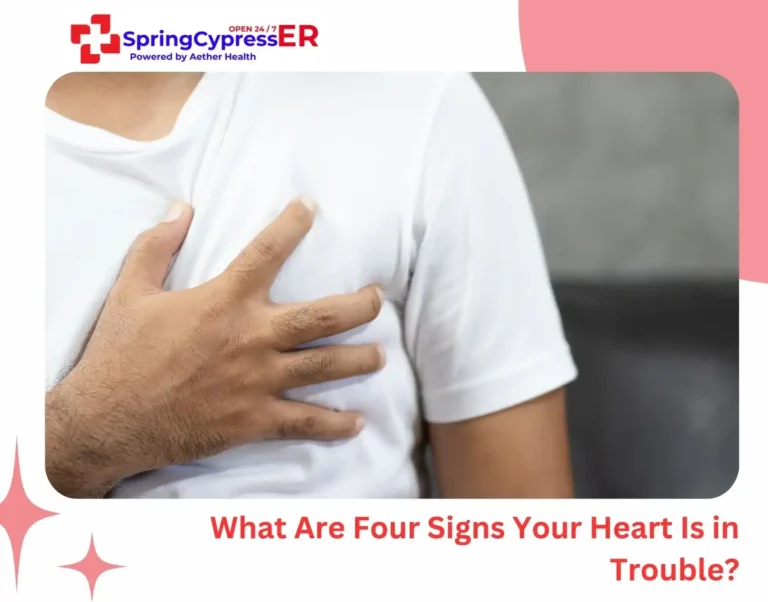
Chest pain is the sign people most closely associate with heart trouble and for good reason. It’s the most common warning symptom of a heart attack. But heart-related chest pain is often not the sharp, stabbing pain people expect. It’s more often a pressure, tightness, squeezing, or heavy sensation.
What heart-related chest pain feels like
- A squeezing, crushing, or heavy pressure in the center or left side of the chest.
- A burning sensation that can feel similar to severe heartburn.
- Discomfort that radiates to the left arm, both arms, jaw, neck, back, or upper abdomen.
- Pain that comes with sweating, nausea, or a feeling of impending doom.
- Discomfort that gets worse with activity and eases with rest or, more dangerously, discomfort that continues at rest.
- Pain lasting more than a few minutes, or pain that goes away and comes back.
Why chest pain matters
Chest pain often signals reduced blood flow to the heart muscle usually from a narrowed or blocked coronary artery. Every minute a heart artery is blocked, more heart muscle dies. This is why cardiologists say “time is muscle.” Recognizing chest pain quickly and getting evaluated in an emergency setting is the single most important factor in outcomes after a heart attack.
What is NOT usually cardiac chest pain
- Sharp, stabbing pain that changes with breathing or body position.
- Pain reproducible by pressing on the chest wall.
- Pain that lasts only seconds.
That said, chest pain that seems minor can still be cardiac. If you are unsure, get evaluated. A short ER visit is a small price for peace of mind.
Chest pain red flags – call 911: Chest pain with any of the following: sweating, nausea, shortness of breath, pain radiating to arm or jaw, lightheadedness, or a sense that something is very wrong. Do not drive yourself. Call 911 paramedics can begin assessment and treatment in the ambulance.
Sign 2: Shortness of Breath
Shortness of breath is one of the most underestimated cardiac warning signs. People often assume it means a lung problem, allergies, or getting out of shape. In many patients especially women, older adults, and people with diabetes shortness of breath is the primary sign of heart trouble, sometimes without any chest pain at all.
When shortness of breath may signal heart trouble
- Difficulty catching your breath during activities that never used to bother you walking up one flight of stairs, carrying groceries, walking the dog.
- Waking up in the middle of the night gasping for air a classic sign of heart failure.
- Needing to prop yourself up on multiple pillows to breathe comfortably.
- Shortness of breath that comes on suddenly, especially with chest discomfort or lightheadedness.
- Feeling like you cannot catch your breath even at rest.
- Breathlessness accompanied by ankle or leg swelling.
Why shortness of breath matters
The heart’s job is to pump oxygen-rich blood to every tissue. When the heart is struggling from a weakened muscle, blocked artery, or arrhythmia the lungs may fill with fluid, or tissues may not receive enough oxygen. The result is breathlessness. It can be a sign of heart failure, coronary artery disease, valve problems, or a serious arrhythmia.
Shortness of breath red flags call 911: Severe shortness of breath at rest, shortness of breath with chest pain, gasping for air, blue lips or fingertips, or shortness of breath so severe you cannot speak in full sentences. These are emergencies.
Sign 3: Unexplained Fatigue
Fatigue is the sign most likely to be dismissed. Everyone gets tired. But cardiac fatigue is different it’s a deep, unusual exhaustion that follows tasks that never used to be tiring, and rest does not fully restore your energy. It is especially common in women and often precedes a cardiac event by days, weeks, or even months.
What cardiac fatigue looks like
- Feeling exhausted after routine tasks showering, making dinner, walking short distances.
- Needing to nap during the day when you normally would not.
- Waking up already tired, even after a full night of sleep.
- A sudden change from your usual energy level a distinct “before and after” shift.
- Fatigue accompanied by any of the other three signs chest discomfort, shortness of breath, or palpitations.
Why unexplained fatigue matters
When the heart’s pumping capacity drops, less blood reaches your muscles, brain, and other organs. Your body responds by conserving energy which registers as fatigue. In early heart failure, reduced cardiac output may cause exhaustion long before other symptoms become obvious. Recognizing this pattern early can prevent an emergency later.
Sign 4: Irregular Heartbeat
An irregular heartbeat sometimes called a palpitation, arrhythmia, or heart fluttering is when the heart beats too fast, too slow, or in an uneven rhythm. Many people experience occasional palpitations that are harmless. Others have irregular rhythms that signal serious underlying heart problems and dramatically raise the risk of stroke or sudden cardiac events. Understanding what causes irregular heartbeat helps you recognize when palpitations are a normal variation versus a red flag.
What an irregular heartbeat feels like
- A fluttering sensation in the chest.
- A racing or pounding heartbeat.
- A skipped or extra beat sensation.
- A heavy, thumping heartbeat.
- Feeling like your heart is dropping or flip-flopping.
- A slow, irregular pulse when checked.
When irregular heartbeat is a warning sign
- Palpitations that last more than a few minutes.
- Rapid heartbeat that occurs at rest, with no obvious trigger.
- An irregular pulse combined with lightheadedness, shortness of breath, chest discomfort, or fainting.
- New episodes of racing or fluttering heart in someone with high blood pressure, diabetes, or a family history of heart problems.
- Any irregular heartbeat during pregnancy or in someone over 60.
The most common serious arrhythmia is atrial fibrillation (AFib) an irregular, often rapid heart rhythm that dramatically increases the risk of blood clots and stroke. AFib often goes undiagnosed for years because episodes come and go. If you’re wondering whether irregular heartbeat is dangerous, the answer depends on the type but any sustained or repeated irregular beats deserve professional evaluation.
Irregular heartbeat red flags call 911: Palpitations combined with chest pain, severe shortness of breath, fainting, or sudden weakness on one side of the body. These may signal a heart attack, dangerous arrhythmia, or stroke.
Who Is Most at Risk for Heart Trouble?

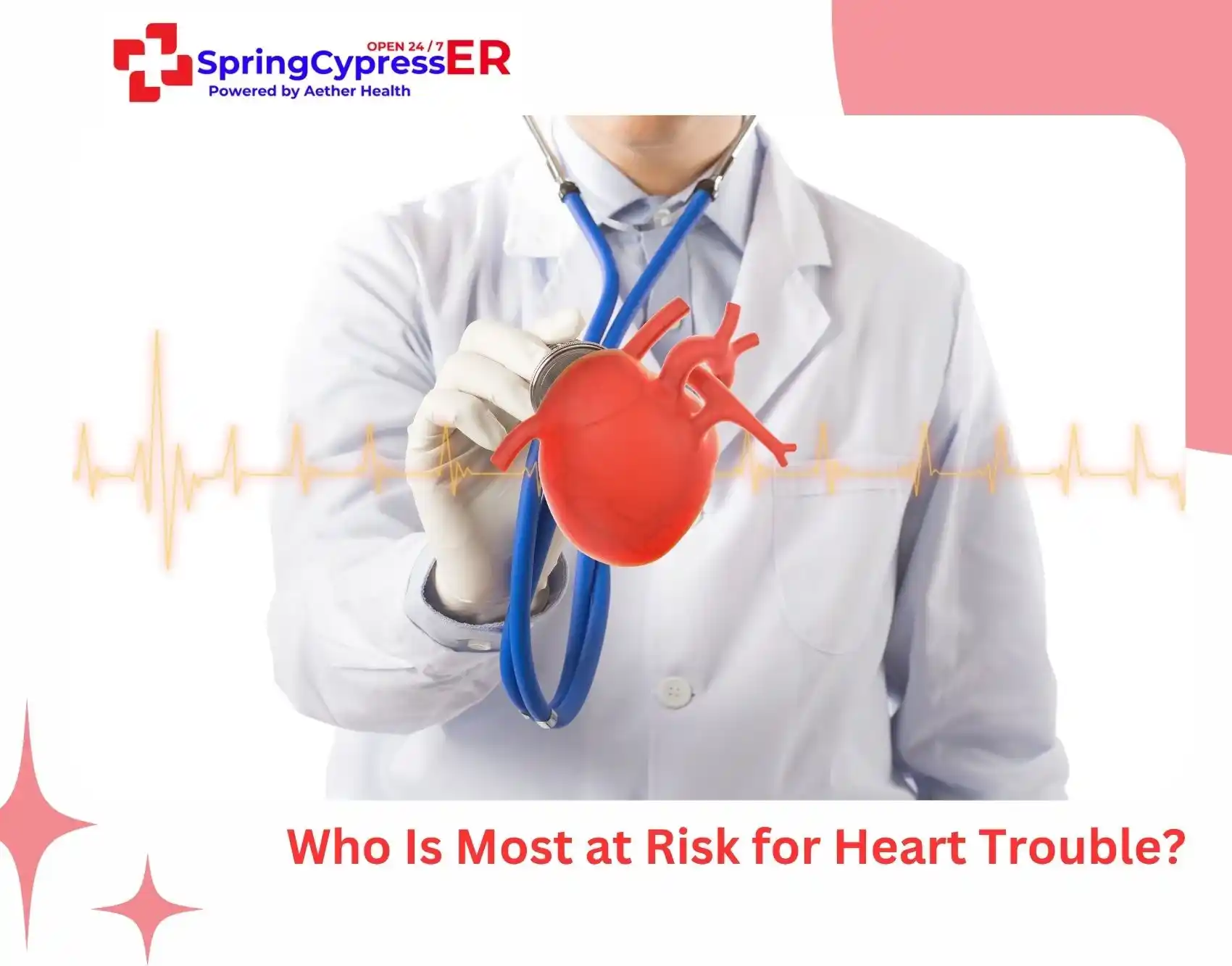
Everyone should recognize the four warning signs, but some people face significantly higher cardiovascular risk. If several factors apply to you, be extra vigilant about early symptoms.
Non-modifiable risk factors
- Age over 55 for men, over 65 for women.
- Family history of heart disease, especially in a parent or sibling before age 60.
- Personal history of previous heart attack, stroke, or arrhythmia.
- Male sex (men are at higher risk earlier in life; women’s risk rises sharply after menopause).
Modifiable risk factors
- High blood pressure.
- High cholesterol.
- Diabetes.
- Obesity.
- Smoking or vaping.
- Sedentary lifestyle.
- Untreated sleep apnea.
- Chronic stress.
- Heavy alcohol use.
When to Come to the ER for Heart Symptoms
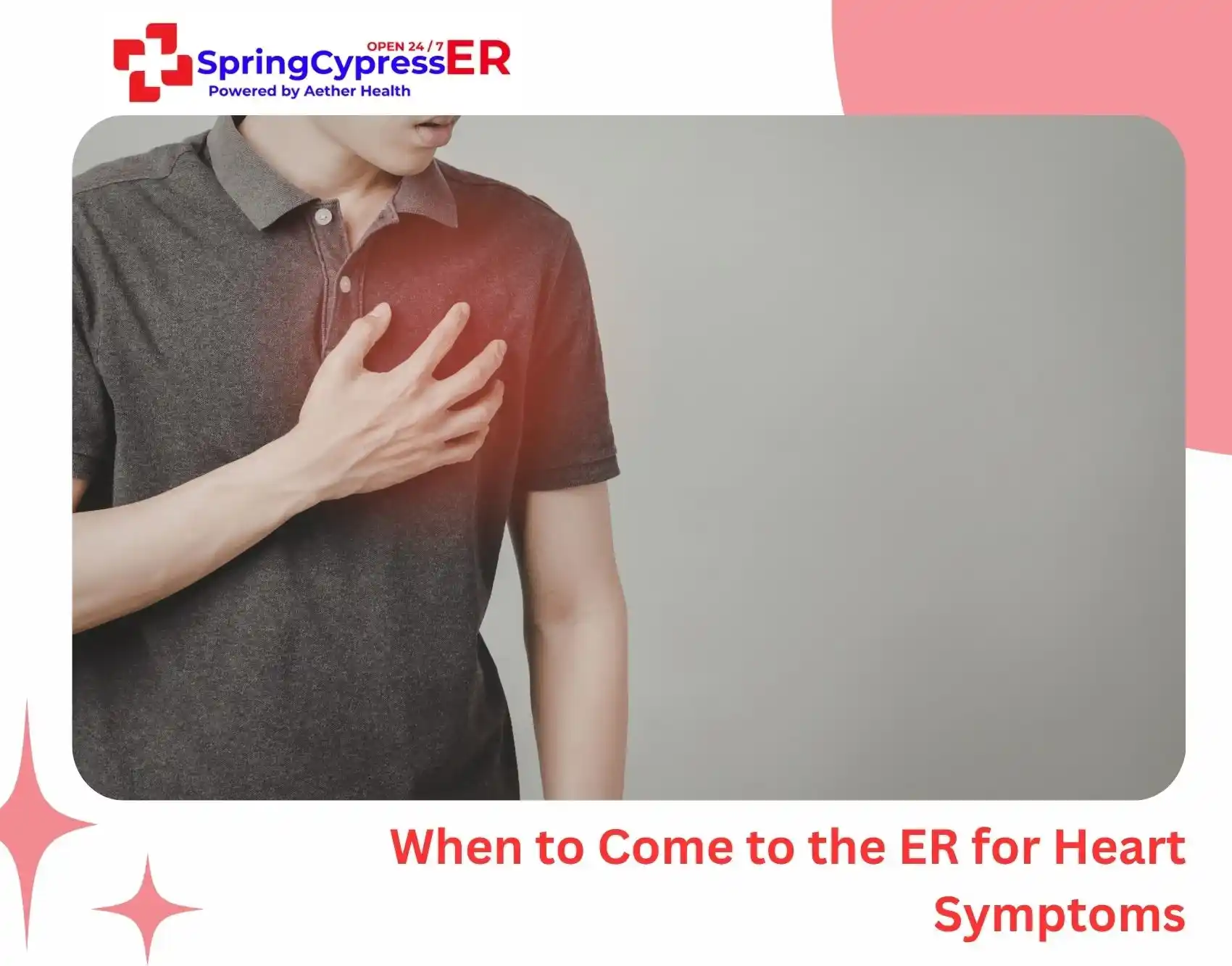
Some cardiac warning signs need immediate emergency care. Others need prompt evaluation but not necessarily a 911 call. Here’s the decision filter.
Call 911 immediately for
- Chest pain lasting more than a few minutes, or chest pain with sweating, nausea, or radiating pain.
- Sudden severe shortness of breath.
- Fainting or near-fainting.
- Sudden weakness or numbness on one side of the body, slurred speech, or vision changes signs of stroke.
- Coughing up pink frothy sputum.
- Blue or gray lips, face, or fingertips.
Come to the ER (without 911) for
- New or worsening shortness of breath during normal activity.
- New irregular heartbeat or palpitations lasting more than a few minutes.
- Persistent unexplained fatigue over days or weeks.
- Ankle or leg swelling that came on quickly.
- Waking up gasping for air.
- Any warning sign in someone with known heart disease, diabetes, or a family history.
Get evaluated fast: Aether Health – Spring Cypress ER provides 24/7 emergency irregular heartbeat treatment with on-site EKG, cardiac lab work, chest X-ray, and CT imaging all with results in minutes. Call +1 (713) 528-8703 or come to 8929 Spring Cypress Rd, Spring, TX 77379.
How SpringCypress ER Evaluates Heart Trouble
When you come in with any cardiac warning sign, our 24/7 freestanding ER in Spring, TX is fully equipped to evaluate, monitor, and coordinate care on site with rapid results that determine whether you need immediate treatment, further observation, or a follow-up plan.
- 12-lead EKG within minutes of arrival identifies heart attacks, arrhythmias, and other cardiac electrical problems.
- Cardiac lab work troponin and other cardiac markers to detect heart muscle damage.
- Continuous cardiac monitoring tracks your heart rhythm throughout the visit.
- On-site chest X-ray identifies heart enlargement, fluid in the lungs, and other cardiac clues.
- CT imaging available immediately when advanced imaging is needed to rule out serious conditions.
- Board-certified emergency physicians always on shift, seeing patients within minutes.
- Coordinated cardiology follow-up for patients who need specialist care beyond the ER, we arrange direct handoffs to cardiac partners.
If you have been diagnosed with a heart rhythm problem or are worried about long-term outcomes, our companion guide on how long you can live with an irregular heartbeat explains what to expect and what steps improve long-term prognosis.
Frequently Asked Questions
Are the four signs of heart trouble the same for men and women?
Not always. Men more commonly experience classic chest pain radiating to the left arm. Women especially women over 50 – more often experience shortness of breath, unusual fatigue, back or jaw pain, and nausea, sometimes with little or no chest pain. This is one reason women’s heart attacks are more often missed. Every one of the four warning signs applies to both sexes, but the mix of symptoms may differ.
Can heart trouble show up without chest pain?
Yes. This is called a “silent” or atypical presentation and is especially common in women, older adults, and people with diabetes. Shortness of breath, unexplained fatigue, dizziness, or nausea may be the only symptoms. Anyone with several cardiovascular risk factors should take non-chest-pain symptoms seriously.
How do I know if my chest pain is heart-related or heartburn?
You often cannot tell without medical evaluation, and the two can feel very similar. Heart-related pain is more commonly described as pressure, squeezing, or heaviness, may radiate to the arm or jaw, and often comes with sweating, nausea, or shortness of breath. Heartburn is more commonly a burning sensation that improves after eating, sitting up, or taking antacids. When in doubt, treat it as cardiac and come to the ER a quick EKG can tell the difference in minutes.
What is the difference between an arrhythmia and a heart attack?
An arrhythmia is a problem with the heart’s electrical rhythm the heart beats too fast, too slow, or irregularly. A heart attack is a problem with blood flow to the heart muscle a coronary artery becomes blocked. The two can occur together, but they are distinct conditions requiring different evaluation. Both are true emergencies.
Should I go to urgent care or the ER for heart symptoms?
For any suspected cardiac symptom, come to the ER not urgent care. Urgent care clinics do not have the diagnostic capability, cardiac monitoring, or physician expertise to rule out a heart attack or arrhythmia. At Aether Health – Spring Cypress ER, our emergency irregular heartbeat evaluation includes board-certified emergency physicians, on-site EKG, cardiac lab work, and full imaging with results in minutes.
Will my insurance cover an ER visit for heart symptoms?
Aether Health – Spring Cypress ER accepts most major commercial insurance plans and works directly with your insurer to avoid surprise billing. We do not currently accept Medicare, Medicaid, or Tricare. Under federal law (EMTALA), your insurance plan’s emergency coverage applies the same at a freestanding ER as it would at a hospital ER. Cost concerns should never delay emergency cardiac care.
People Also Ask About Heart Warning Signs
These are the related questions AI search engines and Google’s “People Also Ask” feature commonly surface alongside heart warning sign queries. Direct answers below.
Can heart trouble come on suddenly with no warning?
Sometimes, yes but more often the heart sends subtle signals for days, weeks, or months before a major event. Sudden events like cardiac arrest can happen without warning, but heart attacks are frequently preceded by mild chest discomfort, unexplained fatigue, or shortness of breath that the person initially dismissed. Paying attention to any new or unusual symptom is your best defense.
What does an early heart problem feel like day to day?
Early heart problems often feel like a gradual decline in exercise tolerance, subtle shortness of breath during ordinary tasks, unexplained tiredness that doesn’t improve with rest, or occasional palpitations. Many people describe it as “just not feeling like myself” for weeks before finally seeking care. If you notice these changes, do not wait for a dramatic symptom to prompt action.
How quickly can heart symptoms turn into a medical emergency?
Within minutes. A coronary artery blockage begins damaging heart muscle within minutes of onset, and full-thickness damage typically occurs within 6 hours. This is why emergency response is measured in minutes, not hours. If you develop severe chest pain, shortness of breath, or fainting, call 911 immediately.
Can an EKG at the ER detect all heart problems?
An EKG identifies many cardiac emergencies including heart attacks in progress, most arrhythmias, and electrical conduction problems. It may not catch problems that come and go, such as intermittent arrhythmias, or structural heart problems that need imaging to detect. That’s why our ER evaluation combines EKG with cardiac lab work, chest X-ray, and CT imaging when appropriate and why we coordinate specialist cardiology follow-up when longer-term monitoring is needed.
Is chest pain always a heart attack?
No. Chest pain has many possible causes muscle strain, heartburn, anxiety, lung problems, and more. But heart-related chest pain is the most dangerous cause, and there is no way to be certain without medical evaluation. A short ER visit with an EKG and cardiac lab work rules out the dangerous causes in under an hour. Never dismiss chest pain get it checked.
What tests will I get if I come to the ER for heart symptoms?
At Aether Health – Spring Cypress ER, cardiac evaluation typically includes: a 12-lead EKG within minutes of arrival, cardiac lab work (troponin and other markers), continuous cardiac monitoring during your visit, chest X-ray to assess heart size and lung fluid, and CT imaging if further evaluation is needed. Most cardiac evaluations complete within 1 to 2 hours. For patients needing specialist follow-up, we coordinate cardiology handoffs with full documentation.
Concerned About Heart Symptoms? Get Cardiac Care Fast in Spring, TX
When your heart is in trouble, time matters more than anything else. Aether Health – Spring Cypress ER provides 24/7 irregular heartbeat emergency treatment and cardiac evaluation with on-site EKG, cardiac lab work, imaging, and coordinated specialist follow-up usually within 60 minutes of arrival. If you or someone you love is experiencing any of the four warning signs, come in.
- Address: 8929 Spring Cypress Rd, Spring, TX 77379
- Phone: +1 (713) 528-8703
- Hours: Open 24 hours, every day of the year
- Contact: Get in touch with our team for questions or directions.
- Insurance: Most commercial plans accepted. No surprise billing.