Reviewed by the emergency care team at Aether Health – Spring Cypress ER | 8929 Spring Cypress Rd, Spring, TX 77379 | +1 (713) 528-8703
You feel your heart skip a beat. Or race for no reason. Or thud so hard in your chest that you put your hand over it to make sure it’s still there. The first question almost everyone asks: what causes irregular heartbeat and is this dangerous?
Sometimes the answer is reassuring: too much coffee, not enough sleep, a stressful week. Other times, an irregular heartbeat is the first warning sign of a serious heart problem that needs treatment within hours. This guide covers every major cause of an irregular heartbeat, explains which ones are safe to monitor at home, and shows you exactly when to come to Aether Health – Spring Cypress ER for emergency heart care in Spring, TX.
Quick Answer: What Causes an Irregular Heartbeat?
An irregular heartbeat medically called an arrhythmia is caused by anything that disrupts the electrical signals controlling your heart’s rhythm. The most common causes are caffeine, stress, anxiety, dehydration, sleep deprivation, alcohol, and certain medications. More serious causes include heart disease, atrial fibrillation, electrolyte imbalances, thyroid disorders, and underlying cardiac conditions. If your irregular heartbeat comes with chest pain, shortness of breath, dizziness, or fainting, treat it as a medical emergency.
Active symptoms right now?: If you are feeling an irregular heartbeat along with chest pressure, severe shortness of breath, dizziness, or fainting stop reading and call 911 or come to Aether Health – Spring Cypress ER immediately. We are open 24/7 with on-site EKG, lab work, and CT imaging at 8929 Spring Cypress Rd. Call +1 (713) 528-8703.
What Is an Irregular Heartbeat?
A healthy adult heart beats 60 to 100 times per minute at rest, in a steady rhythm. An irregular heartbeat happens when that rhythm becomes too fast, too slow, or simply out of sequence. Doctors group these rhythm problems into four main types.
- Tachycardia the heart beats faster than 100 times per minute at rest.
- Bradycardia the heart beats slower than 60 times per minute (not always a problem in athletes).
- Premature beats extra beats that feel like a flutter, skip, or thud in the chest.
- Fibrillation the heart’s chambers quiver instead of beating in a coordinated way; atrial fibrillation is the most common type and a major stroke risk.
Knowing which type you are experiencing helps a physician find the cause but you do not need to figure it out yourself. An EKG at our facility takes less than 60 seconds and gives a definitive answer.
The 8 Main Causes of an Irregular Heartbeat
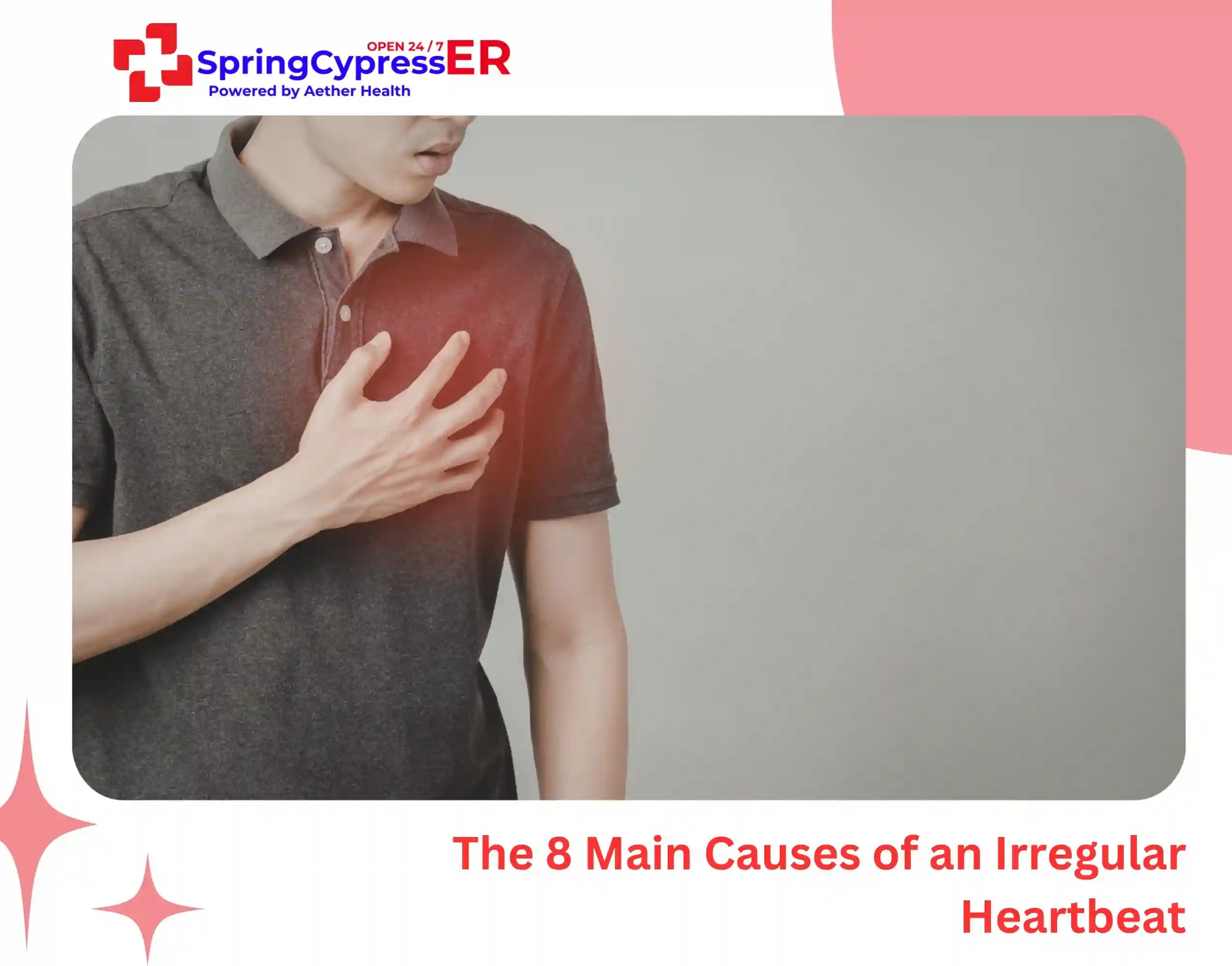
Most irregular heartbeats trace back to one of eight categories. Some are harmless and reversible. Others are warning signs that need immediate attention.
1. Caffeine, Alcohol, and Stimulants
Coffee, energy drinks, pre-workout supplements, nicotine, and alcohol are the most common everyday triggers of palpitations. They overstimulate the nervous system and the heart’s electrical conduction. The effect usually resolves within a few hours of stopping the substance. People with underlying heart conditions are more sensitive to what feels normal to someone else and can throw your heart into rhythm trouble.
2. Stress, Anxiety, and Panic Attacks
Emotional stress and anxiety flood the body with adrenaline, which directly speeds up the heart and can cause skipped beats. Panic attacks, in particular, often involve a racing or pounding heart so intense that people fear they are having a heart attack. The challenge is that anxiety and a cardiac event can feel nearly identical which is exactly why an EKG is important for ruling out the dangerous one.
3. Dehydration and Electrolyte Imbalance
Your heart’s electrical signals depend on potassium, magnesium, sodium, and calcium being at the right levels. Dehydration common in the Texas heat disrupts these levels and can trigger arrhythmias. So can intense vomiting, diarrhea, kidney disease, and certain diuretic medications. A blood panel at our ER can identify and correct electrolyte issues within an hour.
4. Heart Disease
Any structural or vascular problem in the heart coronary artery disease, heart failure, valve disease, cardiomyopathy, or a previous heart attack increases the risk of arrhythmias. Damaged heart muscle creates electrical “short circuits” that disrupt normal rhythm. If you have a known heart condition and notice new or worsening irregular beats, treat it as urgent.
5. Thyroid Disorders
An overactive thyroid (hyperthyroidism) speeds up the entire body, including the heart, and is one of the most under-recognized causes of irregular heartbeat. People often experience weight loss, hand tremor, heat intolerance, and palpitations together. A simple TSH blood test confirms it, and treating the thyroid often resolves the arrhythmia.
6. Medications and Recreational Substances
Many common medications can trigger irregular heartbeats: over-the-counter decongestants (pseudoephedrine), asthma inhalers (albuterol), some antibiotics, certain antidepressants, ADHD medications, and weight-loss supplements. Recreational stimulants like cocaine, methamphetamine, and high-dose MDMA cause severe, sometimes fatal arrhythmias. Always tell the ER team about every substance you have taken, we do not report, and the information can change treatment.
7. Sleep Apnea
Untreated obstructive sleep apnea where breathing repeatedly stops during sleep drops blood oxygen and strains the heart for hours every night. It is a leading cause of atrial fibrillation, especially in adults over 50. If you snore loudly, wake up tired, and feel palpitations, sleep apnea is worth investigating.
8. Primary Electrical Problems in the Heart
Some arrhythmias are caused by problems in the heart’s electrical system itself, with no other underlying disease. Atrial fibrillation, supraventricular tachycardia (SVT), and ventricular arrhythmias fall into this group. These conditions require diagnosis through EKG and sometimes longer-term monitoring, and most are highly treatable once identified.
Quick Reference: Causes of Irregular Heartbeat by Urgency
Use this table to gauge whether your symptoms are likely benign or need immediate evaluation.
| Category | Common Triggers | Urgency Level |
| Lifestyle | Caffeine, alcohol, nicotine, energy drinks, poor sleep, dehydration | Low usually resolves |
| Emotional / Physical Stress | Anxiety, panic attacks, intense exercise, fever, pain | Low to moderate |
| Heart Conditions | Coronary artery disease, heart failure, cardiomyopathy, previous heart attack, valve disease | High needs evaluation |
| Electrolyte Imbalance | Low potassium, low magnesium, dehydration, kidney issues | Moderate to high |
| Thyroid Disorders | Overactive thyroid (hyperthyroidism) | Moderate |
| Medications & Substances | Decongestants, asthma inhalers, certain antibiotics, stimulants, illicit drugs | Moderate |
| Sleep Apnea | Untreated obstructive sleep apnea | Moderate chronic risk |
| Electrical Problems | Atrial fibrillation, ventricular tachycardia, heart block | High emergency |
Symptoms That Come With an Irregular Heartbeat
An arrhythmia often feels like more than just a rhythm change. The following symptoms commonly appear alongside it and they help tell a benign episode apart from a dangerous one.
- A fluttering or pounding in the chest is the most common symptom, often described as the heart “flipping” or “skipping.”
- A racing or slow pulse noticeably faster or slower than normal, even at rest.
- Lightheadedness or dizziness from reduced blood flow to the brain.
- Shortness of breath especially when lying down or with mild activity.
- Chest discomfort, pressure, or pain is a critical warning sign that requires immediate ER evaluation.
- Fainting or near-fainting a serious symptom that should never be ignored.
- Sudden fatigue or weakness the body’s response to the heart not pumping efficiently.
- Anxiety or a sense of doom frequently accompanies serious cardiac events, even when the person feels physically “fine.”
Who Is Most at Risk for an Irregular Heartbeat?
Some people are more prone to arrhythmias because of age, genetics, medical history, or lifestyle. If multiple risk factors apply to you, talk to a doctor before symptoms escalate.
- Age 60 or older arrhythmias become much more common with age.
- Family history of arrhythmia, heart disease, or sudden cardiac death.
- High blood pressure, especially if uncontrolled.
- Diabetes, particularly when paired with high blood pressure.
- Obesity and sedentary lifestyle.
- Heavy alcohol use or binge drinking (“holiday heart syndrome”).
- Chronic stress, anxiety disorders, or untreated depression.
- Previous heart attack, heart surgery, or known structural heart disease.
- Sleep apnea, even if undiagnosed.
- Thyroid disease.
When to Come to the ER for an Irregular Heartbeat
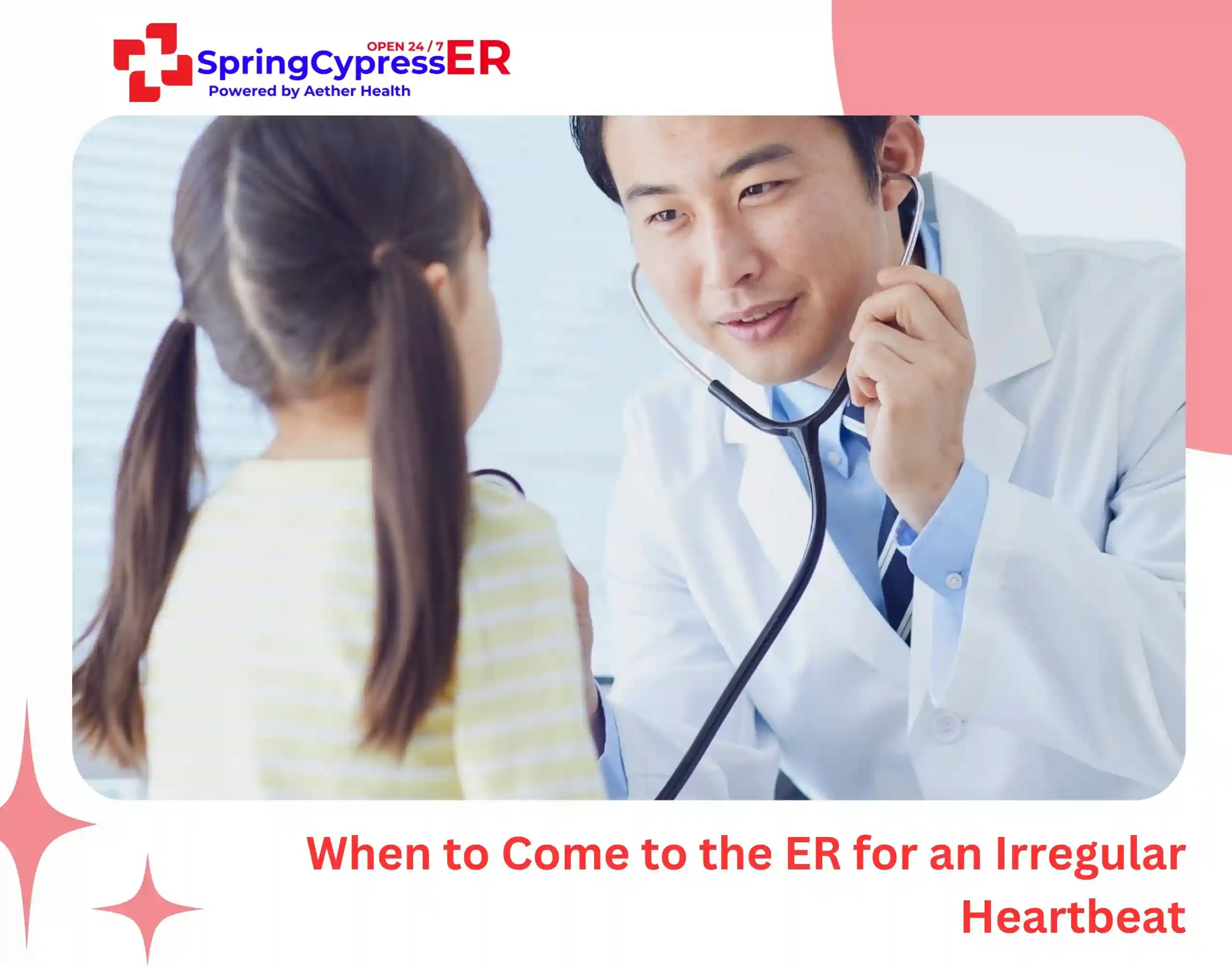
Not every palpitation is an emergency but ignoring the wrong one can be fatal. Come to Aether Health – Spring Cypress ER right away if any of the following apply.
- Irregular heartbeat with chest pain, pressure, tightness, or burning.
- Heart rate consistently above 120 or below 50 at rest, especially with symptoms.
- Shortness of breath, even at rest or while lying down.
- Dizziness, near-fainting, or fainting episodes.
- Palpitations that last longer than 30 minutes without stopping.
- New palpitations in anyone with a history of heart disease, stroke, or atrial fibrillation.
- Irregular heartbeat that begins after a fall, head injury, or new medication.
- Severe anxiety along with chest symptoms let us rule out a cardiac event first.
Don’t “wait and see”: Time matters in cardiac care. Atrial fibrillation, in particular, increases stroke risk significantly when untreated. At Aether Health – Spring Cypress ER, on-site EKG, lab work, and cardiac monitoring are available 24/7 most patients have answers within an hour. Call +1 (713) 528-8703 or come straight to 8929 Spring Cypress Rd.
How We Diagnose and Treat Irregular Heartbeat at SpringCypress ER
Cardiac care depends on speed. Our 24/7 freestanding ER in Spring, TX is equipped to identify the cause of an irregular heartbeat quickly and start treatment on site, without the wait of a hospital ER.
- 12-lead EKG performed within minutes of arrival to identify the exact rhythm and rule out a heart attack.
- Continuous cardiac monitoring tracks every heartbeat during your visit, catching intermittent abnormalities.
- Cardiac blood markers troponin, BNP, and electrolyte panels to detect heart muscle damage or chemical imbalance.
- Chest X-ray and on-site CT for evaluating heart and lung structure when needed.
- Echocardiogram capability ultrasound of the heart to assess pumping function.
- IV medications to slow a dangerously fast heart, replace electrolytes, or convert atrial fibrillation back to normal rhythm.
- Direct cardiology coordination for patients who need a specialist follow-up or admission, we arrange transfer or referral seamlessly.
How to Reduce Your Risk of an Irregular Heartbeat
Many arrhythmias are preventable with consistent habits. These adjustments lower your risk and can stop benign palpitations from becoming chronic.
- Limit caffeine to 1–2 cups of coffee per day; cut energy drinks entirely if you feel palpitations.
- Keep alcohol intake moderate binge drinking is a leading cause of new-onset atrial fibrillation.
- Stay hydrated, especially in Texas summers; aim for clear or light-yellow urine.
- Get 7–9 hours of sleep, and rule out sleep apnea if you snore or wake up tired.
- Manage blood pressure and blood sugar through diet, exercise, and prescribed medications.
- Reduce stress through regular exercise, breathing practices, or therapy when needed.
- Stop smoking and avoid recreational stimulants entirely.
- Review every medication and supplement with your doctor including over-the-counter ones.
Frequently Asked Questions
Is an irregular heartbeat always serious?
No. Most palpitations are caused by caffeine, stress, dehydration, or lack of sleep and resolve on their own. The danger is that some serious arrhythmias feel identical to harmless ones which is why a 60-second EKG is the only reliable way to tell the difference.
Can stress alone cause an irregular heartbeat?
Yes. Adrenaline released during stress, anxiety, or panic attacks directly affects the heart’s electrical system. Stress-related palpitations are common and usually harmless, but they can still feel terrifying and they can mask the symptoms of a real cardiac event.
How long should an irregular heartbeat last before I go to the ER?
Brief palpitations that resolve within a few seconds and have no other symptoms can usually be monitored. But if an episode lasts more than 30 minutes, recurs frequently, or comes with chest pain, shortness of breath, dizziness, or fainting come to the ER immediately.
Can dehydration really cause an irregular heartbeat?
Yes. Dehydration drops potassium, magnesium, and sodium levels, all of which are needed for steady heart rhythm. In Spring, TX summers especially, even mild dehydration can trigger palpitations in otherwise healthy people.
Does an irregular heartbeat mean I’m going to have a heart attack?
Not necessarily. An arrhythmia and a heart attack are two different problems though they can occur together. A heart attack is caused by blocked blood flow; an arrhythmia is an electrical problem. An EKG can tell you which one is happening within minutes.
Will my insurance cover an ER visit for an irregular heartbeat?
Aether Health – Spring Cypress ER accepts most commercial insurance plans and works directly with your insurer to avoid surprise billing. We do not currently accept Medicare, Medicaid, or Tricare. Call us before or during your visit if you have coverage questions we are happy to help.
Get Emergency Heart Care in Spring, TX Open 24/7, No Wait
When your heart isn’t beating right, you should not be waiting in a hospital ER for hours to find out why. At Aether Health – Spring Cypress ER, board-certified emergency physicians, on-site EKG, lab work, and cardiac imaging give you answers fast usually within 60 minutes of walking in.
- Address: 8929 Spring Cypress Rd, Spring, TX 77379
- Phone: +1 (713) 528-8703
- Hours: Open 24 hours, every day of the year
- Insurance: Most commercial plans accepted. No surprise billing.
Call Now: +1 (713) 528-8703 speak to our team in under 30 seconds. Or walk in any time at 8929 Spring Cypress Rd, Spring, TX 77379.