Reviewed by the emergency care team at Aether Health – Spring Cypress ER | 8929 Spring Cypress Rd, Spring, TX 77379 | +1 (713) 528-8703
Your heart skipped, pounded, or fluttered for no reason. The first thought is almost universal: is this dangerous? Should I be worried, or is it nothing?
This guide covers Is Irregular Heartbeat Dangerous? It walks through which types of irregular heartbeat are dangerous, which are safe to monitor at home, the warning signs that should never be ignored, and what we do at Aether Health – Spring Cypress ER to evaluate and treat dangerous rhythms quickly.
Quick Answer: Is an Irregular Heartbeat Dangerous?
Sometimes it depends on the type of rhythm and what else is happening. Brief skipped or extra beats with no other symptoms are usually harmless and caused by caffeine, stress, dehydration, or lack of sleep. However, irregular heartbeats become dangerous when they come with chest pain, fainting, severe shortness of breath, or a sustained racing or very slow heart rate.
Conditions like atrial fibrillation, ventricular tachycardia, and certain heart blocks can lead to stroke, heart failure, or sudden cardiac arrest if untreated. A simple EKG, which takes less than 60 seconds, is the only reliable way to know which type you have.
Symptoms right now?: If you are experiencing an irregular heartbeat with chest pain, severe shortness of breath, fainting, or dizziness call 911 or come to Aether Health – Spring Cypress ER immediately. We are open 24/7 with on-site EKG, lab work, and cardiac monitoring at 8929 Spring Cypress Rd. Call +1 (713) 528-8703.
Three Risk Tiers of Irregular Heartbeat
Not all irregular heartbeats are equal. Cardiologists and emergency physicians sort them into three risk levels based on the type of rhythm and the symptoms that accompany it. Knowing which tier you fall into is the first step in deciding what to do next.
| Risk Level | What It Looks Like | Common Causes | Action |
| Low Risk | Brief skipped beats, no other symptoms, resolves on its own | Caffeine, stress, dehydration, lack of sleep | Monitor at home; mention at next doctor visit |
| Moderate Risk | Frequent palpitations, lightheadedness, mild shortness of breath | Thyroid issues, electrolyte imbalance, medications, anxiety | Same-day evaluation; schedule a clinic or ER visit |
| High Risk | Chest pain, fainting, severe shortness of breath, sustained racing or slow heart rate | Atrial fibrillation, ventricular tachycardia, heart attack, heart failure | Call 911 or come to the ER immediately |
Important: Risk level can change quickly. A low-risk rhythm in someone with new chest pain becomes moderate or high risk immediately. When in doubt, get an EKG.
When an Irregular Heartbeat Is Usually Not Dangerous
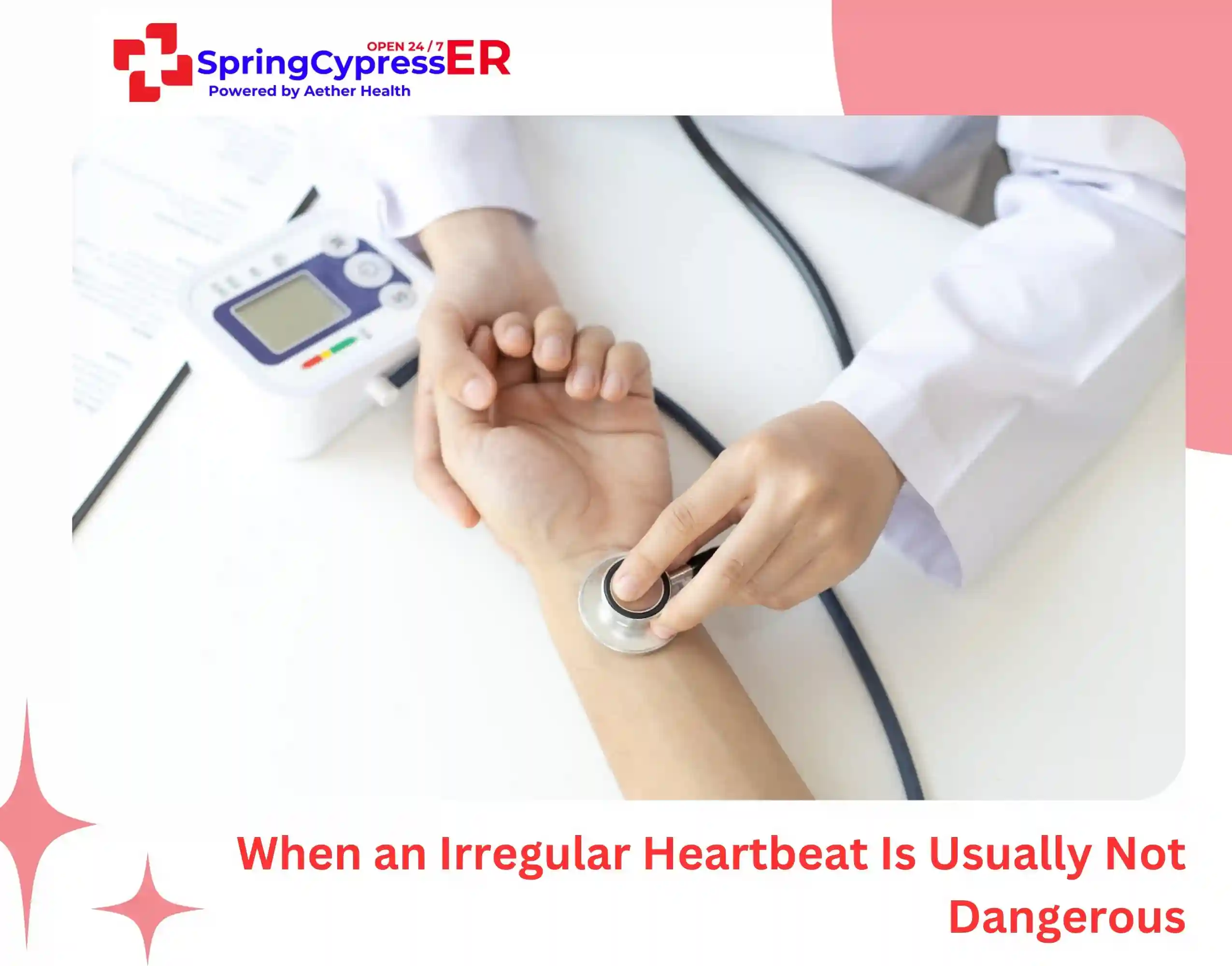
Most palpitations in otherwise healthy people are caused by harmless triggers and resolve on their own. They are still worth understanding so you do not waste worry on something benign.
Premature Atrial Contractions (PACs) and Premature Ventricular Contractions (PVCs)
These are the medical names for the classic “skipped beat” or “flip-flop” sensation. They happen when the heart fires an extra beat slightly earlier than expected. Occasional PACs and PVCs are extremely common most healthy adults have them throughout the day without noticing. They are typically harmless when they are infrequent, brief, and not accompanied by symptoms.
Sinus Tachycardia from Stress or Exercise
A racing heart during exercise, anxiety, fever, dehydration, or pain is a normal response. The rhythm itself is regular the heart is just beating faster than usual. It returns to baseline when the trigger resolves.
Stimulant-Related Palpitations
Caffeine, energy drinks, nicotine, pre-workout supplements, and decongestants like pseudoephedrine all stimulate the heart and can cause palpitations. These resolve within hours of stopping the substance and rarely cause lasting harm in healthy individuals.
Vagal Reactions
Skipped beats triggered by coughing, straining, swallowing cold liquids, or lying down can feel alarming but are usually harmless. They reflect normal nervous-system reflexes briefly slowing the heart.
When an Irregular Heartbeat IS Dangerous
Some arrhythmias are serious medical problems that can cause stroke, heart failure, or sudden death if not treated. These are the ones that need immediate evaluation.
1. Atrial Fibrillation (AFib)
The most common dangerous arrhythmia. In AFib, the upper chambers of the heart quiver chaotically instead of beating in a coordinated way, causing blood to pool. Pooled blood forms clots, and those clots can travel to the brain making AFib a leading cause of stroke. Untreated atrial fibrillation increases stroke risk roughly five-fold. AFib often feels like an erratic, racing heart and may come with shortness of breath, fatigue, or chest discomfort.
2. Ventricular Tachycardia (VT)
A fast, dangerous rhythm originating in the lower chambers of the heart. VT can be sustained or come in brief bursts. It often causes the heart to pump inefficiently, leading to lightheadedness, fainting, or sudden cardiac arrest. VT can be a warning sign of underlying heart disease, scar tissue from a previous heart attack, or genetic rhythm disorders.
3. Ventricular Fibrillation (VF)
The deadliest arrhythmia. In VF, the heart’s lower chambers quiver instead of pumping, and blood flow effectively stops. Without immediate defibrillation, VF causes cardiac arrest within minutes. It is the rhythm that AEDs are designed to treat.
4. Heart Block
Occurs when the heart’s electrical signals are partially or completely blocked. Mild forms cause an irregular slow pulse. Severe forms (third-degree heart block) can cause fainting and sudden death. Symptoms include extreme fatigue, lightheadedness, fainting, and a heart rate that stays unusually slow.
5. Supraventricular Tachycardia (SVT)
Sudden episodes of a fast heart rate that come on out of nowhere and stop just as suddenly. Episodes can last seconds to hours. While usually not life-threatening, sustained SVT can cause fainting, blood pressure drops, and is highly treatable once diagnosed.
6. Bradycardia With Symptoms
A slow heart rate (under 60 beats per minute) is often normal in athletes. But a slow heart rate combined with fatigue, lightheadedness, or fainting can mean the heart isn’t pumping enough blood to meet the body’s needs and may require a pacemaker.
Warning Signs That Make an Irregular Heartbeat Dangerous
The symptoms that come alongside an irregular heartbeat are what determine whether it’s an emergency. Any of the following with palpitations means to come to the ER immediately.
- Chest pain, pressure, or tightness may indicate a heart attack or unstable heart disease.
- Fainting or near-fainting suggests the heart is not pumping enough blood to the brain.
- Severe shortness of breath especially when at rest or lying down, may indicate heart failure or pulmonary embolism.
- Sustained rapid heart rate above 120 at rest, lasting more than 30 minutes.
- Sustained slow heart rate below 50 with symptoms, in someone who is not a trained athlete.
- Sudden weakness on one side of the body, slurred speech, or facial drooping AFib-related stroke symptoms; call 911 immediately.
- Confusion, severe sweating, or pale clammy skin signs that the body is not getting enough blood flow.
- A sense of doom or impending death frequently reported by patients having a serious cardiac event, and should never be dismissed.
If you have these symptoms: Do not drive yourself. Call 911 paramedics can begin EKG monitoring and treatment in the ambulance. For urgent but non-emergency cardiac concerns, call Aether Health – Spring Cypress ER at +1 (713) 528-8703 or come directly to 8929 Spring Cypress Rd, Spring, TX 77379. We are open 24/7 with no wait.
Who Is Most at Risk for a Dangerous Irregular Heartbeat?
Some people are more likely to develop dangerous arrhythmias than others. If multiple risk factors apply to you, ongoing screening with a cardiologist may be appropriate.
- Age over 60 the risk of AFib and other dangerous rhythms rises sharply with age.
- High blood pressure, especially when uncontrolled.
- Coronary artery disease or previous heart attack.
- Heart failure or known structural heart disease.
- Obesity and lack of physical activity.
- Untreated obstructive sleep apnea.
- Family history of arrhythmia, heart disease, or sudden cardiac death.
- Heavy alcohol use, especially binge drinking (“holiday heart syndrome”).
- Smoking, vaping, or recreational stimulant use.
- Thyroid disorders are both overactive and underactive.
- Chronic kidney disease.
- Certain inherited rhythm disorders, such as long QT syndrome or Brugada syndrome.
How We Evaluate Irregular Heartbeat at SpringCypress ER
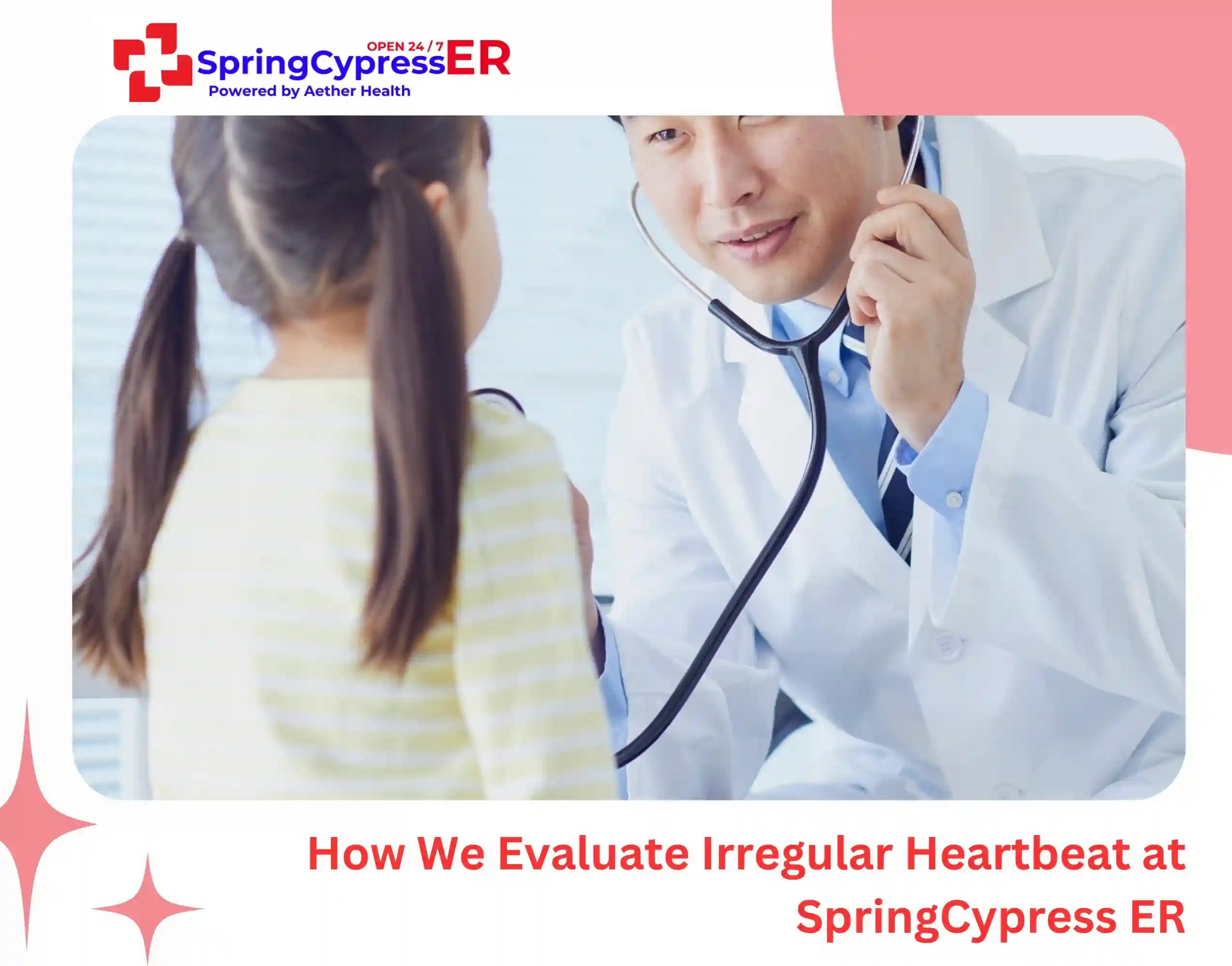
When a patient with palpitations walks into our 24/7 freestanding ER in Spring, TX, the goal is to rule out dangerous causes within the first hour. Our process is fast, methodical, and runs in parallel to save time.
- 12-lead EKG performed within minutes of arrival; identifies the exact rhythm and rules out a heart attack.
- Continuous cardiac monitoring tracks every beat during your visit so we catch intermittent abnormalities.
- Cardiac blood markers troponin, BNP, electrolytes, and thyroid panels detect heart muscle damage and metabolic causes.
- Chest X-ray on-site imaging assesses heart size, fluid in the lungs, and other anatomical issues.
- CT imaging available immediately if pulmonary embolism, aortic dissection, or other emergencies are suspected.
- Echocardiogram capability ultrasound of the heart to evaluate pumping function and valves.
- IV medications, rhythm control medications, electrolyte replacement, or treatments for atrial fibrillation are started on site as needed.
- Cardiology coordination for patients who need a cardiologist follow-up or hospital admission, we arrange seamless transfer or referral.
Frequently Asked Questions
Can an irregular heartbeat kill you?
Some can. Ventricular fibrillation causes sudden cardiac arrest within minutes if not treated. Atrial fibrillation can cause fatal strokes. Most arrhythmias are not immediately life-threatening, but several require treatment to prevent serious harm. An EKG is the only reliable way to know which type you have.
Can anxiety cause a dangerous irregular heartbeat?
Anxiety usually causes harmless palpitations. The problem is that anxiety symptoms and cardiac symptoms feel nearly identical: chest tightness, racing heart, shortness of breath, sense of doom. This is why people experiencing severe anxiety should still have an EKG to rule out a dangerous rhythm. Don’t assume it’s just panic until that’s confirmed.
How long can a dangerous irregular heartbeat last before becoming fatal?
Ventricular fibrillation causes cardiac arrest within minutes that’s why public AEDs and bystander CPR save lives. Atrial fibrillation can be tolerated for hours or longer but raises stroke risk continuously. Sustained ventricular tachycardia can cause fainting and progress to cardiac arrest. Any sustained, symptomatic arrhythmia is an emergency.
Should I go to the ER or wait to see my doctor?
Go to the ER for any palpitations with chest pain, fainting, severe shortness of breath, or symptoms lasting more than 30 minutes. See a doctor (or come to the ER for faster service) for new-onset palpitations even without other symptoms, especially if you have risk factors. Brief, symptom-free skipped beats can be discussed at your next routine visit.
What does a dangerous heart rhythm feel like compared to a harmless one?
Dangerous rhythms often feel sustained minutes or hours of racing, pounding, or chaotic beating and come with chest discomfort, shortness of breath, lightheadedness, or fainting. Harmless rhythms tend to be brief, isolated skipped beats with no other symptoms. But you cannot reliably tell the difference without an EKG.
Will my insurance cover an ER visit for an irregular heartbeat?
Aether Health – Spring Cypress ER accepts most commercial insurance plans and works directly with your insurer to avoid surprise billing. We do not currently accept Medicare, Medicaid, or Tricare. Insurance concerns should never delay seeking care for cardiac symptoms call us at +1 (713) 528-8703 or walk in.
Worried About Your Heart Rhythm? Get Answers Fast in Spring, TX
When something is off with your heartbeat, the question isn’t whether you can wait to find out what’s happening, it’s how fast you can get an EKG. At Aether Health – Spring Cypress ER, board-certified emergency physicians, on-site EKG, lab work, and cardiac imaging give you definitive answers usually within 60 minutes of walking in.
- Address: 8929 Spring Cypress Rd, Spring, TX 77379
- Phone: +1 (713) 528-8703
- Hours: Open 24 hours, every day of the year
- Emergency: If symptoms are severe, call 911 paramedics can begin treatment en route.
Call Now: +1 (713) 528-8703 speak to our team in under 30 seconds. Or walk in any time at 8929 Spring Cypress Rd, Spring, TX 77379.