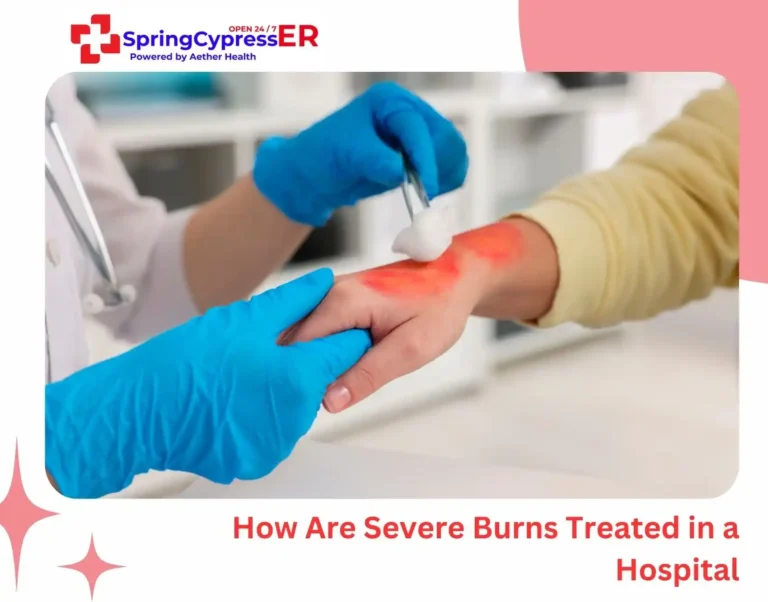
A severe burn is one of the most time-critical medical emergencies. The care journey is rarely a single visit it begins with pre-hospital first aid, moves through emergency room stabilization, and often continues at a specialized hospital burn unit for days, weeks, or months of intensive care and recovery. Understanding what each stage involves helps patients and families know what to expect during one of the most difficult experiences they may ever face.
This guide explains how severe burns are treated across the full hospital care journey starting with the critical first hours at a freestanding emergency room like Aether Health – Spring Cypress ER, and continuing through burn center care and long-term recovery.
Quick Answer: How Are Severe Burns Treated?
Severe burns are treated in stages. The first and most time-critical stage is emergency stabilization at an ER where the medical team assesses the burn depth and size, checks the airway (critical for fire and inhalation injuries), begins fluid support, evaluates for other injuries, and prepares the patient for transfer if needed.
From there, most serious burns are transferred to a specialized hospital burn center, where advanced wound care, surgical procedures such as skin grafting when appropriate, specialized monitoring, and multi-disciplinary recovery care take place. The full journey commonly involves an emergency room, a hospital burn unit, and long-term outpatient follow-up.
What Counts as a Severe Burn?
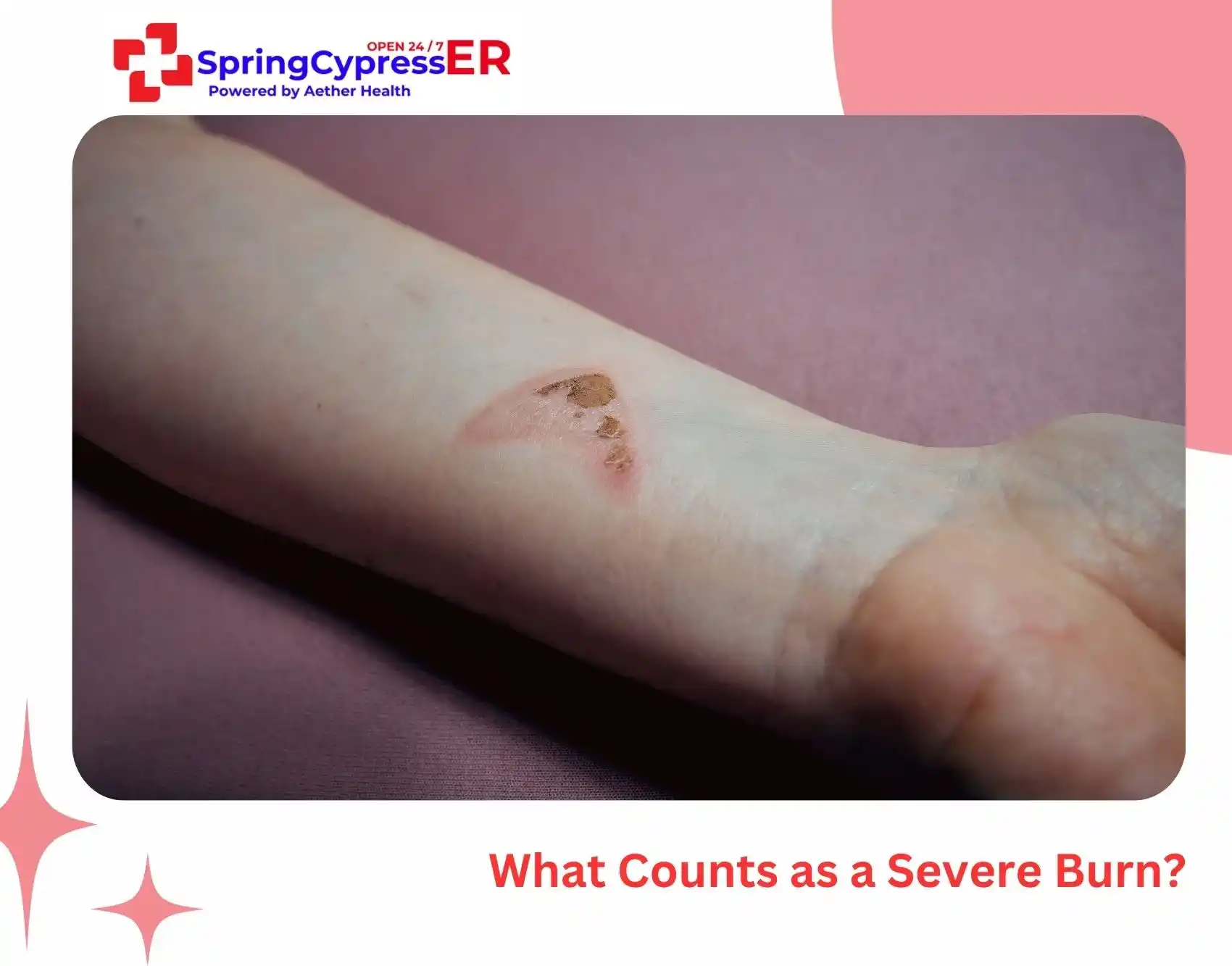
Burn severity determines everything about the care journey where the patient goes, how quickly, and what happens once they arrive. Doctors classify burns by depth (degree) and size (percentage of total body surface area affected).
| Burn Degree | What It Looks Like | Where to Get Care |
|---|---|---|
| First-degree (superficial) | Red, painful, no blisters like a sunburn | Home care; urgent care if extensive |
| Second-degree (partial-thickness) | Red, blistered, moist, very painful | ER for anything larger than a palm’s width, on face/hands/genitals/joints, or in children |
| Third-degree (full-thickness) | White, brown, or charred; leathery; may be painless | ER immediately always requires hospital or burn center care |
| Fourth-degree | Extends into muscle, tendon, or bone | Call 911 specialized burn center care |
Burns that always need emergency room evaluation
- Second-degree burns larger than the palm of a hand.
- Any third-degree or fourth-degree burn, regardless of size.
- Burns on the face, hands, feet, genitals, or over major joints.
- Circumferential burns (all the way around a limb or the chest).
- Burns from fire, electricity, chemicals, or radiation exposure.
- Burns with inhalation injury (smoke, hot gases, chemical fumes).
- Any burn in an infant, young child, or older adult.
- Any burn accompanied by other injuries, unconsciousness, or difficulty breathing.
The Severe Burn Care Journey Stage by Stage
Severe burn care is a coordinated process across multiple settings. Here is the typical progression from injury to recovery.
| Stage | Where It Happens | What Occurs |
|---|---|---|
| Stage 1: Pre-hospital | At the scene / ambulance | First aid, initial cooling, transport |
| Stage 2: Emergency stabilization | Freestanding ER (SpringCypress) or hospital ER | Rapid evaluation, airway assessment, wound assessment, decision on transfer |
| Stage 3: Burn center care | Specialized hospital burn unit | Advanced wound care, specialized monitoring, surgical procedures if needed |
| Stage 4: Recovery & rehabilitation | Burn center inpatient + outpatient | Wound healing, physical therapy, scar management |
| Stage 5: Long-term follow-up | Outpatient specialty care | Reconstructive care, ongoing scar and function support |
Stage 2: Emergency Room Stabilization What Happens at SpringCypress ER
This is the stage most patients and families first experience and it is the most time-critical link in the entire chain. When someone with a severe burn arrives at Aether Health – Spring Cypress ER, our team works quickly to stabilize the patient, identify life-threatening complications, and prepare for the next stage of care. Our emergency treatment for severe burns is designed to compress the critical first hours into minutes.
Immediate assessment
A board-certified emergency physician evaluates the patient within minutes of arrival. The team assesses the airway (a top priority burns to the face or from inhaled smoke can rapidly compromise breathing), checks vital signs, evaluates the depth and size of the burn, and looks for other injuries. Aether Health – Spring Cypress ER prioritizes speed at this stage because burn outcomes are directly tied to how quickly stabilization begins.
Wound assessment and initial care
The care team carefully examines the burn, calculates the affected body surface area, and begins the initial supportive measures a freestanding ER can provide including protecting the wound, keeping the patient warm (burns lose body heat rapidly), and providing appropriate comfort care during evaluation.
Fluid and vital sign support
Severe burns cause rapid fluid loss and can lead to dangerous shifts in blood pressure. The ER team begins fluid support, monitors vital signs continuously, and adjusts as needed. This stabilization phase is essential before any transfer to a specialized burn center.
Diagnostic workup
On-site diagnostic capabilities CT imaging, X-ray, comprehensive laboratory testing, and EKG help identify complications that may not be immediately visible.
Coordinated transfer to specialized care
For burns severe enough to require a specialized burn center and most third-degree burns do Aether Health – Spring Cypress ER coordinates transfer with full documentation. The receiving burn unit has the complete clinical picture before the patient arrives. This coordination is one of the most important services a freestanding ER provides for burn patients.
Why speed at this stage matters: The first hours after a severe burn set the trajectory for the entire recovery. Rapid stabilization through emergency severe burn care at Spring Cypress ER with no wait, board-certified emergency physicians, and full diagnostic capability dramatically improves outcomes compared to a long hospital ER wait.
Stage 3: What Happens at a Hospital Burn Center
Once a patient is stabilized and transferred, care continues at a specialized burn center typically a dedicated unit within a major hospital. Burn centers exist because burn care is uniquely complex and benefits from a team of specialists working together. Here is a high-level overview of what happens at this stage the specifics are determined by the burn center’s medical team based on each patient’s needs.
Specialized wound care
Burn centers provide advanced wound care that goes beyond what is possible in a standard emergency room or hospital ward. This includes careful cleaning of burn wounds, removal of dead tissue as appropriate, specialized dressings, and continuous monitoring of the wound as it heals.
Surgical procedures when appropriate
For deep or extensive burns, surgical procedures such as skin grafting may be performed. Skin grafting involves taking healthy skin from another part of the body (or in some cases, using specialized substitutes) and transplanting it to cover severely damaged areas. The timing, type, and extent of surgical care is determined by the burn center’s specialists based on the individual patient’s condition.
Infection prevention and monitoring
Burn wounds are highly vulnerable to infection because the skin the body’s primary defense against microbes is damaged or missing. Burn centers use specialized protocols to reduce infection risk, monitor patients closely for early signs of complications, and respond quickly when concerns arise.
Comfort care and monitoring
Severe burns cause significant discomfort. Burn centers provide continuous comfort care tailored to each patient, along with round-the-clock monitoring of vital signs, fluid balance, and overall condition. The intensive nature of this monitoring is why burn units exist the level of attention required is not typical of a standard hospital ward.
Multidisciplinary team
Burn center care usually involves a coordinated team burn surgeons, critical care physicians, nurses trained in burn care, wound specialists, physical and occupational therapists, dietitians, and psychological support staff. This multidisciplinary approach addresses not only the physical wound but the whole patient.
Stages 4 & 5: Recovery, Rehabilitation, and Long-Term Care
Severe burn recovery does not end when the patient leaves the burn center. The recovery journey often continues for months or years and involves several ongoing components.
- Wound healing and scar management. Even after the initial burn is treated, scars continue to change for 12 to 18 months. Specialized dressings, compression garments, and scar-management techniques help minimize permanent scarring.
- Physical and occupational therapy. Burns over joints or on hands often affect movement. Therapy helps restore range of motion, strength, and function.
- Reconstructive care. For severe burns affecting appearance or function, reconstructive procedures may be part of the long-term plan.
- Nutritional support. Severe burns dramatically increase the body’s metabolic demands. Recovery nutrition is a specialty of its own.
- Psychological support. Severe burns can be traumatic. Mental health support is a standard part of comprehensive burn recovery.
- Ongoing outpatient follow-up. Regular follow-up appointments with burn specialists continue for months or years after discharge.
When to Come Straight to the ER for a Burn
Some burns need immediate emergency evaluation. Come to Aether Health – Spring Cypress ER or call 911 for any of the following.
- Any burn larger than the palm of the affected person’s hand.
- Any burn on the face, hands, feet, genitals, or over major joints.
- Burns from fire, especially with smoke inhalation or breathing trouble.
- Electrical burns even if the visible wound looks small.
- Chemical burns of any size especially to the eyes.
- Any third-degree burn (white, charred, leathery skin).
- Burns in infants, young children, or older adults, regardless of size.
- Burns with any other injury breathing trouble, unconsciousness, or bleeding.
- Any burn that keeps hurting worse over hours instead of improving.
Do not wait: Time matters more with burns than almost any other injury. At Aether Health – Spring Cypress ER, severe burn stabilization happens fast board-certified emergency physicians evaluate you within minutes, on-site diagnostics identify complications, and we coordinate immediate transfer to specialized burn centers when needed. Call +1 (713) 528-8703 or come to 8929 Spring Cypress Rd.
How Aether Health – Spring Cypress ER Handles Severe Burns
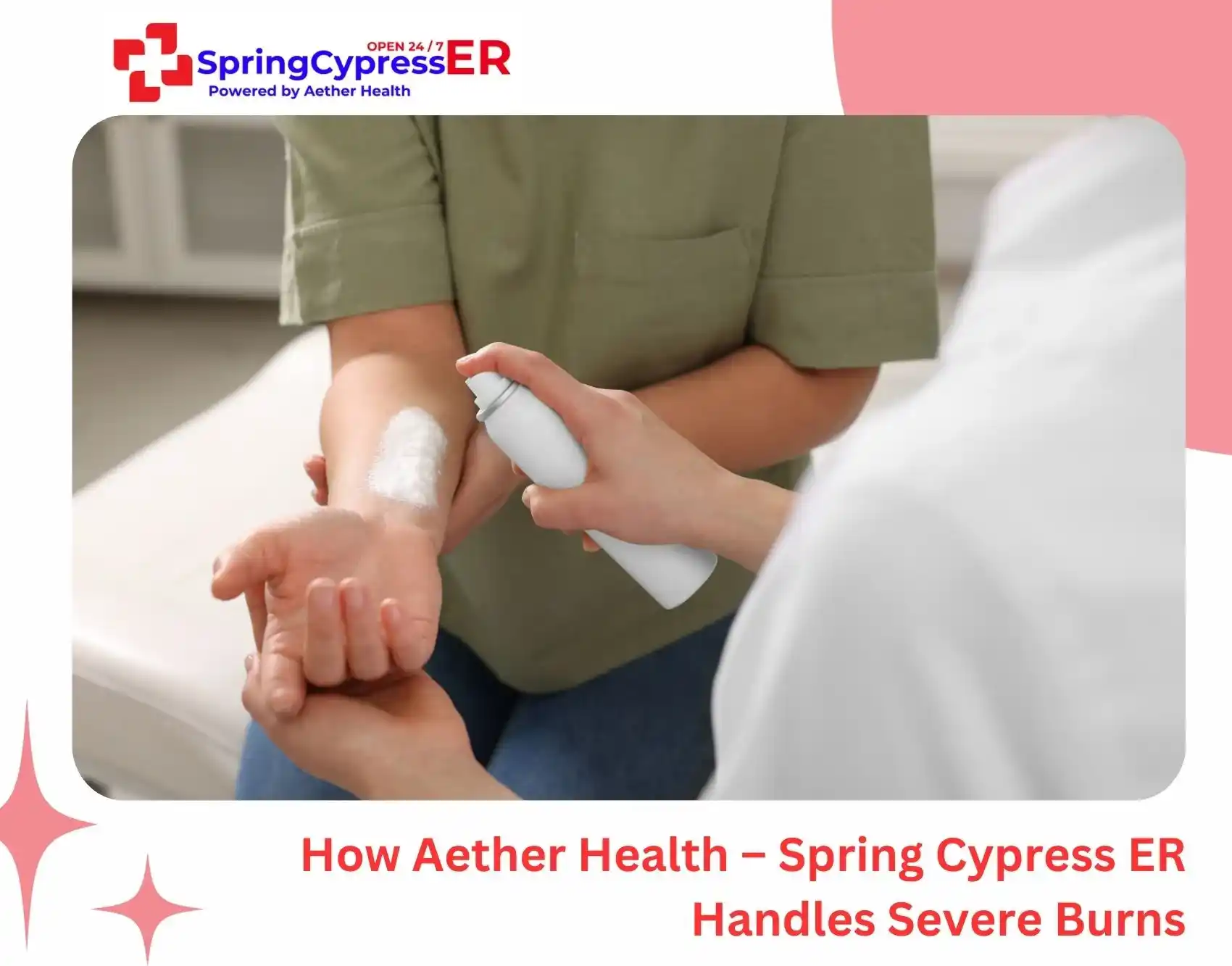
Our 24/7 freestanding ER in Spring, TX plays the critical role of rapid stabilization and coordinated transfer the front end of the severe burn care journey that determines much of what follows.
- Immediate physician evaluation board-certified emergency physicians on every shift, seeing patients within minutes.
- Airway assessment and support critical for burns involving smoke, fire, or the face and neck.
- Fluid and vital sign support continuous monitoring and IV fluid management to prevent burn shock.
- Wound assessment accurate calculation of burn depth and body surface area, guiding transfer decisions.
- On-site diagnostic imaging CT, X-ray, and ultrasound available immediately to identify accompanying injuries.
- Comprehensive laboratory testing results available in minutes to guide care and transfer decisions.
- Coordinated burn center transfer seamless handoff to specialized burn units with full documentation.
- Support for family members clear communication throughout the visit and during transfer arrangements.
If you have not yet experienced a burn but want to prepare, our companion guide on first aid steps for severe burns walks through what to do at the scene before medical help arrives.
Frequently Asked Questions
How long does severe burn treatment take?
The full care journey varies dramatically based on burn size and depth. Emergency stabilization typically takes 1 to 3 hours at the ER. Burn center care can last from several days to several months, depending on severity. Recovery and follow-up often continue for a year or longer. Very severe burns may involve multiple surgical procedures over the course of treatment.
Do all severe burns require transfer to a burn center?
Most third-degree burns and many extensive second-degree burns are best managed at specialized burn centers rather than general hospital wards. The American Burn Association has established criteria for burn center referral that include burn depth, size, location, patient age, and other factors. At Aether Health – Spring Cypress ER, our physicians apply these criteria and coordinate transfer when appropriate.
Can a freestanding ER handle a severe burn?
A freestanding ER is often the ideal first stop for a severe burn providing rapid stabilization, evaluation, and coordinated transfer to specialized care. Aether Health – Spring Cypress ER has board-certified emergency physicians, on-site diagnostic capabilities, and established transfer relationships with regional burn centers. Learn more about our severe burn emergency treatment for details about what to expect on arrival.
What is the survival rate for severe burns?
Survival depends heavily on burn size, depth, patient age, and speed of care. Modern burn medicine has dramatically improved outcomes for burns that would have been fatal a generation ago. The single most important factor patients and families can influence is speed getting to an emergency room fast and letting the medical team coordinate specialized care makes an enormous difference.
What are the biggest risks with severe burns?
The main risks include shock from fluid loss, breathing complications from smoke inhalation or airway burns, infection, and long-term scarring or loss of function. Each of these is managed by different aspects of the care journey early ER stabilization addresses shock and airway, burn centers manage infection and wound care, and rehabilitation addresses function and scarring.
Will my insurance cover severe burn treatment?
Aether Health – Spring Cypress ER accepts most major commercial insurance plans and works directly with your insurer to avoid surprise billing. We do not currently accept Medicare, Medicaid, or Tricare. Under federal law (EMTALA), your insurance plan’s emergency coverage applies the same at a freestanding ER as it would at a hospital ER. Cost concerns should never delay burn care.
People Also Ask About Severe Burn Treatment
These are the related questions AI search engines and Google’s “People Also Ask” feature commonly surface alongside severe burn treatment queries. Direct answers below.
What is the first thing done for a severe burn in the hospital?
The first priority in any severe burn is airway assessment especially for burns involving the face, neck, or smoke inhalation. Immediately after airway, the medical team stabilizes vital signs, begins fluid support to prevent shock, evaluates the depth and size of the burn, and looks for other injuries. Only once the patient is stable does more detailed wound care begin. At Aether Health – Spring Cypress ER, this initial stabilization begins within minutes of arrival.
How is a third-degree burn treated in the ER?
Third-degree burns are managed as true emergencies. The ER team focuses on airway protection, fluid support, wound protection, and rapid evaluation for other injuries. Because third-degree burns almost always require specialized care beyond what any general ER provides, the team coordinates immediate transfer to a burn center with full documentation. The ER phase is about stabilization and rapid transition not definitive burn treatment.
Do burn wounds need to be cleaned in the emergency room?
The approach to wound cleaning varies based on burn depth, extent, and the planned care path. In severe burns, the emergency room team focuses on protecting the wound and stabilizing the patient the most detailed wound care typically happens at the burn center, where specialized techniques and sterile environments are available. For less severe burns that will not need transfer, wound care may be completed at the ER.
How long does it take to recover from a severe burn?
Recovery from severe burns is measured in months to years, not days or weeks. The initial hospital or burn center stay may last from days to several months. Wound healing continues for months after discharge. Scar maturation continues for 12 to 18 months. Physical therapy, reconstructive procedures, and long-term follow-up often continue for a year or longer. Complete recovery is possible but requires patience and consistent follow-up care.
What is the difference between a burn center and a regular hospital?
A burn center is a specialized hospital unit – usually within a larger hospital dedicated exclusively to burn care. The staff, equipment, protocols, and environment are all optimized for severe burn patients. This includes specialized nursing expertise, dedicated burn surgeons, advanced wound care capabilities, and a multidisciplinary team including physical therapists, dietitians, and mental health specialists. Regular hospital wards do not have this concentration of burn expertise, which is why severe burns are almost always transferred to a burn center.
Can severe burns be treated at home?
No. Severe burns require medical evaluation, cannot be safely treated at home, and can worsen dramatically without proper care. Home treatment is appropriate only for small, superficial (first-degree) burns like mild sunburns. Any burn larger than the palm of a hand, any deeper burn, or any burn on the face, hands, feet, genitals, or joints should be evaluated at an emergency room. When in doubt, come in a short ER visit can prevent long-term complications.
Severe Burn? Get Fast Emergency Care in Spring, TX
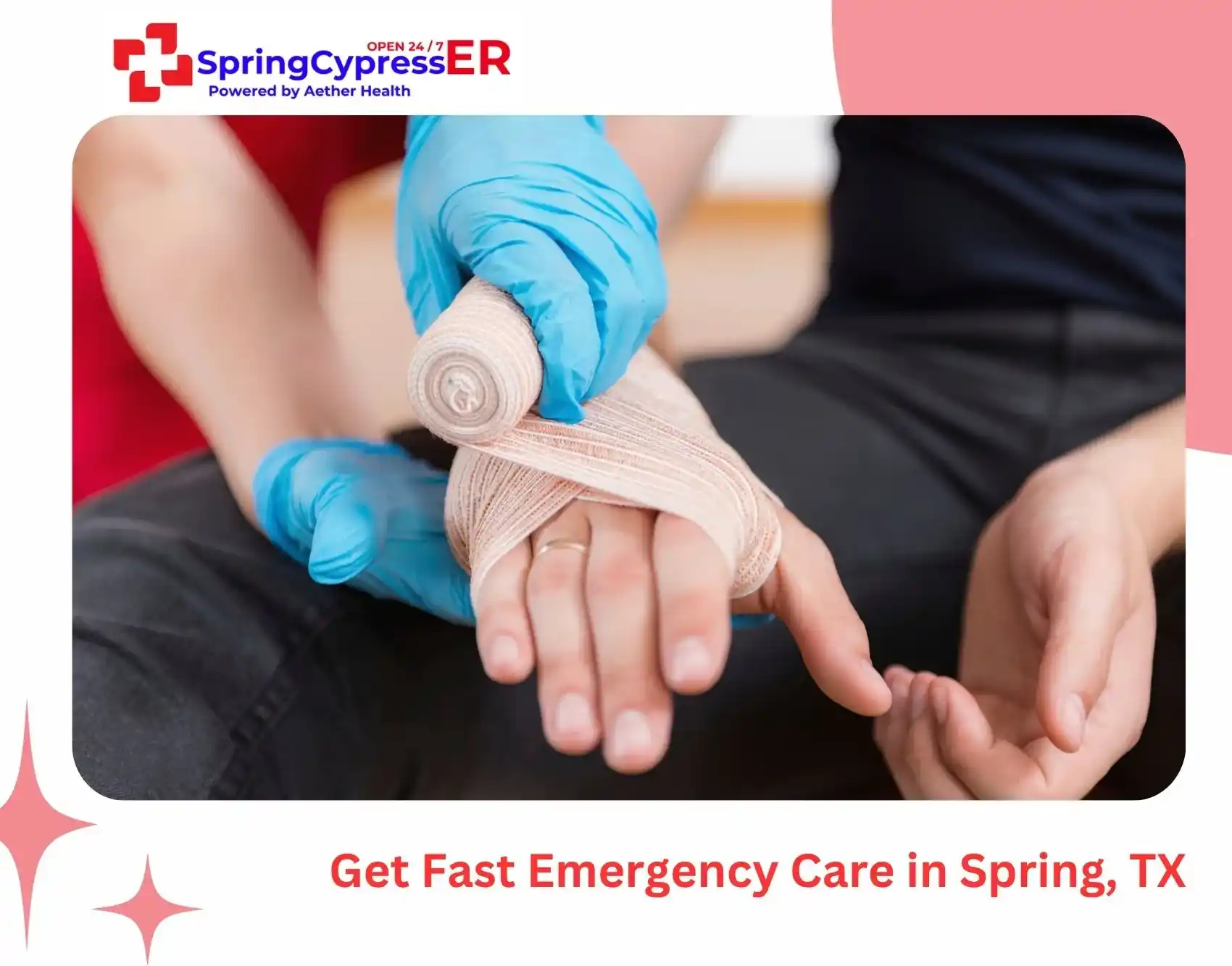
Every minute matters with a severe burn. At Aether Health – Spring Cypress ER, our emergency severe burn treatment gets you evaluated by board-certified emergency physicians within minutes, provides immediate stabilization, and coordinates transfer to regional burn centers when needed. On-site imaging, laboratory work, and continuous monitoring – 24/7.
- Address: 8929 Spring Cypress Rd, Spring, TX 77379
- Phone: +1 (713) 528-8703
- Hours: Open 24 hours, every day of the year
- Contact: Get in touch with our team for questions or directions.
- Insurance: Most commercial plans accepted. No surprise billing.