Reviewed by the emergency care team at Aether Health – Spring Cypress ER | 8929 Spring Cypress Rd, Spring, TX 77379 | +1 (713) 528-8703
CALL 911 NOW: If you or someone near you has sudden weakness on one side, slurred speech, drooping face, severe headache, or loss of vision this could be a stroke caused by a blood clot in the brain. Every minute counts. Call 911 immediately or come to Aether Health – Spring Cypress ER at 8929 Spring Cypress Rd, Spring, TX 77379. We are open 24/7 with on-site CT imaging.
A blood clot in the brain medically known as a cerebral thrombosis or ischemic stroke is one of the most time-sensitive medical emergencies that exists. When a clot blocks blood flow to the brain, neurons start dying within minutes. The good news: modern treatments can dissolve or remove the clot and dramatically reduce permanent damage, but only if treatment begins within a narrow time window.
This guide answers the question: what is the treatment for a blood clot in the brain? It covers every approved treatment option, the critical time windows that determine which one is possible, how to recognize stroke symptoms with the BE FAST method, and what recovery looks like in the weeks and months after. It is written by the emergency care team at Aether Health – Spring Cypress ER for residents of Spring, Klein, Cypress, and surrounding areas.
What Is the Treatment for a Blood Clot in the Brain?
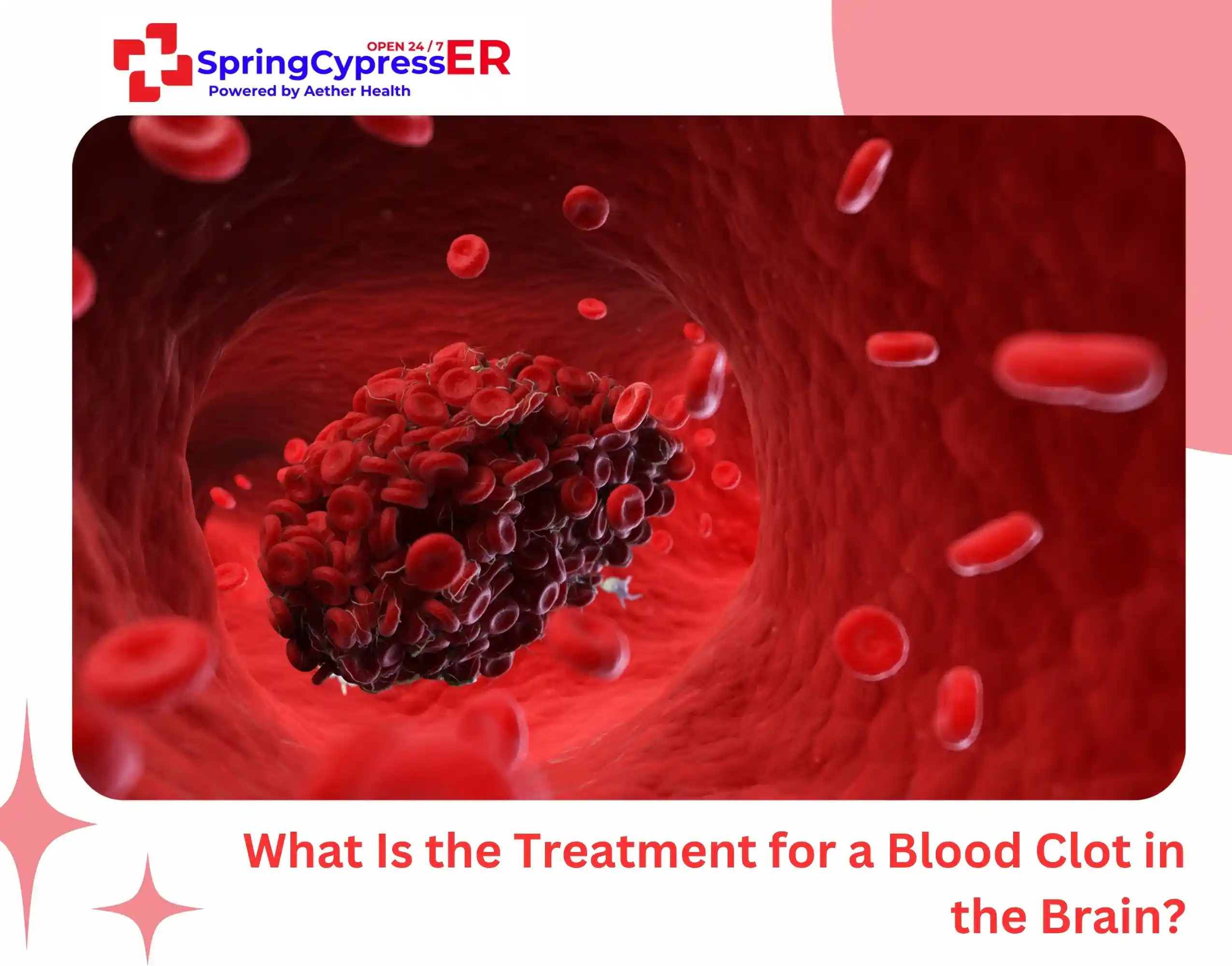
The treatment for a blood clot in the brain depends on how quickly the patient reaches the emergency room. Within 3 to 4.5 hours of symptom onset, IV clot-dissolving medications can break up the clot and restore blood flow. For larger clots, mechanical thrombectomy, a catheter-based procedure that physically removes the clot can be performed up to 24 hours later in select patients. Long-term treatment includes antiplatelet medications (aspirin, clopidogrel), anticoagulants (warfarin, DOACs), blood pressure management, and stroke rehabilitation. Every minute of delay means more brain cells lost call 911 immediately at the first sign of stroke.
Time Is Brain: Why Every Minute Counts
When a blood clot blocks an artery in the brain, the brain tissue downstream of the clot is starved of oxygen. Without treatment, approximately 1.9 million brain cells die every minute. Two million neurons. Every. Minute.
This is why stroke care is measured in minutes, not hours. Patients who receive treatment within the first 90 minutes have dramatically better outcomes than those who arrive later. By the time someone has “slept it off” or “waited to see if it gets better,” the window for the most effective treatments may already be closed.
Do not drive yourself: If you suspect a stroke, call 911. Paramedics can begin assessment in the ambulance, alert the receiving hospital, and shave critical minutes off treatment time. Driving yourself is dangerous and slower.
How to Recognize a Stroke: The BE FAST Method
Most blood clots in the brain cause sudden, recognizable symptoms. The BE FAST acronym is taught to first responders and the public worldwide because it catches roughly 95% of strokes when used correctly.
- B – Balance: sudden loss of balance, coordination, or dizziness.
- E – Eyes: sudden vision changes blurred vision, double vision, or loss of sight in one or both eyes.
- F – Face: ask the person to smile. Does one side of the face droop?
- A – Arms: ask the person to raise both arms. Does one arm drift downward?
- S – Speech: ask the person to repeat a simple sentence. Is the speech slurred or strange?
- T – Time: if any of these signs are present, call 911 immediately. Note the exact time symptoms started this determines which treatments are possible.
Other stroke symptoms to watch for include a sudden severe headache with no known cause, sudden confusion or trouble understanding speech, sudden numbness on one side of the body, and sudden trouble walking. Even if symptoms resolve on their own a so-called “mini-stroke” or transient ischemic attack (TIA) they are a major warning sign that a larger stroke may be imminent. TIAs still require emergency evaluation.
The Main Treatments for a Blood Clot in the Brain
Modern stroke care offers several proven treatments, each suited to a different time window and clot size. Most patients receive a combination of these depending on their specific situation. Medications should only be taken on the practitioner’s advice.
- Clot-Busting Medications (Thrombolytics)
Tissue plasminogen activator (tPA), also known as alteplase, is the first-line treatment for many ischemic strokes when patients arrive within 3 hours of symptom onset (up to 4.5 hours for some patients). It is given as an IV infusion and works by activating the body’s natural clot-dissolving system. A newer alternative, tenecteplase (TNK), works similarly and is becoming the preferred option in many stroke centers.
Clot-busting drugs are powerful but carry a risk of bleeding. They are not appropriate for patients on certain blood thinners, with recent surgery, or with high blood pressure that cannot be quickly controlled. CT imaging is required before administration to rule out a brain bleed because a hemorrhagic stroke requires the opposite treatment.
2. Mechanical Thrombectomy
For larger clots in major brain arteries, mechanical thrombectomy is the most effective treatment. A specialized neurointerventional team threads a catheter through an artery in the groin or wrist up to the brain, then uses a tiny suction device or stent retriever to physically pull the clot out. This procedure can be performed up to 24 hours after symptom onset in carefully selected patients, dramatically extending the treatment window.
Thrombectomy is performed at comprehensive stroke centers. When a patient arrives at our freestanding ER with signs of a large-vessel stroke, we stabilize, image, and coordinate immediate transfer to a hospital equipped for thrombectomy every step parallel-tracked to save minutes.
3. Antiplatelet Medications
They are usually started within 24 to 48 hours of the stroke and continued long-term to lower the risk of recurrence. For many patients, daily low-dose aspirin becomes part of their lifelong stroke prevention plan.
4. Anticoagulants
Stronger blood thinners are used when the stroke is caused by atrial fibrillation, a known clotting disorder, or recurrent strokes. They require careful monitoring to balance stroke prevention against bleeding risk.
5. Blood Pressure Management
Carefully controlling blood pressure protects damaged brain tissue and prevents the clot from worsening. In the first 24 hours, doctors often allow blood pressure to run slightly higher than normal to preserve blood flow around the clot then gradually bring it under tighter control as the patient stabilizes.
6. Surgical Treatments
In severe strokes with significant brain swelling, neurosurgeons may perform a decompressive craniectomy temporarily removing a portion of the skull to give the swollen brain room to expand. This is a last-resort treatment for life-threatening swelling and can be lifesaving in the right patients.
What Happens at Aether Health – Spring Cypress ER for a Suspected Stroke
When a stroke patient arrives at our 24/7 freestanding ER in Spring, TX, every step happens in parallel to save time. This is exactly what our team is trained to do.
- Rapid triage. Stroke patients bypass the waiting room. Our team begins assessment within seconds of arrival.
- CT imaging. An on-site CT scan is performed immediately to confirm the stroke type and rule out brain bleeding. Results are available in minutes.
- Lab work. Blood tests run simultaneously to check clotting function, blood sugar, and kidney function all critical for treatment decisions.
- Neurology consultation. A neurologist is consulted by telemedicine in real time to confirm the diagnosis and guide treatment.
- Time-critical treatment. If the patient is a candidate for tPA or tenecteplase, the medication is given on site.
- Coordinated transfer. For patients who need thrombectomy or comprehensive stroke center care, we coordinate immediate transfer with full documentation with no time lost in handoff.
Why a freestanding ER matters in stroke care: Hospital ERs in Houston often have hours-long wait times. Aether Health – Spring Cypress ER has no wait patients are evaluated immediately. For stroke, those saved minutes translate directly into preserved brain function. Call +1 (713) 528-8703 or come straight to 8929 Spring Cypress Rd.
Stroke Recovery: What to Expect After Treatment
Recovery from a blood clot in the brain depends on the size of the clot, the part of the brain affected, how quickly treatment was given, and the patient’s overall health. Recovery is a long-term process, but most stroke survivors experience meaningful improvement with rehabilitation.
Days 1 to 7: Acute Hospital Care
Close monitoring of brain function, blood pressure, and complications. Swallowing is assessed before food or drink to prevent aspiration. Physical and occupational therapy often begins within 24 to 48 hours.
Weeks 2 to 12: Inpatient or Outpatient Rehabilitation
Structured rehab focuses on relearning skills affected by the stroke walking, speaking, dressing, eating, fine motor control. The first 3 months see the fastest gains because brain plasticity is highest during this window.
Months 3 to 12: Continued Recovery
Improvement continues, often more gradually. Speech therapy, cognitive therapy, and emotional support remain important. Many patients return to work, driving, and full independence during this phase, though some deficits may be permanent.
Long-Term: Prevention of a Second Stroke
Having one stroke significantly increases the risk of having another. Long-term prevention includes daily medications, blood pressure control, diabetes management, smoking cessation, regular exercise, and treating underlying causes like atrial fibrillation or carotid artery disease.
Risk Factors for a Blood Clot in the Brain
Some risk factors for stroke cannot be changed, but most can. Knowing where you stand allows you to take action before a stroke happens.
Non-Modifiable Risk Factors
- Age risk doubles every decade after 55.
- Family history of stroke or heart disease.
- Sex men have slightly higher risk; women have higher mortality.
- Race African Americans and Hispanic Americans face higher stroke rates.
- Prior stroke or TIA.
Modifiable Risk Factors
- High blood pressure the single biggest modifiable risk factor.
- Atrial fibrillation increases stroke risk significantly when untreated.
- High cholesterol.
- Smoking and vaping.
- Obesity and lack of physical activity.
- Heavy alcohol use.
- Sleep apnea.
- Recreational drug use, particularly stimulants.
How to Prevent a Blood Clot in the Brain
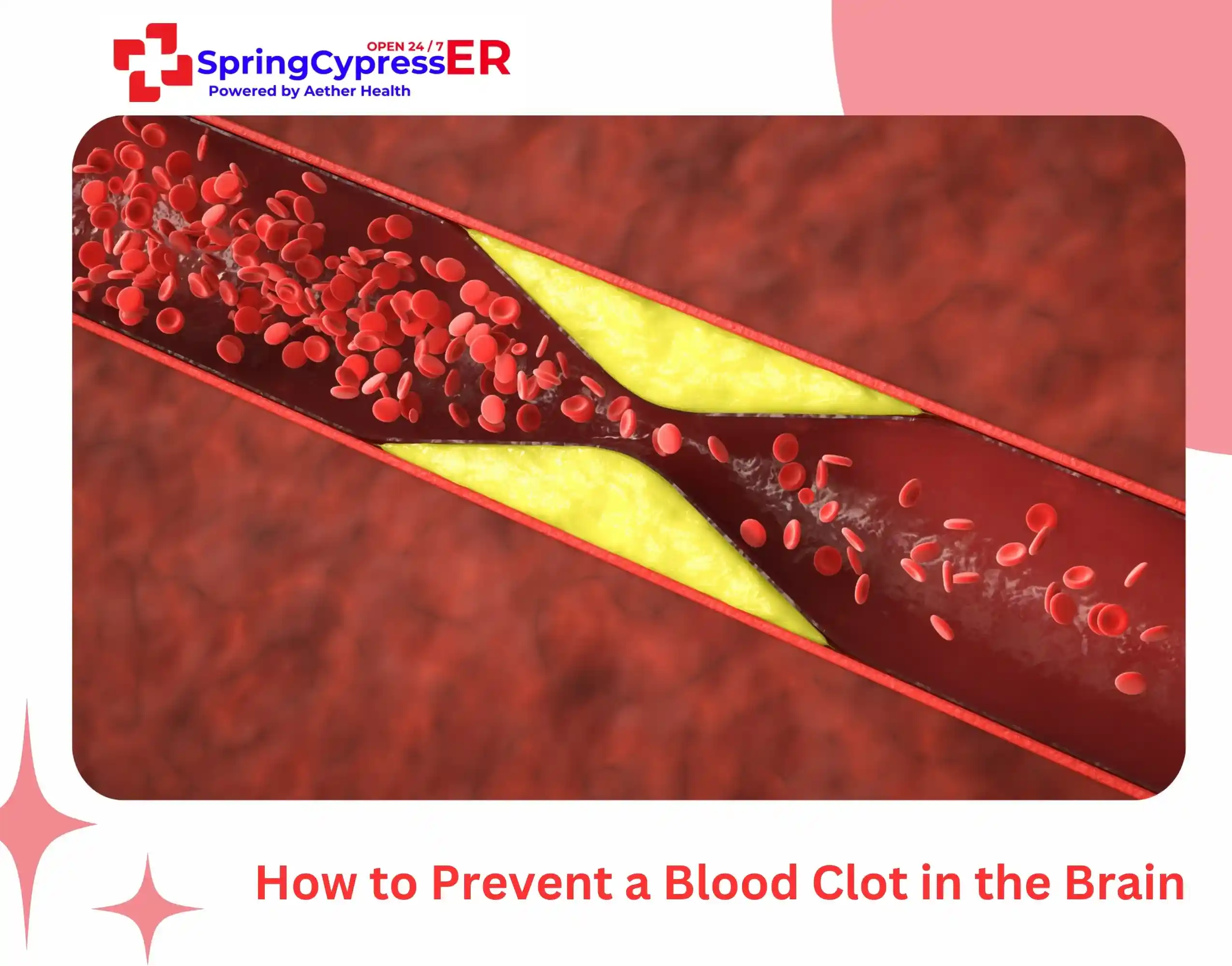
Up to 80% of strokes are preventable with consistent risk-factor management. These steps make the biggest difference.
- Get your blood pressure checked regularly and treated if elevated.
- If you have atrial fibrillation, take prescribed anticoagulants as directed never skip doses.
- Manage diabetes through diet, exercise, and medication.
- Lower cholesterol through lifestyle changes and statin medications if prescribed.
- Quit smoking and avoid secondhand smoke.
- Maintain a healthy weight and exercise at least 150 minutes per week.
- Eat a Mediterranean-style diet vegetables, fruits, whole grains, fish, olive oil.
- Limit alcohol to no more than 1 drink per day for women, 2 for men.
- Get screened and treated for sleep apnea if you snore or wake up tired.
- Treat depression and chronic stress both raise stroke risk.
Frequently Asked Questions
Can a blood clot in the brain go away on its own?
Rarely. The body has natural clot-dissolving systems, but they usually cannot act fast enough to prevent brain damage from a stroke. Waiting to see if symptoms improve almost always results in worse outcomes. Always call 911 at the first sign of stroke.
What’s the difference between a stroke caused by a clot and one caused by bleeding?
An ischemic stroke is caused by a blood clot blocking an artery and accounts for about 87% of strokes. A hemorrhagic stroke is caused by a ruptured blood vessel bleeding into the brain. The treatments are completely different which is why CT imaging is the first step before any stroke medication is given.
How long does it take to recover from a brain blood clot?
Most recovery happens in the first 3 to 6 months, though improvement can continue for years. Some patients recover fully, especially those treated within the first 90 minutes. Others have lasting effects that they learn to adapt to through rehabilitation.
Can young people have a blood clot in the brain?
Yes. Although stroke is more common after age 55, it occurs in young adults too. Causes in younger patients include congenital heart defects, blood clotting disorders, recreational drug use, head or neck injuries, oral contraceptives combined with smoking, and undiagnosed atrial fibrillation. Stroke at any age is an emergency.
Are stroke symptoms different in women?
Women experience the classic BE FAST symptoms, but they may also have less common signs more often than men including sudden fatigue, nausea, hiccups, general weakness, chest pain, and shortness of breath. These atypical symptoms sometimes delay diagnosis. When in doubt, treat any sudden neurological symptom as an emergency.
Will my insurance cover an ER visit for stroke symptoms?
Aether Health – Spring Cypress ER accepts most commercial insurance plans and works directly with your insurer to avoid surprise billing. We do not currently accept Medicare, Medicaid, or Tricare. Insurance concerns should never delay seeking emergency stroke care call 911 or come straight in.
Suspect a Stroke? Get Emergency Care in Spring, TX Now
A blood clot in the brain is one of the most time-sensitive emergencies in medicine. At Aether Health – Spring Cypress ER, on-site CT imaging, lab work, telemedicine neurology, and rapid clot-busting treatment are available 24/7 with no wait and we coordinate immediate transfer to comprehensive stroke centers when thrombectomy is needed.
- Address: 8929 Spring Cypress Rd, Spring, TX 77379
- Phone: +1 (713) 528-8703
- Hours: Open 24 hours, every day of the year
- Emergency: If symptoms are active, call 911 paramedics can begin treatment en route.
Call 911 Now: If any BE FAST symptom is present right now, call 911 do not drive yourself. For non-emergency questions, call us at +1 (713) 528-8703 or visit 8929 Spring Cypress Rd, Spring, TX 77379.