Medically reviewed by the emergency care team at Aether Health – Spring Cypress ER, a freestanding 24/7 emergency room in Spring, TX
| Context first. Nearly everyone experiences extra heart beats. In healthy adults they are usually benign reactions to caffeine, stress, dehydration, or hormone shifts. In a smaller group they signal a treatable underlying issue. This guide helps you tell the difference and know when to come in. |
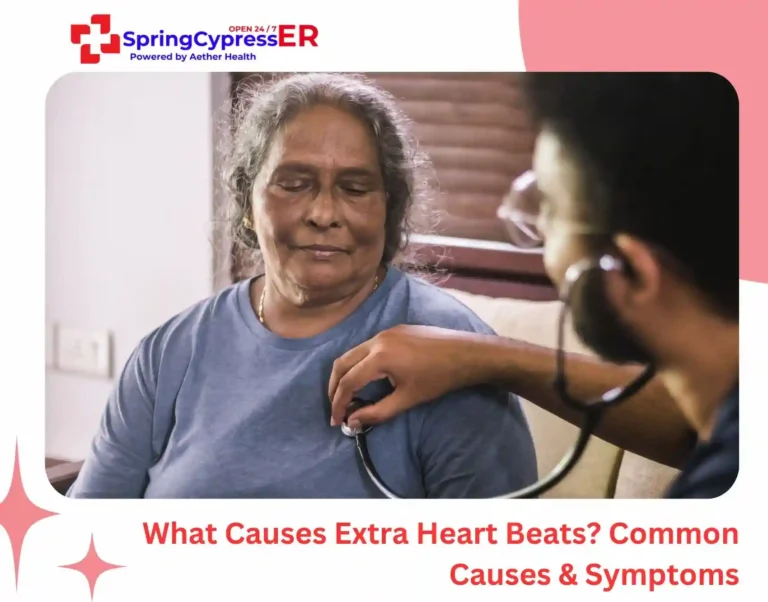
What causes extra heart beats, and should you worry when you feel that quick flutter in your chest? Extra heart beats, known medically as premature atrial or ventricular contractions, are early beats that interrupt the heart’s regular rhythm. They are extremely common. Most are benign reactions to lifestyle triggers, but a small share point to an underlying issue worth evaluating. Knowing the triggers and warning signs helps you decide what to do.
What causes extra heart beats?
Extra heart beats are most often caused by caffeine, stress, dehydration, hormonal shifts, lack of sleep, alcohol, nicotine, and certain medications. According to the American Heart Association guide to premature contractions (PACs and PVCs), up to half of all healthy adults experience them at some point.¹
In a smaller share of cases, extra beats stem from underlying heart conditions, thyroid imbalance, electrolyte abnormalities, or structural changes in the heart. The context in which they appear matters more than their presence.
Types of extra heart beats: PACs vs PVCs
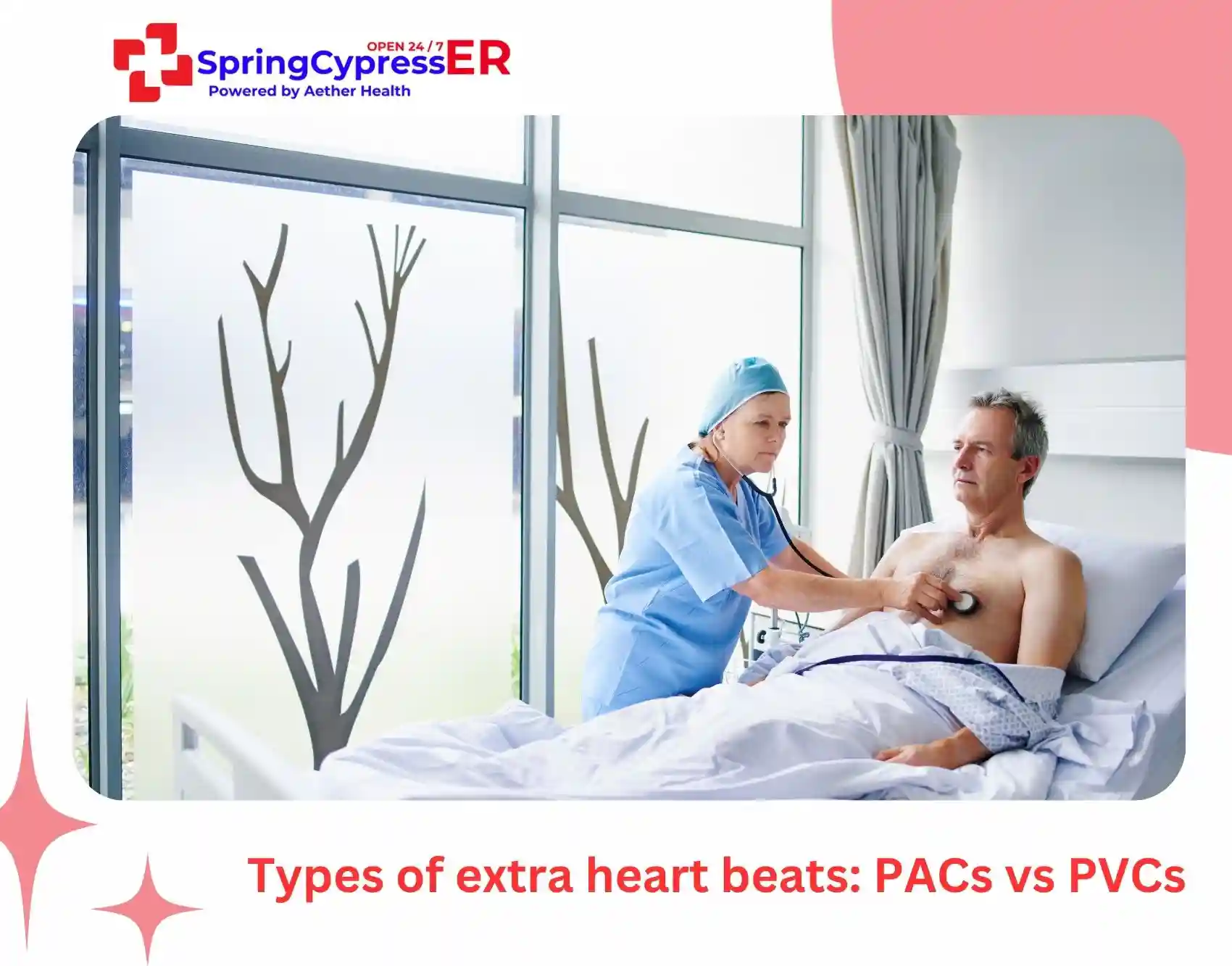
Doctors classify extra heart beats by where in the heart they originate. The two main types are premature atrial contractions (PACs) and premature ventricular contractions (PVCs). Both feel similar from the outside but have different implications.
- Premature atrial contractions (PACs): Extra beats originating in the upper chambers (atria). Common, almost always benign in healthy adults, and often linked to caffeine, stress, or sleep deprivation.
- Premature ventricular contractions (PVCs): Extra beats originating in the lower chambers (ventricles). More commonly felt as a strong thump or skip. Usually benign but can signal underlying heart disease when frequent.
- Bigeminy: A pattern where every other beat is extra. Can feel like a persistent flutter. Deserves evaluation.
- Trigeminy: Every third beat is extra. Similar implications to bigeminy, not a one-off occurrence.
- Couplet or triplet: Two or three extra beats in a row. More likely to be felt and more likely to need investigation.
What extra heart beats actually look like on paper
Here is a visual representation of what happens when an extra beat interrupts your normal rhythm. The regular pattern breaks for a single beat before resuming.
| Normal rhythm | lub-DUB . lub-DUB . lub-DUB . lub-DUB . lub-DUB |
| With extra beat | lub-DUB . lub-DUB-dub! lub-DUB . lub-DUB . lub-DUB |
| You feel | fine . fine . [FLUTTER!] . fine . fine . fine |
The extra beat is usually followed by a brief pause, which is why many people feel the next normal beat as a strong thump.
The 6 most common triggers of extra heart beats
Most extra heart beats trace back to a short list of everyday triggers. At Aether Health – Spring Cypress ER, we see all six of these daily in otherwise healthy adults who come in for a quick EKG and reassurance. Identifying your personal trigger often makes the extra beats stop.
| 01 Caffeine and stimulants
Coffee, energy drinks, and some pre-workout supplements raise sympathetic nervous activity and provoke extra beats within minutes. |
02 Stress and anxiety
Acute stress releases adrenaline, which makes the heart more electrically reactive. Chronic anxiety amplifies palpitation awareness. |
| 03 Dehydration and electrolytes
Low potassium, magnesium, or hydration levels disturb cardiac cell electrical balance and often lead to premature beats. |
04 Hormonal shifts
Thyroid imbalance, menstrual cycle, pregnancy, and menopause all change hormone levels that influence heart rhythm. |
| 05 Lack of sleep
Sleep deprivation raises stress hormones and lowers vagal tone, both of which make the heart more prone to extra beats. |
06 Underlying heart conditions
Coronary artery disease, cardiomyopathy, or valve problems can produce frequent or sustained extra beats and need evaluation. |
When extra heart beats are a reason to come in
Most extra beats are harmless. A few patterns need evaluation. If you have been diagnosed with any cardiac condition or want to understand how long you can live with an irregular heartbeat, that companion guide walks through long-term outlook and treatment approaches.
Use this decision flow to match current symptoms to the right next action.
| STEP 1: Are extra beats happening with chest pain, fainting, or severe shortness of breath? |
| ↓ |
| YES → Call 911 immediately. This may be a serious arrhythmia or heart event. |
| ↓ |
| NO → STEP 2: Are extra beats frequent, lasting hours, or new in someone over 50? |
| ↓ |
| YES → Walk in to the ER today for an EKG and basic labs. |
| ↓ |
| NO → Occasional, brief, no other symptoms? Monitor at home and reduce caffeine, stress, and alcohol. |
What happens at the ER for suspected extra heart beats
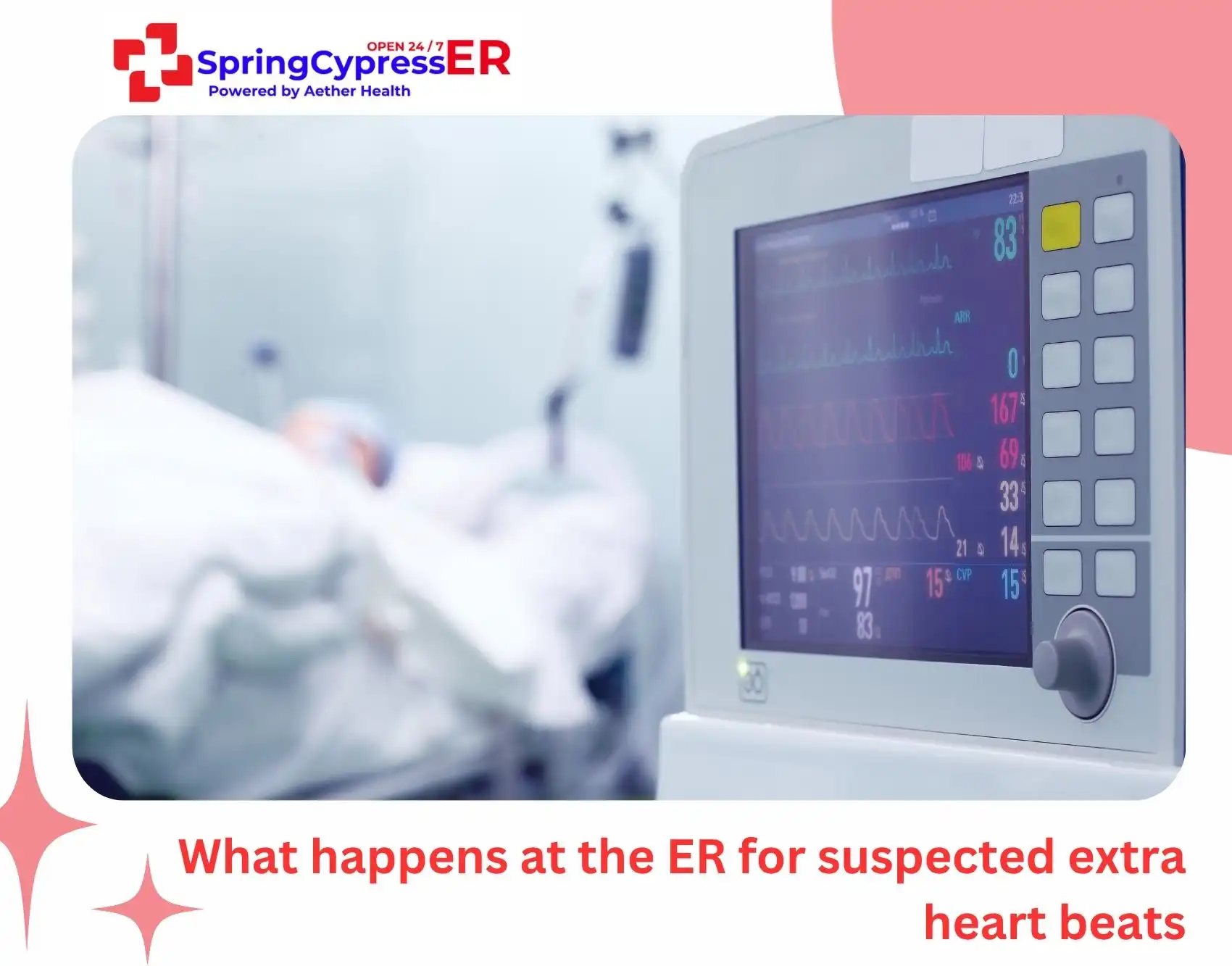
A focused ER evaluation at a freestanding emergency room can rule out serious causes of extra heart beats within one short visit. According to the Mayo Clinic guide to premature ventricular contractions, a basic workup includes an EKG, blood tests to check for electrolyte or thyroid issues, and in some cases a short period of continuous rhythm monitoring.²
- 12-lead EKG: A 10-second snapshot of the heart’s electrical activity. Reveals whether extra beats are PACs, PVCs, or something more concerning.
- Troponin and basic labs: Rules out heart muscle damage, electrolyte imbalance, and thyroid disorders in one blood draw.
- Continuous rhythm monitoring: A short observation period captures intermittent patterns that a single EKG might miss.
- Echocardiogram when indicated: Checks the heart’s structure and pumping function. Used when PVCs are frequent or new.
- Cardiology coordination: For patterns requiring long-term monitoring (Holter monitor, event monitor), we arrange follow-up with cardiology partners.
| WHAT WE DO HERE
Our emergency irregular heartbeat treatment program delivers a 12-lead EKG, cardiac enzyme testing, and continuous rhythm monitoring in a single visit. Board-certified emergency physicians interpret results within minutes, not days. |
Not sure if your palpitations need an ER visit? Message our care team any time. Open 24/7.
Common questions
Q1. How many extra heart beats a day is too many?
Occasional extra beats are normal. Doctors become concerned when PVCs exceed 10 to 20 percent of total daily beats on a Holter monitor. Below that threshold, most adults need no treatment.
Q2. Why do I feel extra heart beats more at night?
Nighttime vagal tone is higher and your body is quieter, so you notice sensations you miss during the day. Lying on your left side also brings the heart closer to the chest wall, making beats feel stronger.
Q3. Can anxiety alone cause extra heart beats?
Yes. Anxiety raises adrenaline and sympathetic nervous activity, both of which trigger premature beats. The relationship runs both ways: anxiety provokes beats, and feeling beats raises anxiety.
Q4. Do extra heart beats mean I will have a heart attack?
No. Occasional PACs and PVCs do not raise heart attack risk in healthy adults. Frequent PVCs in someone with existing heart disease may need treatment, which is why evaluation matters when extra beats become persistent.
Q5. What causes extra heart beats during exercise?
Exercise raises adrenaline and heart rate, which can provoke extra beats. In healthy adults this is benign. If extra beats appear only during exertion and cause dizziness or chest pain, evaluation is warranted.
Palpitations in Spring, TX? Get a same-visit EKG
When extra beats feel frequent, forceful, or come with other symptoms, a quick visit to our freestanding ER tells you whether they are benign or need follow-up. No appointment required. The freestanding ER model means shorter waits and faster answers than a hospital emergency department.
Aether Health – Spring Cypress ER | Freestanding 24/7 Emergency Room
8929 Spring Cypress Rd, Spring, TX 77379 | (713) 528-8703
No appointment. Walk in any time.