Written by the on-site laboratory team at Aether Health – Spring Cypress ER, a freestanding 24/7 emergency room in Spring, TX
What are the common types of blood tests, and which ones will you likely encounter in a lifetime? Each of the common types of blood tests answers a different question about your health. One counts your cells, another checks your kidneys, a third looks at cholesterol. Knowing which is which helps you understand what your provider is ordering, why fasting is required for some but not others, and what a result really means.
What are the common types of blood tests?
So what are the common types of blood tests you are likely to see on a lab requisition? The list includes the complete blood count (CBC), basic and full metabolic panels, lipid panel, blood glucose, hemoglobin A1C, thyroid function panel, and coagulation studies. Each targets a specific body system. According to MedlinePlus guidance on blood testing, these panels form the backbone of routine and diagnostic lab work in the United States.¹
Some are ordered as part of an annual physical. Others show up when a specific concern needs investigating: fatigue, chest pain, unexplained bruising, or a suspected infection. Each test uses only a small sample of blood, often drawn during a single visit.
Overview: 7 common types of blood tests at a glance
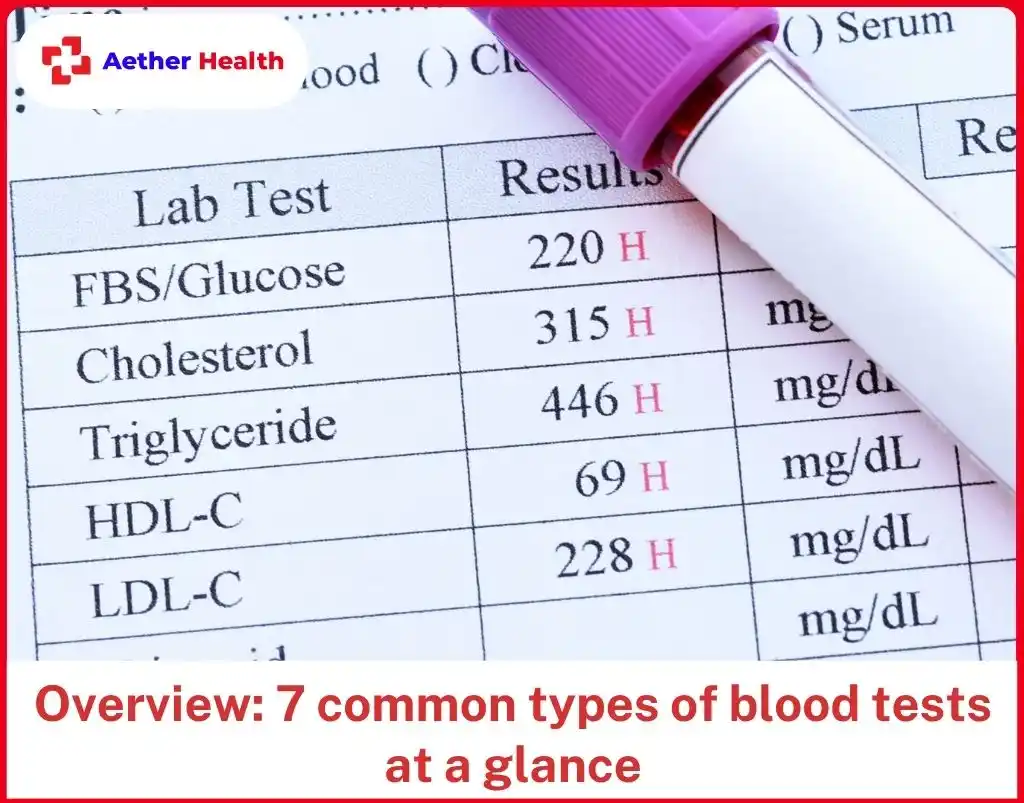
Use this table as your quick reference. Detailed breakdowns of each test follow below, including a spec bar for each showing what it measures, whether fasting is needed, and how it is used.
| Blood Test | What It Checks | Fasting? |
|---|---|---|
| CBC | Red cells, white cells, platelets, hemoglobin | No |
| BMP / CMP | Glucose, electrolytes, kidney function, liver enzymes (CMP) | Usually yes |
| Lipid Panel | Total cholesterol, LDL, HDL, triglycerides | Yes (9-12h) |
| Blood Glucose | Current blood sugar level | Yes |
| Hemoglobin A1C | 3-month average blood sugar | No |
| Thyroid Panel | TSH, T3, T4 thyroid hormone levels | No |
| Coagulation | Blood clotting time (PT, PTT, INR) | No |
1. Complete Blood Count (CBC)
| What it measures: Red cells, white cells, platelets, hemoglobin, hematocrit | Fasting: Not required | Common uses: Anemia, infection, clotting disorders, general health |
The complete blood count is the workhorse of blood testing. It quantifies each cell type circulating in your blood and often signals problems before symptoms appear. Doctors order it during routine physicals, before surgery, and when unexplained fatigue, bruising, or fever is present.
What abnormal CBC results may point to:
- Low red cells or hemoglobin: anemia, iron deficiency, blood loss
- High white cells: bacterial or viral infection, inflammation, immune response
- Low platelets: bleeding or clotting disorders, medication side effects
- High platelets: inflammation, marrow disorders
2. Metabolic Panels (BMP and CMP)
| What it measures: Glucose, electrolytes, kidney function, liver enzymes (CMP only) | Fasting: Usually 8-12 hours | Common uses: Kidney and liver health, diabetes, electrolyte balance |
Metabolic panels come in two forms. The basic panel (BMP) measures 8 markers including glucose, calcium, and kidney function. The full panel (CMP) adds liver enzymes and protein markers, for 14 measurements total.
Common uses:
- Kidney function: Creatinine and BUN show how well kidneys filter waste from blood.
- Liver function (CMP): ALT, AST, bilirubin, and albumin reveal liver inflammation or damage.
- Electrolyte balance: Sodium, potassium, and chloride levels affect heart rhythm and hydration.
- Blood sugar: Fasting glucose can screen for diabetes when combined with A1C.
3. Lipid Panel (Cholesterol Test)
| What it measures: Total cholesterol, LDL, HDL, triglycerides | Fasting: 9-12 hours required | Common uses: Heart disease risk, stroke risk assessment |
The lipid panel measures cholesterol fractions and triglycerides. It gives providers a strong signal of cardiovascular risk long before symptoms show up. Most healthy adults get one every 4 to 6 years, more often if risk factors are present.
What each number means:
- Total cholesterol: Below 200 mg/dL is generally desirable.
- LDL (bad cholesterol): Lower is better. High LDL narrows arteries over time.
- HDL (good cholesterol): Higher is better. HDL helps clear excess cholesterol.
- Triglycerides: Below 150 mg/dL is desirable. High levels raise heart disease risk.
4. Blood Glucose and Hemoglobin A1C
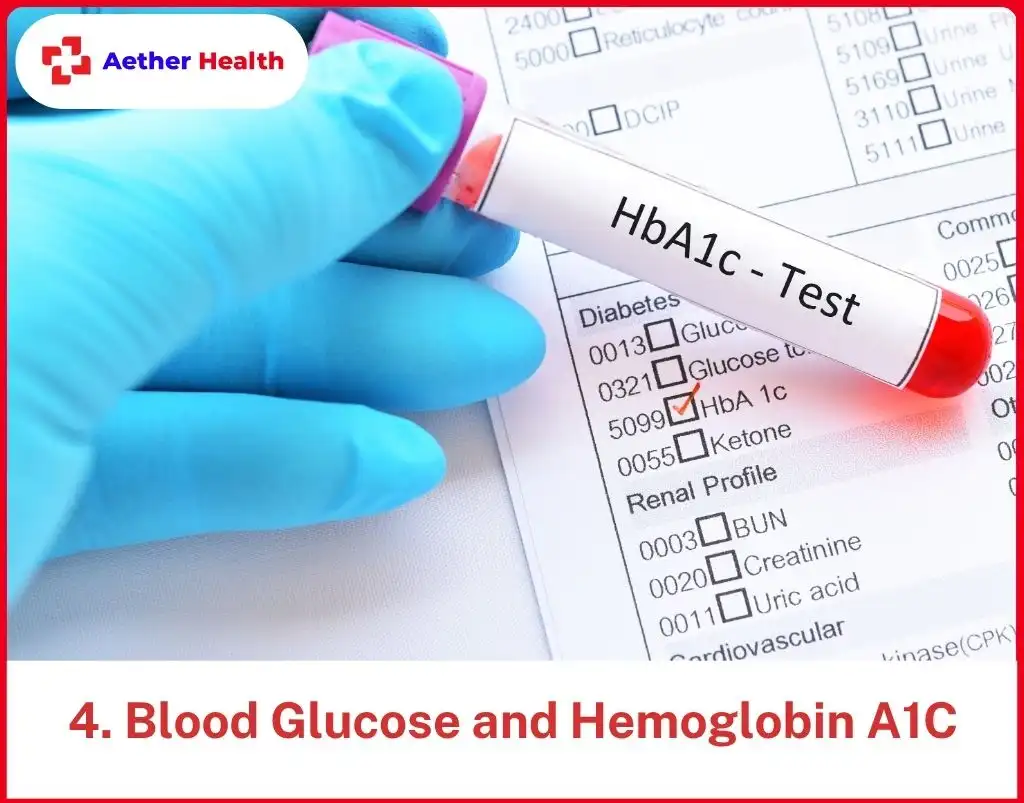
| What it measures: Fasting glucose (snapshot) or A1C (3-month average) | Fasting: Glucose: yes | A1C: no | Common uses: Diabetes screening, prediabetes, blood sugar control |
A fasting glucose test shows your blood sugar at a single moment. Hemoglobin A1C reflects your average blood sugar over the past 2 to 3 months by measuring how much sugar has attached to red blood cells. The CDC A1C test guide describes both as standard tools for diagnosing diabetes and prediabetes.²
Typical result ranges:
- A1C below 5.7%: normal
- A1C 5.7% to 6.4%: prediabetes
- A1C 6.5% or above: diabetes
- Fasting glucose 100-125 mg/dL: prediabetes
- Fasting glucose 126 mg/dL or above: diabetes
5. Thyroid Function Panel
| What it measures: TSH, free T3, free T4 hormone levels | Fasting: Not required | Common uses: Underactive or overactive thyroid, fatigue, weight changes |
A thyroid panel checks whether your thyroid gland is producing the right amount of hormone. Since thyroid hormone controls metabolism, imbalances cause fatigue, weight changes, mood shifts, hair loss, and temperature intolerance. TSH is usually the first test ordered.
What the results suggest:
- High TSH: Underactive thyroid (hypothyroidism). Body is asking for more hormone.
- Low TSH: Overactive thyroid (hyperthyroidism). Body already has too much hormone.
- Free T4 and T3: Confirm the diagnosis and gauge severity.
6. Coagulation Studies (PT, PTT, INR)
| What it measures: Blood clotting time | Fasting: Not required | Common uses: Before surgery, monitoring blood thinners, bleeding disorders |
Coagulation studies measure how quickly your blood forms clots. They matter before any surgery, during blood thinner therapy, and when unexplained bleeding or bruising appears. The three most common values are PT (prothrombin time), PTT (partial thromboplastin time), and INR (a standardized version of PT).
How a freestanding ER runs blood tests fast
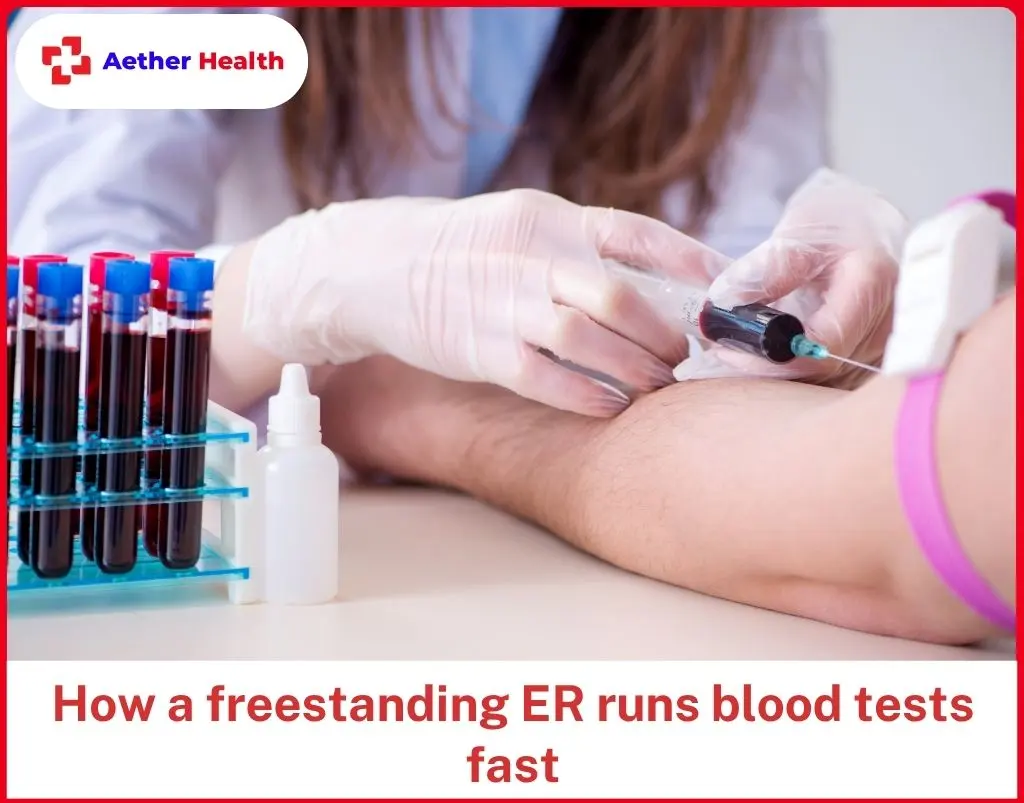
Once you understand what are the common types of blood tests, the next question is where to get them run quickly. Aether Health – Spring Cypress ER is a freestanding emergency room with a COLA-certified on-site laboratory that runs the full slate during the same visit. Results are ready within 30 to 60 minutes for most panels, not the 2 to 3 days typical of outpatient labs.
What this means for you:
- Same-visit results for CBC, metabolic panels, glucose, A1C, and coagulation
- Board-certified emergency physicians reviewing results in real time
- On-site imaging paired with lab work when a fuller picture is needed
- Walk-in access 24 hours a day, no appointment
- Direct coordination with your primary care provider for follow-up
For a look at how our lab turnaround compares to hospital and outpatient options, see our companion post on emergency lab and imaging services.
Common questions
▸ Which blood tests need fasting?
Lipid panels, fasting glucose, and most metabolic panels require 8 to 12 hours without food. CBC, A1C, thyroid, and coagulation studies do not. When unsure, ask the ordering office before your appointment.
▸ What are the common types of blood tests done in an emergency setting?
In an ER, common types of blood tests include CBC, metabolic panel, cardiac markers, lactate, and coagulation studies. These help identify infection, organ function, blood loss, and heart or clotting problems within minutes.
▸ How quickly do blood test results come back?
At a freestanding ER with an on-site lab, most common panels finish in 30 to 60 minutes. At outpatient labs, results usually take 1 to 3 business days depending on the test and lab volume.
▸ Are any blood tests painful?
Most people describe a brief pinch during the needle stick. The draw itself takes 3 to 5 minutes. Bruising is possible but small, and soreness at the site usually resolves within a day or two.
▸ Can a single blood test diagnose a specific disease?
Sometimes yes, sometimes no. A1C can diagnose diabetes on its own. Other conditions like anemia or thyroid disease may need confirmatory testing. Your provider interprets results in context with symptoms and history.
Need blood work fast? Walk in for same-visit lab results in Spring, TX
When symptoms cannot wait for a 3-day outpatient turnaround, a freestanding ER with an on-site lab is the fastest path from question to answer. Aether Health – Spring Cypress ER runs the full range of blood panels 24 hours a day with results in minutes. Board-certified physicians. No appointment.
Questions about a specific test or what to expect? Contact our care team any time.
Aether Health – Spring Cypress ER | Freestanding 24/7 Emergency Room
8929 Spring Cypress Rd, Spring, TX 77379 | (713) 528-8703
No appointment. Walk in any time.
External references links :
1.MedlinePlus guidance on blood testing
2.CDC A1C test guide