Medically reviewed by the emergency care team at Aether Health – Spring Cypress ER, a freestanding 24/7 emergency room in Spring, TX
| First things first. Most salmonella infections resolve on their own in 4 to 7 days with rest and plenty of fluids. The main job of treatment is to prevent dehydration while your immune system clears the bacteria. Severe cases, high-risk patients, and persistent symptoms need medical care. |
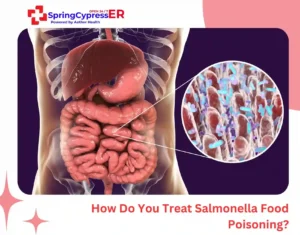
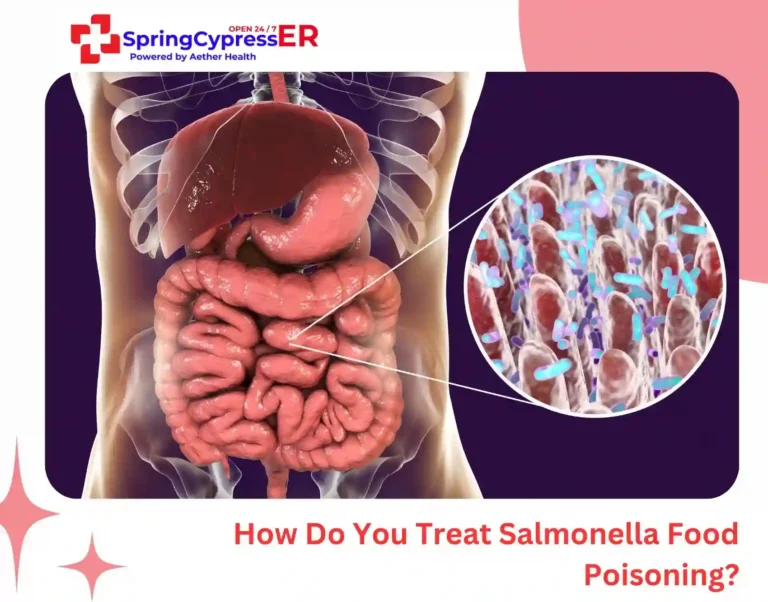
How do you treat salmonella food poisoning when you suddenly feel the cramps, chills, and the long walk to the bathroom? The answer is almost always a combination of hydration, rest, and patience, because the body clears most salmonella infections without medication. Antibiotics are reserved for severe cases or high-risk patients. Knowing the right fluids, the right pace, and when to come to the ER is what turns a hard week into a shorter one.
How do you treat salmonella food poisoning at home?
Most salmonella food poisoning is treated at home with plenty of fluids, rest, and gradual reintroduction of bland foods. The CDC guide to salmonella symptoms explains that most adults recover within 4 to 7 days without antibiotics. Treatment is about preventing dehydration while your immune system does the work.¹
Antibiotics are not routine. They are reserved for severe illness, infants, older adults, pregnant patients, and anyone with a weakened immune system. For healthy adults, taking antibiotics unnecessarily can actually prolong the time you carry the bacteria.
Step 1: Hydration schedule (the single most important treatment)
Dehydration is what sends most salmonella patients to the ER. Preventing it is the whole first-line treatment. Match your intake to how your symptoms are moving using the schedule below. Oral rehydration solutions are more effective than plain water because they also replace electrolytes.
| Time Window | What to Drink | How Much |
|---|---|---|
| First 4 hours | Small sips of water or oral rehydration solution | 1 to 2 tablespoons every 10 minutes if vomiting; a half cup every 15 minutes if not |
| Hours 4 to 12 | Oral rehydration solution, clear broth, diluted apple juice | 1 cup per hour, more if diarrhea is heavy |
| Day 2 onward | Water, broth, electrolyte drinks, weak tea | Enough to keep urine light yellow and feel steady on your feet |
| Recovery | Normal fluids plus foods like bananas, rice, toast, broth | Resume normal intake once vomiting stops and appetite returns |
Signs you are winning: urine stays light yellow, mouth stops feeling dry, you can stand up without feeling dizzy. Signs you are losing ground: dark urine, cracked lips, racing heart, confusion, no urination for 8 hours or more.
What a typical salmonella recovery timeline looks like
Salmonella follows a fairly predictable pattern. The timeline below sets expectations for each phase of recovery and helps you spot when symptoms are not following the usual curve.
| DAY 1-2 | Symptom peak. Diarrhea, cramping, fever, nausea, sometimes vomiting. Focus is sip-by-sip hydration and rest. |
| DAY 2-3 | Fever may begin to ease. Diarrhea often remains frequent. Keep taking fluids and small bland bites when appetite allows. |
| DAY 3-5 | Stools begin to firm. Energy still low. Return to the BRAT diet (bananas, rice, applesauce, toast) and avoid dairy and fatty foods. |
| DAY 5-7 | Most adults feel noticeably better. Appetite returns. Normal foods can resume slowly. |
| WEEK 2+ | Residual loose stools can linger up to 2 weeks. Any new fever, bloody stool, or worsening dehydration at this point needs evaluation. |
Step 2: What to eat as you recover
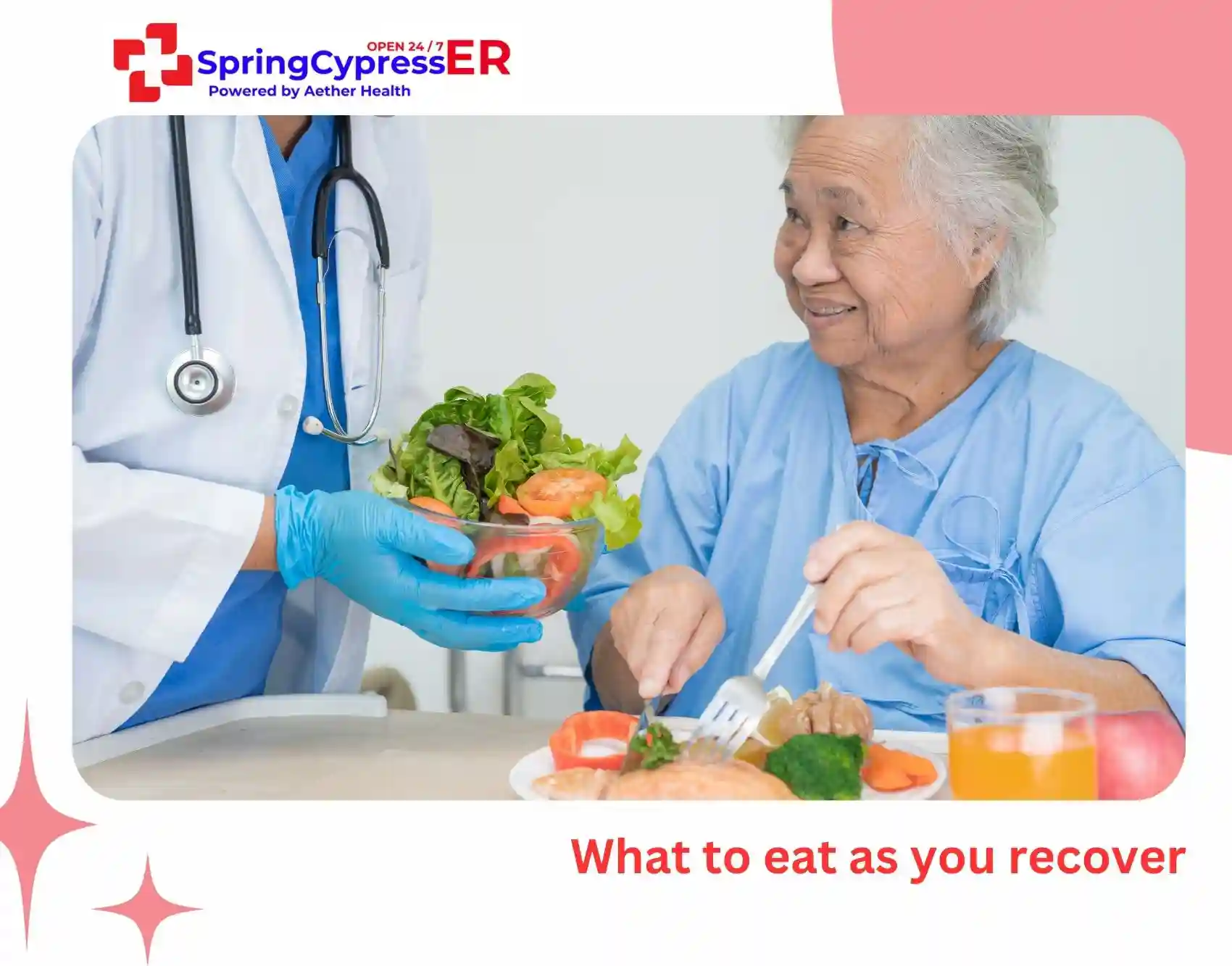
Once vomiting stops and clear fluids are staying down, climb this food ladder one rung at a time. If you tolerate the current rung for 4 to 6 hours, step up. If you have symptoms again, step back. For patients who are not recovering as expected, Aether Health – Spring Cypress ER provides IV rehydration and lab testing in a single short visit.
| RUNG 1 | Clear fluids: water, oral rehydration solution, clear broth, weak tea. |
| RUNG 2 | Bland starches: plain toast, saltines, white rice, boiled potato (no butter). |
| RUNG 3 | BRAT additions: bananas, applesauce, and more complex grains like oatmeal. |
| RUNG 4 | Low-fat proteins: baked chicken, scrambled egg, baked fish. |
| RUNG 5 | Normal diet: resume dairy, raw produce, and fatty foods last. |
Foods to avoid during recovery: dairy products (especially in the first 48 hours), caffeine, alcohol, fatty or fried foods, spicy foods, raw fruits and vegetables, and sugary drinks. Each of these can worsen diarrhea or stomach irritation.
When salmonella food poisoning needs medical care
Certain symptoms turn salmonella from a stay-at-home illness into one that needs same-day evaluation. The food poisoning symptoms you should never ignore cover a broader set of warning signs that apply across foodborne illnesses, including salmonella.
Come to the ER for any of the following:
- Blood in your stool or vomit
- Fever above 102°F that will not come down
- Signs of severe dehydration (little or no urine, extreme thirst, confusion)
- Diarrhea lasting more than 3 days without any improvement
- Severe abdominal pain that is sharp, constant, or localized
- Vomiting that will not stop and prevents you from keeping any fluids down
- Weakness or lightheadedness strong enough to make standing difficult
- Any of the above in a child under 5, adult over 65, or anyone with a weakened immune system
Who is at highest risk from salmonella food poisoning
Most healthy adults recover without complications. The FoodSafety.gov guide to bacteria and viruses lists the groups who face a much higher risk of severe illness. If you fall into one of these categories, do not watch and wait. Learning how fast food poisoning starts helps high-risk patients recognize symptoms early and seek care before dehydration takes hold.²
- Children under 5: Smaller fluid reserves make dehydration dangerous much faster. Watch for fewer wet diapers, dry mouth, and no tears when crying.
- Adults over 65: Reduced thirst response and often other medical conditions. Salmonella can lead to bloodstream infection in this group.
- Pregnant patients: Salmonella can cross to the baby and raise the risk of complications. Always evaluate promptly.
- Immunocompromised: Chemotherapy patients, organ transplant recipients, HIV, long-term steroid use, and some autoimmune conditions all raise the risk of severe illness.
- People with chronic health conditions: Diabetes, kidney disease, and inflammatory bowel disease make hydration and recovery harder.
How a freestanding ER handles salmonella food poisoning
Our freestanding ER is set up to treat salmonella and other foodborne illness quickly and completely in a single visit. There is no waiting room triage behind trauma, no multi-hour admission queue.
- Rapid assessment: A board-certified emergency physician sees you within minutes to gauge dehydration and overall severity.
- IV fluid rehydration: The fastest way to restore hydration. Most patients feel noticeably better before the first bag is finished.
- Lab testing: Stool studies, blood work, and electrolyte panels on-site. Results in minutes, not days.
- Symptom management: Comfort measures to settle nausea and cramping while rehydration takes effect.
- Follow-up coordination: For high-risk patients or anyone needing extended care, we coordinate directly with primary care or hospital admission.
| Not sure if you need to come in? Call or message our team. We help you decide, 24/7. |
Common questions
Q1. How long does salmonella food poisoning last?
Most healthy adults recover in 4 to 7 days. Mild loose stools can linger up to 2 weeks. Severe cases or those with complications may take longer and require medical care.
Q2. Do I need antibiotics for salmonella?
Usually no. Antibiotics are reserved for severe illness, infants, older adults, pregnant patients, and immunocompromised people. In healthy adults, unnecessary antibiotics can actually prolong how long you carry the bacteria.
Q3. Is salmonella contagious person to person?
Yes, through unwashed hands after bathroom use. Wash hands thoroughly with soap and water, especially before handling food, and do not prepare food for others until symptoms have resolved for at least 48 hours.
Q4. Can anti-diarrhea medicine help?
Over-the-counter anti-diarrhea medicines are not recommended for salmonella in most cases. They can slow the body’s ability to clear the bacteria. Ask a doctor before using them, especially if there is bloody diarrhea or fever.
Q5. What are the signs that salmonella became more serious?
Bloody stool, high fever that will not break, severe abdominal pain, dizziness or fainting, racing heart, no urination for over 8 hours, or symptoms lasting beyond 7 days all signal that evaluation is needed.
Severe food poisoning in Spring, TX? Walk in for IV fluids
When salmonella food poisoning stops responding to home care, the fastest way to feel better is IV rehydration. Our freestanding ER opens its doors 24 hours a day with no appointment required. Most patients feel significantly better before leaving.
Aether Health – Spring Cypress ER | Freestanding 24/7 Emergency Room
8929 Spring Cypress Rd, Spring, TX 77379 | (713) 528-8703
No appointment. Walk in any time.