
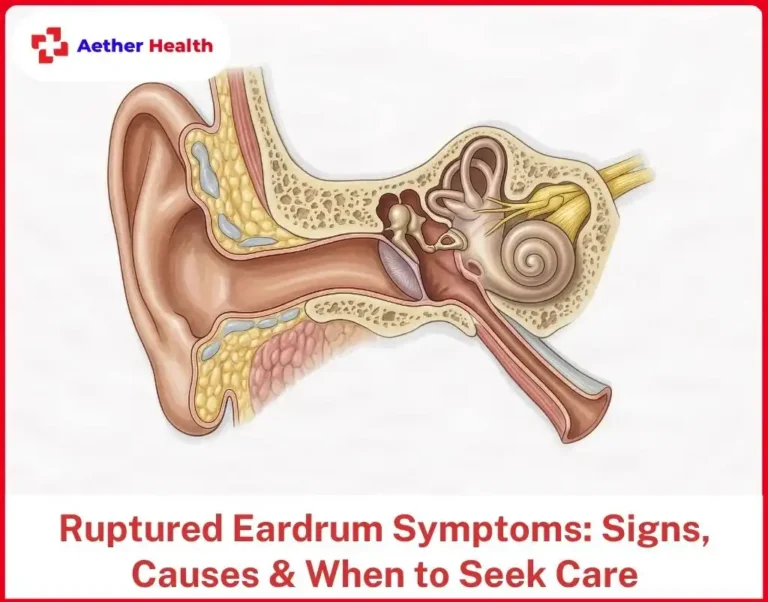
Medically reviewed by the emergency care team at Aether Health – Spring Cypress ER, a freestanding 24/7 emergency room in Spring, TX
| Clinical note. Most ruptured eardrums heal on their own within a few weeks. A small share, especially those involving injury, sudden hearing loss, or severe dizziness, need same-day evaluation. Aether Health – Spring Cypress ER is a freestanding emergency room open 24 hours a day at 8929 Spring Cypress Rd. Call (713) 528-8703. |
The symptoms of a ruptured eardrum can arrive fast and feel dramatic. Sudden sharp pain that then eases, muffled hearing, fluid from the ear, ringing, and a spinning sensation are all possible signs that the thin tissue separating your outer ear from your middle ear has torn. Most heal without surgery. A few need urgent evaluation.
What are the symptoms of a ruptured eardrum?
The symptoms of a ruptured eardrum typically include sudden sharp ear pain that may ease quickly, drainage from the ear (clear fluid, pus, or blood), noticeable hearing loss on the affected side, ringing or buzzing (tinnitus), and spinning dizziness (vertigo). According to Mayo Clinic guidance on ruptured eardrum, these symptoms usually appear together after a triggering event such as an ear infection, loud noise, injury, or rapid pressure change.¹
Not everyone experiences every sign. Some people notice only sudden hearing changes with no pain. Others have severe pain but no drainage. Recognizing the full range makes it easier to decide whether you need same-day evaluation.
The 7 core symptoms of a ruptured eardrum
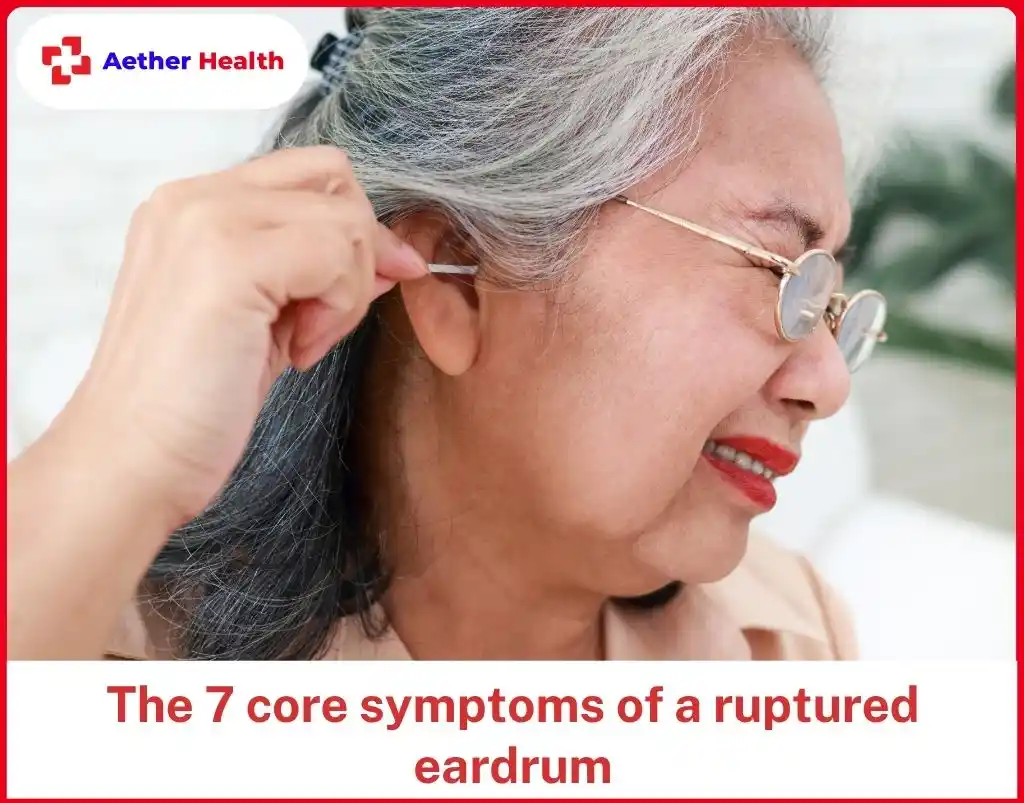
Here are the seven symptoms doctors look for when evaluating a suspected ruptured eardrum. The presence of even one after a triggering event warrants prompt evaluation.
- Sudden sharp ear pain that eases fast. The pain often peaks at the moment of rupture and then decreases noticeably as pressure releases. This paradoxical relief can trick people into thinking the problem has resolved.
- Drainage from the ear canal. Clear fluid, cloudy pus, or blood-tinged discharge coming from the ear is one of the strongest signs. The type of fluid can hint at the cause: pus points to infection, blood to injury.
- Hearing loss on the affected side. Sound feels muffled, distant, or plugged. Speech may sound as if it is coming through a wall. Most rupture-related hearing loss is temporary but may last weeks.
- Ringing or buzzing (tinnitus). A high-pitched ring, whoosh, or hum that was not there before. Tinnitus after an eardrum rupture usually improves as the membrane heals.
- Vertigo or dizziness. A spinning sensation, loss of balance, or brief nausea can happen when the rupture disturbs middle or inner ear structures.
- A feeling of pressure or fullness. Some people describe the ear as feeling blocked, plugged, or full even after the initial pain fades. This often accompanies the muffled hearing.
- Facial weakness (rare). When the injury or infection reaches nearby facial nerves, one side of the face may droop or feel numb. Same-day evaluation needed.
What causes a ruptured eardrum?
Understanding the cause helps predict which signs you may notice. The MedlinePlus reference on ruptured eardrum lists these as the most frequent causes, in rough order of how often each appears in emergency evaluation.²
| Middle ear infection
Fluid or pus builds up behind the eardrum and increasing pressure eventually tears the membrane. This is the most common cause, especially in children. |
Barotrauma
Rapid pressure changes from flying, scuba diving, or driving through mountains can push the eardrum past its tolerance. |
| Loud noise (acoustic trauma)
Explosions, gunshots close to the ear, or extreme concert-level sound can shock the membrane and cause it to tear. |
Ear injury
A slap to the ear, a fall onto water, a car airbag deployment, or a direct head impact can rupture the eardrum from mechanical force. |
| Foreign objects
Cotton swabs, hairpins, or small objects pushed into the ear canal can pierce the eardrum. Never insert anything smaller than your elbow into your ear. |
Severe head trauma
Skull fractures near the ear canal or blunt force injuries can tear the tympanic membrane along with surrounding structures. |
The cause often points to which sign will dominate. Infections usually produce pus drainage and fever. Barotrauma causes sharp pressure pain that eases with a pop. Foreign objects may cause bleeding and immediate hearing loss.
When ruptured eardrum symptoms warrant emergency care
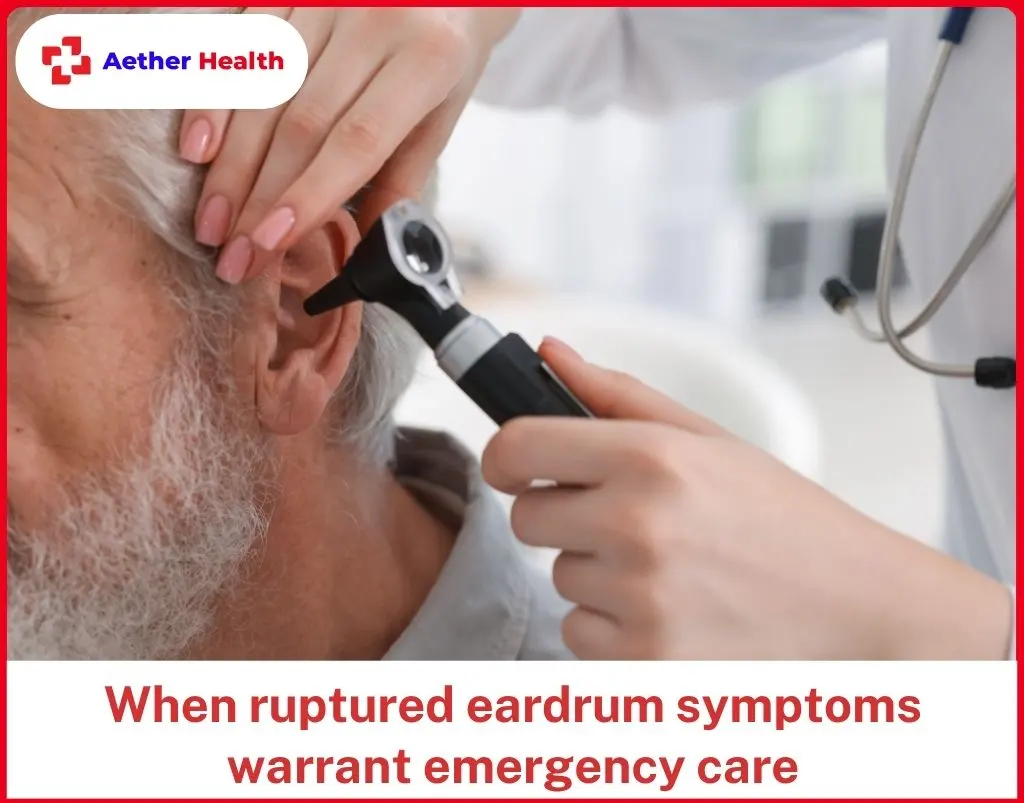
Most ruptured eardrums do not need an ER trip. A same-day appointment with a doctor is usually enough. Certain signs, however, need immediate evaluation because they can indicate spreading infection, inner ear damage, or a more serious head injury. Signs that overlap with conditions like tingling or unusual sensations in the ear also deserve prompt evaluation.
- Sudden significant hearing loss with no known cause
- Severe vertigo with vomiting that will not stop
- Fluid or blood draining from the ear after a head injury
- Facial weakness or drooping on the same side
- High fever above 102°F with ear pain
- Swelling, redness, or pain over the bony area behind the ear (possible mastoiditis)
- Severe headache with a stiff neck along with ear symptoms
- Any eardrum rupture in an infant or a person with a weakened immune system
For any of the above, walk in for emergency ear pain treatment at our freestanding ER. No appointment needed, and you will be seen by a board-certified emergency physician within minutes.
| Rupture after a head injury? Fluid or blood draining from the ear after a head impact can indicate a skull base fracture. Do not delay. Call 911 or come to Aether Health – Spring Cypress ER immediately at 8929 Spring Cypress Rd. |
Why a freestanding ER is the right stop for serious ear symptoms
A freestanding emergency room offers the same clinical capabilities as a hospital ER for evaluating ear injuries and infections, without the long waits, competing traumas, or admission-focused workflow of a hospital emergency department. For an eardrum rupture that needs imaging, IV medication, or specialty referral, this matters.
What a freestanding ER visit looks like:
- Immediate triage by nursing staff, usually within minutes of arrival
- Otoscope examination of both ears by an emergency physician
- On-site tympanometry when needed to measure eardrum function
- CT imaging available on site for suspected skull base injury or mastoiditis
- Full laboratory testing with rapid results for infection workup
- IV antibiotics started at the visit if a serious infection is confirmed
- Clear discharge instructions with red-flag signs to watch for at home
The freestanding ER model was built for exactly this kind of visit: focused, fast, and complete without the delays common in overburdened hospital emergency departments.
How long does a ruptured eardrum take to heal?
Most ruptured eardrums heal on their own within a few weeks. Small tears often close within 1 to 2 weeks. Larger perforations may take 6 to 8 weeks. A small number of ruptures do not heal without surgical repair, called tympanoplasty.
Healing tips your care team will emphasize:
- Keep the ear dry. Use a waterproof plug when showering.
- Do not swim or dive until cleared by a doctor.
- Do not blow your nose forcefully. Pressure stresses the healing membrane.
- Do not insert swabs or drops without medical guidance.
- Watch for infection: increasing pain, new drainage, or fever.
Common questions
- Can a ruptured eardrum heal on its own?
Yes, most do. Small to moderate tears close on their own within 1 to 8 weeks. Larger or repeatedly infected ruptures may need a surgical patch. Follow-up hearing testing confirms recovery.
- Is a ruptured eardrum painful the whole time it heals?
No. The sharp initial pain eases within minutes to hours as pressure releases. Mild discomfort may linger for days, but severe ongoing pain signals a complication that needs re-evaluation.
- Can hearing loss from a ruptured eardrum be permanent?
Uncommonly, yes. Most hearing loss resolves as the membrane heals. Permanent loss can occur when the tiny bones of the middle ear are damaged or repeated ruptures leave scarring.
- Can I fly with a ruptured eardrum?
Not recommended until it heals. Pressure changes during flight can cause severe pain or worsen the tear. Wait for your doctor to confirm the eardrum has closed before flying.
- When should I go to the ER for a ruptured eardrum?
Go to the ER for sudden hearing loss, severe dizziness with vomiting, drainage after head injury, facial weakness, high fever, or swelling behind the ear. Milder cases can wait for same-day primary care.
Walk in for ruptured eardrum evaluation in Spring, TX
When symptoms of a ruptured eardrum come with fever, drainage, dizziness, or hearing changes, do not wait. Aether Health – Spring Cypress ER is a freestanding 24/7 emergency room with board-certified physicians, on-site imaging and lab work, and coordinated ENT follow-up.
Questions before you visit? Contact our care team any time, day or night.
Aether Health – Spring Cypress ER | Freestanding 24/7 Emergency Room
8929 Spring Cypress Rd, Spring, TX 77379 | (713) 528-8703
No appointment. Walk in any time.
External References Links :
1.Mayo Clinic guidance on ruptured eardrum
2. MedlinePlus reference on ruptured eardrum