Reviewed by the emergency care team at Aether Health – Spring Cypress ER | 8929 Spring Cypress Rd, Spring, TX 77379 | +1 (713) 528-8703
If unsure rule out the heart first: Severe chest pain that radiates to your jaw, left arm, or back or comes with shortness of breath, sweating, or nausea may be a heart attack, not heartburn. Call 911 or come to Aether Health – Spring Cypress ER immediately. Antacids should never delay cardiac evaluation. Call +1 (713) 528-8703.
A burning sensation rises from your stomach into your chest. Maybe you ate something spicy. Maybe you bent over after a big meal. Maybe it woke you up at 2 a.m. and felt so intense you wondered if something was seriously wrong with your heart. Severe heartburn is one of the most common and most misunderstood symptoms in adults.
This guide breaks down What Causes Severe Heartburn? the lifestyle and medical triggers behind it, the difference between heartburn and a cardiac emergency, and when burning chest pain crosses into ER territory.
It’s written by the emergency care team at Aether Health – Spring Cypress ER, where we evaluate chest pain every day for Spring, Klein, and Cypress residents and where ruling out the heart is always step one.
Quick Answer: What Causes Severe Heartburn?
Severe heartburn is most often caused by stomach acid flowing backward into the esophagus, a condition called acid reflux or gastroesophageal reflux disease (GERD). The main triggers include trigger foods (spicy, fatty, acidic, or caffeinated), large meals, lying down too soon after eating, obesity, pregnancy, smoking, alcohol, certain medications, hiatal hernia, and stress.
Severe or frequent heartburn that doesn’t respond to over-the-counter antacids or that comes with chest pressure, shortness of breath, or pain radiating to the arm or jaw needs medical evaluation immediately to rule out a heart attack.
What Heartburn Actually Is and Why It Hurts
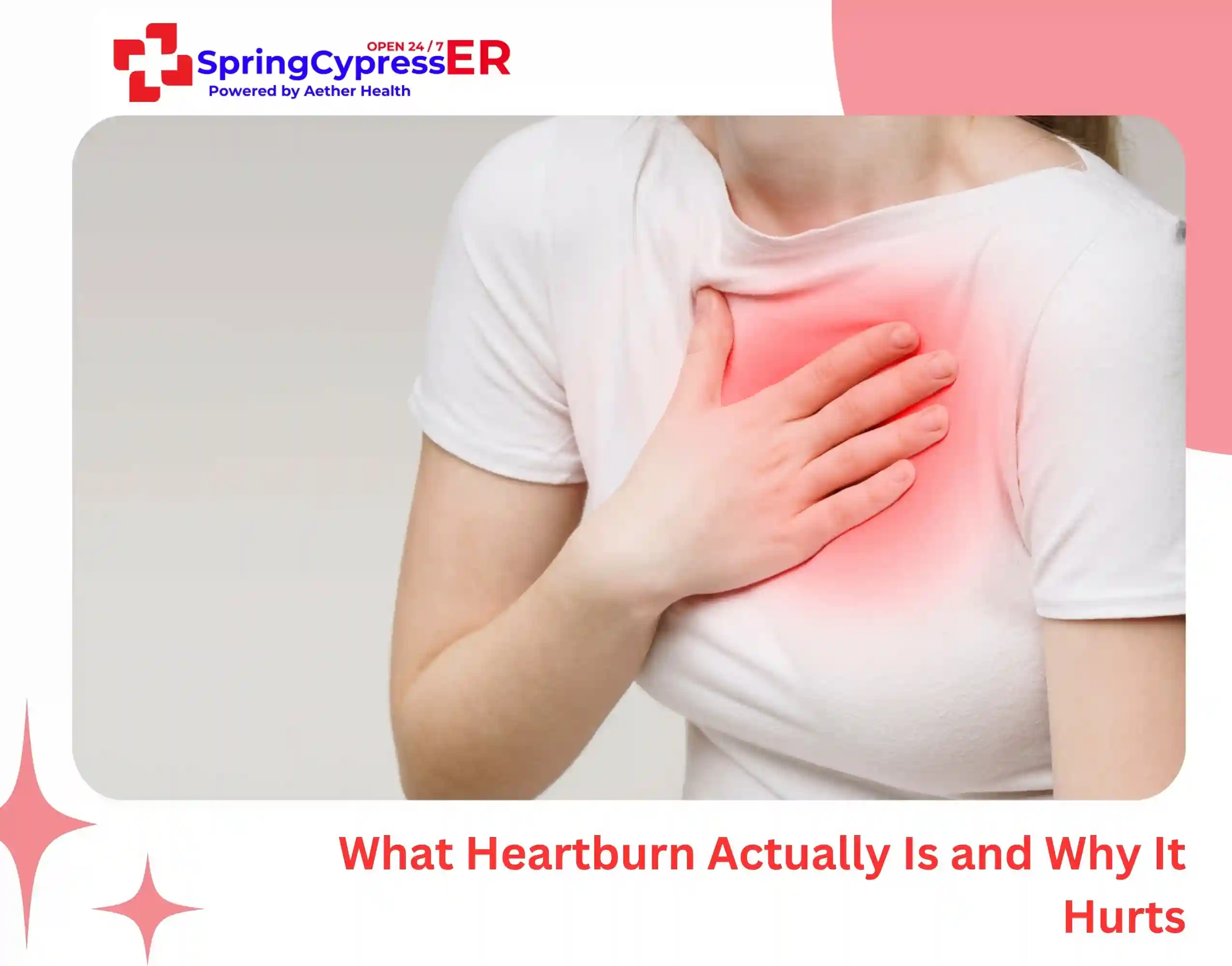
Heartburn has nothing to do with the heart. The name comes from where the pain is felt directly behind the breastbone, in the same general area as the heart. What’s actually happening is that stomach acid is escaping upward into the esophagus, the tube that connects the throat to the stomach.
The esophagus has no protective lining against acid. When acid touches its delicate tissue, it triggers an intense burning sensation that can rise into the throat and even reach the back of the mouth. Severe or repeated episodes can cause inflammation, narrowing, or even precancerous changes to the esophagus over time which is why severe heartburn is never something to ignore long-term.
At the bottom of the esophagus is a ring of muscle called the lower esophageal sphincter (LES). When functioning normally, it stays tightly closed and only opens to let food pass into the stomach. Severe heartburn happens when the LES becomes weak, relaxes at the wrong times, or is bypassed entirely letting acid flow upward.
The 8 Main Causes of Severe Heartburn
Most cases of severe heartburn trace back to one or more of these eight categories. Identifying which apply to you is the first step in stopping the cycle.
1. Trigger Foods and Drinks
Some foods and drinks either relax the LES or directly irritate the esophagus. The most common offenders are spicy food, fried and fatty food, tomatoes and tomato-based sauces, citrus fruits, chocolate, peppermint, onions, garlic, coffee, alcohol, and carbonated drinks. Triggers vary from person to person keeping a 1-week food and symptom diary is the fastest way to identify yours.
2. Large Meals and Late Eating
Eating large portions stretches the stomach and increases pressure on the LES. Eating within 3 hours of lying down makes that pressure worse by removing gravity’s help in keeping acid down. Late-night meals are one of the leading causes of severe nighttime heartburn and also the most disruptive to sleep and quality of life.
3. Obesity and Excess Belly Weight
Extra abdominal fat puts continuous pressure on the stomach and pushes acid upward. Even modest weight loss 5 to 10 pounds can dramatically reduce heartburn frequency in overweight patients. This is one of the most reliably effective treatments for chronic acid reflux.
4. Smoking and Tobacco Use
Nicotine relaxes the lower esophageal sphincter directly, allowing acid to escape. Smoking also reduces saliva production, which normally helps neutralize stomach acid in the esophagus. Quitting smoking improves heartburn within weeks for most patients.
5. Pregnancy
Hormonal changes during pregnancy relax the LES, and the growing uterus pushes upward on the stomach. Heartburn is reported by up to 80% of pregnant women, especially in the third trimester. It usually resolves after delivery but can be severe in the meantime.
6. Hiatal Hernia
A hiatal hernia happens when part of the stomach pushes upward through the diaphragm into the chest cavity. This weakens the natural antireflux barrier at the LES and is a structural cause of chronic, often severe heartburn. Many people with hiatal hernias don’t know they have one until an upper endoscopy or imaging reveals it.
7. Medications
Several common medications either relax the LES or directly irritate the stomach lining. The most common include calcium channel blockers and more. Never stop a prescribed medication without consulting your doctor but do mention severe heartburn to your provider, as adjustments are often possible.
8. Stress and Lifestyle Factors
Stress doesn’t directly cause acid production, but it makes you more sensitive to existing acid and disrupts the eating habits that keep heartburn in check. Stress is also linked to overeating, late meals, alcohol use, and poor sleep all of which worsen reflux. Tight clothing, especially around the waist, can also physically push acid upward.
Heartburn vs. Heart Attack: How to Tell the Difference
This is the most important distinction in this entire article. Heartburn and a heart attack can feel similar and people die every year because they assumed cardiac chest pain was “just indigestion” and waited too long to seek help.
| Feature | Heartburn (Acid Reflux) | Heart Attack |
| Type of pain | Burning sensation behind the breastbone | Pressure, tightness, squeezing, or heaviness |
| Trigger | Often after eating, lying down, or bending over | Can occur at rest or with exertion, often unprovoked |
| Spread of pain | Usually stays in the chest and throat | Often radiates to jaw, neck, left arm, or back |
| Relief | Antacids and sitting upright often help quickly | Antacids do NOT help; pain often persists or worsens |
| Other symptoms | Sour taste in mouth, regurgitation, burping | Shortness of breath, sweating, nausea, lightheadedness |
| Duration | Minutes to a couple of hours | Often more than 15 to 20 minutes, unrelenting |
When in doubt get checked: Even experienced doctors cannot reliably tell heartburn from a heart attack based on symptoms alone. An EKG and blood test at our ER take less than 15 minutes and give a definitive answer. The cost of being wrong is too high to guess.
Who Is Most at Risk for Severe Heartburn?
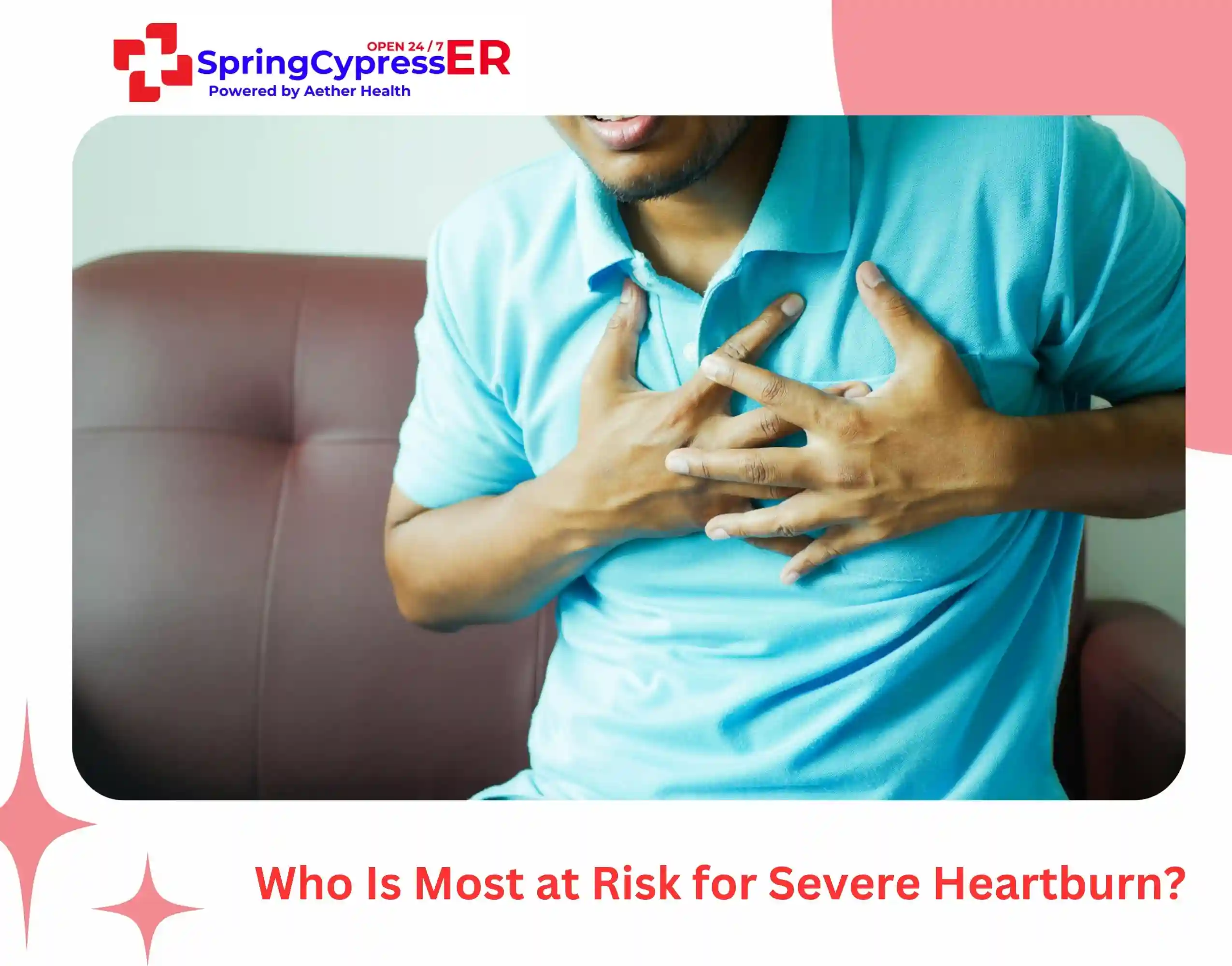
Severe and frequent heartburn is more common in some groups than others. If you have several of these risk factors, your symptoms are unlikely to improve without targeted lifestyle changes or medical treatment.
- Age over 40 the LES weakens gradually with age.
- Overweight or obese, especially with abdominal fat.
- Smoker or recent ex-smoker.
- Frequent alcohol consumption.
- Pregnancy, especially in the second and third trimesters.
- Family history of GERD or hiatal hernia.
- Use of NSAIDs, calcium channel blockers, or asthma medications.
- Diabetes slows stomach emptying, increasing reflux.
- Connective tissue disorders (such as scleroderma).
- History of asthma strong overlap with reflux.
When Severe Heartburn Needs Medical Attention
Occasional heartburn is normal. Severe, frequent, or worsening heartburn is not and may indicate GERD, esophagitis, or a more serious problem. Seek medical care if any of the following apply.
- Heartburn more than 2 times per week for 3 weeks or longer.
- Heartburn that doesn’t improve with over-the-counter antacids or acid reducers.
- Heartburn that wakes you up at night.
- Difficulty or pain when swallowing.
- Food feeling stuck on the way down.
- Unintentional weight loss.
- Vomiting blood or vomit that looks like coffee grounds.
- Black, tarry, or bloody stools.
- Persistent hoarseness, cough, or sore throat silent reflux is often the cause.
- Chronic asthma that worsens after meals or at night.
Come to the ER immediately if: Your heartburn is accompanied by chest pressure, pain radiating to the arm/jaw/back, shortness of breath, sweating, lightheadedness, or vomiting blood. These are NOT heartburn symptoms and may indicate a heart attack, bleeding ulcer, or esophageal tear. Call 911 or come to Aether Health – Spring Cypress ER. +1 (713) 528-8703.
Treatment Options for Severe Heartburn
Severe heartburn responds well to a stepped approach starting with lifestyle changes, escalating to medications when needed, and reserving procedures for the most stubborn cases.
Step 1 Lifestyle Changes
- Eat smaller meals more frequently instead of large meals.
- Avoid eating within 3 hours of bedtime.
- Elevate the head of your bed 6 to 8 inches using bed risers or a wedge Extra pillows under your head don’t work.
- Identify and avoid your personal trigger foods through a food diary.
- Lose excess weight, especially around the waist.
- Quit smoking and limit alcohol.
- Wear loose-fitting clothing, tight belts and waistbands push acid up.
Step 2 Over-the-Counter Medications
- Antacids (Tums, Rolaids, Mylanta) neutralize existing stomach acid quickly. Best for mild, occasional symptoms.
- H2 blockers (famotidine/Pepcid, cimetidine/Tagamet) reduce acid production for 8 to 12 hours. Good for moderate symptoms and overnight reflux.
- Proton pump inhibitors (omeprazole/Prilosec, esomeprazole/Nexium) the strongest acid suppressors available without a prescription. Most effective when taken 30 to 60 minutes before the first meal of the day. Not intended for long-term use without a doctor’s supervision.
Step 3 Prescription Treatment
When OTC medications aren’t enough, prescription-strength acid suppressors, prokinetics (which help the stomach empty faster), and combination therapies are available. Some patients benefit from an upper endoscopy to assess esophageal damage and rule out other causes.
Step 4 Procedural and Surgical Options
For severe, treatment-resistant cases especially with hiatal hernia procedures like Nissen fundoplication, LINX device implantation, or transoral incisionless fundoplication (TIF) can physically restore the antireflux barrier. These are reserved for patients in whom medications have failed.
How to Prevent Severe Heartburn
Most severe heartburn is preventable with consistent habit changes. These steps make the biggest difference.
- Eat your largest meal earlier in the day; keep dinner smaller and lighter.
- Stop eating at least 3 hours before bed.
- Avoid your personal trigger foods, track them in a 2-week diary if you don’t know them yet.
- Drink water with meals instead of soda, coffee, or alcohol.
- Maintain a healthy weight, focusing on losing belly fat.
- Quit smoking and avoid secondhand smoke.
- Manage stress through exercise, sleep, and breathing practices.
- Sleep with the head of your bed elevated, especially if nighttime reflux is a problem.
- Avoid tight belts, shapewear, and waist-cinching clothing.
- Discuss medication side effects with your doctor alternatives often exist.
How We Help at SpringCypress ER When Heartburn Becomes Severe
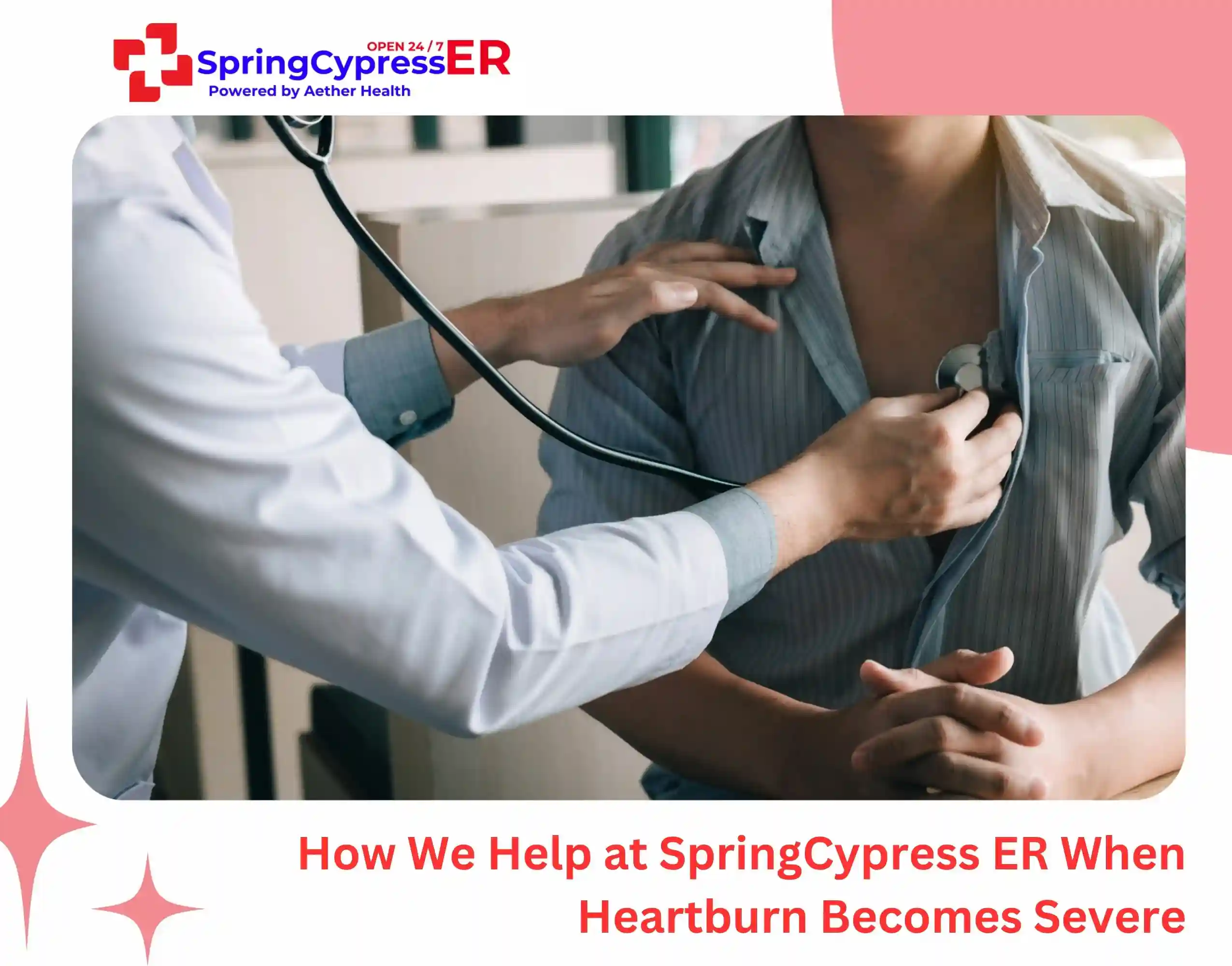
Severe chest pain, heartburn or otherwise is one of the most common reasons people come to our 24/7 freestanding ER in Spring, TX. Our process is built to rule out emergencies fast, then provide effective relief.
- Rapid EKG performed within minutes to rule out a heart attack or dangerous rhythm.
- Cardiac blood markers troponin and other tests detect heart muscle damage with high accuracy.
- Clinical evaluation an emergency physician assesses your symptoms, medical history, and exam findings.
- Imaging when needed on-site chest X-ray and CT for suspected lung, esophageal, or aortic causes of chest pain.
- Immediate symptom relief IV medications can quickly relieve severe heartburn while we work through the diagnosis.
- Treatment for complications we manage bleeding ulcers, esophageal tears, and severe esophagitis on site or coordinate transfer when needed.
- Discharge plan clear instructions, prescription medications when appropriate, and direct follow-up with a primary care doctor or gastroenterologist.
Frequently Asked Questions
Can severe heartburn be mistaken for a heart attack?
Yes and the reverse is also true. The pain pathways for the esophagus and the heart overlap, so the brain has difficulty telling them apart. Studies have shown that even experienced clinicians cannot reliably distinguish them based on symptoms alone. An EKG and cardiac blood work are the only definitive way to rule out a heart attack.
Why does my heartburn get worse at night?
When you lie flat, gravity no longer helps keep stomach acid down. Saliva production also drops during sleep, removing one of the body’s natural neutralizers. The combination is why nighttime reflux is often the most severe and the hardest to treat. Elevating the head of the bed and avoiding food within 3 hours of bedtime are the most effective interventions.
Can severe heartburn cause cancer?
Long-standing, uncontrolled acid reflux can lead to a condition called Barrett’s esophagus, in which the lining of the esophagus changes and becomes more susceptible to esophageal cancer. The overall risk is low, but it’s one of the reasons severe, persistent heartburn should never be ignored long-term. An upper endoscopy can screen for these changes.
How often is heartburn?
Heartburn more than twice a week for several weeks meets the clinical definition of GERD and warrants medical evaluation. Daily heartburn, heartburn that wakes you up, or heartburn that doesn’t respond to over-the-counter medications all need a doctor’s input.
Are proton pump inhibitors safe to take long-term?
Proton pump inhibitors are effective and generally well tolerated, but long-term use (months to years) has been associated with vitamin and mineral deficiencies, bone density issues, kidney effects, and increased risk of certain infections. They should be used at the lowest effective dose for the shortest necessary time, ideally under medical guidance.
Will my insurance cover an ER visit for chest pain or severe heartburn?
Aether Health – Spring Cypress ER accepts most commercial insurance plans and works directly with your insurer to avoid surprise billing. We do not currently accept Medicare, Medicaid, or Tricare. Concerns about insurance should never delay seeking care for severe chest pain call us at +1 (713) 528-8703 or come straight in.
Severe Chest Pain or Heartburn? Get Answers Fast in Spring, TX
When chest pain hits hard, you should not be guessing whether it’s heartburn or your heart. At Aether Health – Spring Cypress ER, board-certified emergency physicians, on-site EKG, lab work, and imaging give you definitive answers usually within 60 minutes of walking in.
- Address: 8929 Spring Cypress Rd, Spring, TX 77379
- Phone: +1 (713) 528-8703
- Hours: Open 24 hours, every day of the year
- Emergency: If symptoms are severe or you suspect a heart attack, call 911 paramedics can begin treatment en route.
Call Now: +1 (713) 528-8703 speak to our team in under 30 seconds. Or walk in any time at 8929 Spring Cypress Rd, Spring, TX 77379.