
Respiratory infections cause over 2 million deaths globally each year, making them a leading cause of infectious disease mortality¹.
The three signs of respiratory infection to watch for are persistent cough with throat irritation, fever, and nasal congestion or breathing difficulty. These symptoms escalate quickly in infants, older adults, and people with chronic conditions.
So, let’s find out more about these early signs and how to prevent them in the long run.
What Is a Respiratory Infection?
Respiratory infections develop when viruses, bacteria, or other pathogens invade your airways and trigger inflammation. These infections attack either upper airways (nose, throat, sinuses) or lower airways (lungs, bronchi), and location determines symptom severity.
- Upper respiratory infections include common colds, sinusitis, pharyngitis, and laryngitis—typically causing milder symptoms that resolve within 7-10 days.
- Lower respiratory infections like pneumonia, bronchiolitis, RSV, and influenza affect deeper lung tissue—producing more severe symptoms requiring medical intervention.
Understanding this difference helps you recognize when mild symptoms are progressing into serious conditions requiring emergency care.
The Three Signs of Respiratory Infection You Need to Know
Early recognition prevents complications because respiratory infection symptoms progress rapidly, especially when infection spreads from upper to lower airways. While presentations vary, three consistent signs indicate your respiratory system is under attack.
1. Cough and Throat Irritation
A cough is often the first noticeable sign. A dry cough may suggest irritation or a viral start, while a wet or productive cough usually points to mucus buildup in the airways. A persistent or worsening cough can indicate a deeper infection, such as bronchitis or pneumonia.
Infants may not cough forcefully, so they often show subtler cues, such as coughing during feeds, pulling away from the bottle or breast, or frequent choking episodes.
2. Fever or Elevated Body Temperature
Fever tells you the body is fighting an infection. In adults and older children, temperatures above 100.4°F (38°C) suggest an active infection. Babies under three months with any fever require prompt medical evaluation.
A fever becomes more concerning when it lasts several days, spikes very high, or appears alongside labored breathing, lethargy, or poor feeding. In respiratory infections, persistent fever often signals that the lower airways or lungs may be involved.
3. Nasal Congestion or Difficulty Breathing
Congestion can cause noisy breathing, blocked airflow, and disrupted sleep. When congestion worsens or the infection moves deeper, breathing issues become more obvious.
Warning signs requiring immediate attention:
- Nasal flaring (nostrils widening with each breath)
- Wheezing (high-pitched whistling sound when breathing)
- Fast breathing (respiratory rate exceeding normal for age)
- Chest retractions (skin pulling tight between ribs during inhalation)
- Grunting (audible sound with breathing effort in infants)
These red flags indicate a respiratory system emergency requiring immediate evaluation.
Differences in Symptoms Across Age Groups

Infants and Young Children
- May show indirect signs like poor feeding, irritability, or reduced activity.
- Physical indicators include nasal flaring, grunting, and fast breathing.
- Symptoms can worsen quickly due to smaller airways.
- Any breathing difficulty or persistent fever should be assessed promptly.
Older Children
- Can describe sore throat, headaches, body aches, and general fatigue.
- Often have more noticeable congestion and cough.
- Still need monitoring for fast breathing, chest retractions, or worsening fever.
- Symptoms may escalate during viral seasons or when dehydrated.
Adults
- Common symptoms include cough, congestion, fatigue, and mild fever.
- Can experience chest tightness or shortness of breath in more serious infections.
- Persistent high fever or worsening cough signals the need for medical attention.
- Those with asthma, COPD, or weakened immune systems may deteriorate faster.
When to Seek Emergency Care for Respiratory Infections
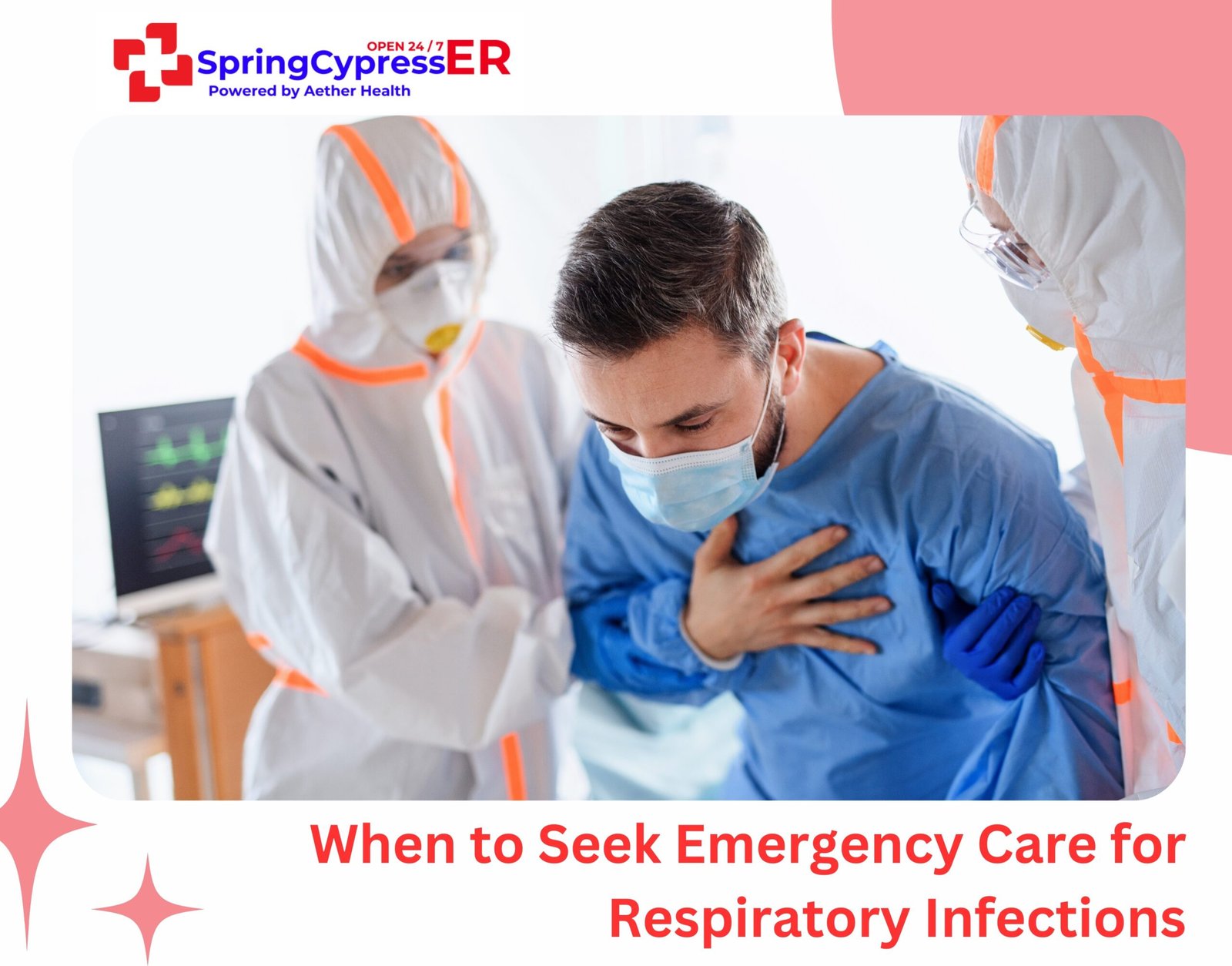
- Severe chest retractions: Visible pulling of the skin between or below the ribs signals the lungs are struggling to get enough air.
- Bluish lips or face (cyanosis): Indicates low oxygen levels and requires immediate evaluation.
- Very fast or labored breathing: Breaths that seem unusually rapid, shallow, or visibly strained are a medical emergency.
- Extreme lethargy or inability to feed: A baby or child who is too weak to eat, drink, or stay awake may be in serious distress.
- High fever in infants under 3 months: Any fever of 4°F (38°C) or higher in this age group needs urgent assessment.
At ER of Spring Cypress, we provide rapid respiratory evaluation including pulse oximetry, chest X-rays, rapid viral testing (flu, RSV, COVID-19), and immediate breathing support when needed.
Preventive Measures
- Practice strong hand hygiene: Regular handwashing with soap and water reduces the spread of respiratory viruses. Use alcohol-based sanitizers when soap isn’t available.
- Use masks when appropriate: During peak respiratory seasons or when caring for someone who is sick, masks help reduce exposure to airborne pathogens.
- Stay up to date on vaccinations: Annual influenza shots, COVID-19 boosters, and RSV protection (where available and recommended) significantly cut the risk of severe infection.
- Limit exposure to sick contacts: Keep infants, older adults, and high-risk individuals away from people with symptoms such as coughing, fever, or congestion.
- Maintain clean indoor environments: Disinfect high-touch objects and improve ventilation to reduce pathogen spread.
Conclusion
Core respiratory infection signs like cough, fever, and trouble breathing require close monitoring, especially in infants, older adults, and those with chronic conditions. Upper respiratory infections typically cause mild symptoms resolving within a week, while lower respiratory infections like pneumonia produce severe symptoms requiring medical intervention.
Seek emergency care at ER of Spring Cypress for chest retractions, blue lips, rapid breathing, extreme lethargy, or any fever in infants under 3 months. Early recognition and prompt treatment prevent complications and save lives.
Frequently Asked Questions
How do I know if my child has a viral or bacterial infection?
Viral infections usually cause a runny nose, mild fever, and a gradual onset of symptoms. Bacterial infections tend to cause higher fevers, worsening symptoms after initial improvement, or localized symptoms such as ear pain or sinus pressure. A clinician can confirm the cause if symptoms escalate or persist beyond the expected recovery time.
Can mild congestion or runny nose signal something serious?
Most congestion is harmless and improves with rest and hydration within 5-7 days. However, congestion accompanied by rapid breathing, chest retractions, dehydration signs, or unusual irritability in infants may indicate lower respiratory infection progressing.
How quickly can respiratory infections progress in infants?
Infants deteriorate within hours because their airways are smaller and more easily obstructed by mucus or swelling. Signs like nasal flaring, grunting, poor feeding, fast breathing, or decreased responsiveness require immediate evaluation.
Are antibiotics ever needed for respiratory infections?
Antibiotics help only with bacterial infections. Conditions like the common cold, RSV, or most sore throats are viral and don’t improve with antibiotics. A healthcare provider determines whether antibiotics are appropriate based on symptoms, exam findings, and test results.
How can I monitor breathing at home safely?
Watch for signs like fast breathing, ribs pulling in, nostril flaring, or unusual noises such as wheezing or grunting. You can also count breaths per minute during sleep or rest. If breathing looks labored or your child seems less responsive, seek immediate medical care.