
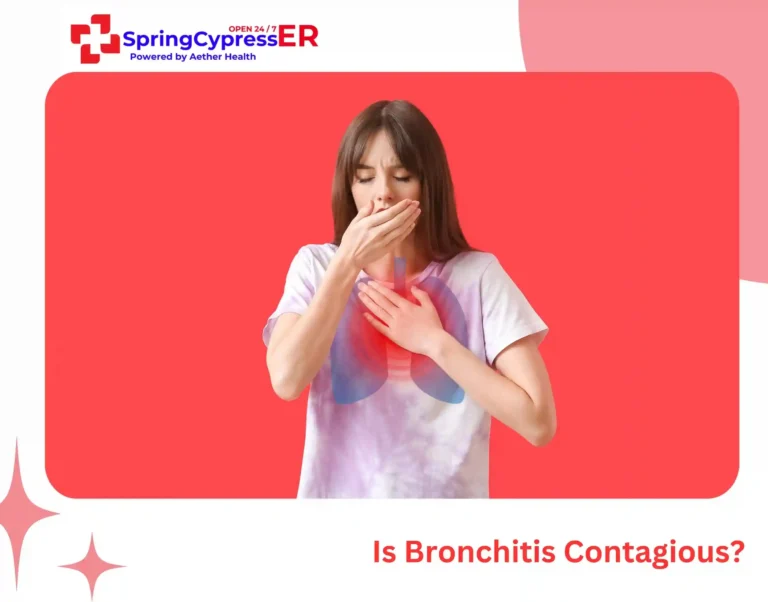
You’re sick with bronchitis. Your kids are running around. Your spouse is sleeping next to you. You have a presentation at work in three days. The question that follows every diagnosis: am I contagious? And if so, for how long?
The answer is more nuanced than a simple yes or no which is why most quick Google answers get it wrong. This guide breaks down exactly how bronchitis spreads, how long you can pass it on, when it’s safe to be around family, when you can return to work or school, and how to protect the people around you. It’s written by the emergency care team at Spring Cypress ER for Spring, Klein, and Cypress residents who need a clear, practical answer.
Quick Answer: Is Bronchitis Contagious?
Yes and no depending on what caused it. Acute bronchitis is almost always caused by viruses (about 90% of cases) or, less commonly, bacteria and those underlying infections are contagious. The bronchitis itself is the body’s response to the infection, not the contagious agent. Most people are contagious for about a week from when symptoms start, though some causes (like whooping cough or COVID-19) can spread for longer.
Chronic bronchitis caused by smoking or long-term lung irritation is not contagious. You’re generally safe to be around others 24 hours after your fever has resolved without medication and your other symptoms are clearly improving.
Why “Is Bronchitis Contagious?” Is the Wrong Question

Bronchitis is a description of inflamed bronchial tubes — not an infection itself. It’s a downstream condition. What’s actually contagious is whatever caused the inflammation in the first place.
Think of it like a sunburn. A sunburn isn’t contagious, but the sun causes it. With bronchitis, the “sun” is a virus or bacteria that infects the airways. Two different people exposed to the same virus might develop a cold, the flu, sinusitis, or bronchitis depending on where the virus ends up and how their immune system responds.
That’s why people in the same household get sick from each other they’re sharing the underlying virus, even if one ends up with bronchitis and another just gets a runny nose.
Knowing this changes how you think about prevention. You’re not protecting your family from “bronchitis” you’re protecting them from the cold, flu, RSV, or COVID-19 virus that caused yours.
How Bronchitis Spreads
The viruses and bacteria behind bronchitis spread the same way other respiratory infections do. Knowing the routes helps you cut off the transmission paths.
1. Respiratory Droplets
When you cough, sneeze, talk, or sing, you release tiny droplets carrying virus particles. These droplets can travel up to 6 feet and land on the mouth, nose, or eyes of nearby people. This is the most common route of transmission and the reason masks and physical distance reduce spread so effectively.
2. Airborne Particles
Smaller droplets — called aerosols — can stay suspended in the air for minutes to hours, especially in poorly ventilated indoor spaces. Influenza, COVID-19, RSV, and many cold viruses can spread this way, particularly in offices, restaurants, classrooms, and crowded family gatherings.
3. Surface (Fomite) Transmission
Virus particles land on doorknobs, phones, light switches, keyboards, faucets, and other commonly touched surfaces. Someone touches the surface, then touches their face — and the virus has a new host. Hand washing dramatically reduces this route.
4. Direct Contact
Hugging, kissing, sharing food or drinks, or shaking hands with an infected person passes the virus directly. Family members are especially vulnerable through this route.
5. Through Children and Workplaces
Schools, daycares, and offices are common transmission hubs. Children especially carry and spread respiratory viruses efficiently because their hygiene is less consistent and they have closer contact during play.
How Long Is Bronchitis Contagious?
The contagious period depends entirely on what caused the bronchitis. The table below summarizes the most common causes and how long you should expect to be infectious.
| Cause | Contagious Period | Stops Being Contagious When… |
| Common cold viruses (rhinovirus, adenovirus) | 1 to 2 days before symptoms; about 5 to 7 days after | Fever-free for 24 hours and symptoms improving |
| Influenza | 1 day before through 5 to 7 days after symptoms start | Fever-free for 24 hours without medication |
| RSV | 3 to 8 days; longer in young children | Symptoms have substantially resolved |
| COVID-19 | Up to 10 days; longer in some patients | Per current CDC guidance — confirm at time of illness |
| Whooping cough (pertussis) | Up to 3 weeks of coughing without treatment | 5 days after starting appropriate antibiotics |
| Mycoplasma pneumoniae | Up to several weeks | After several days of effective antibiotic treatment |
| Chronic bronchitis (from smoking, COPD) | Not contagious in itself | Flare-ups from infections may be contagious — check with a doctor |
Practical rule of thumb: If your bronchitis followed a cold or flu, assume you are contagious for 5 to 7 days from when symptoms started — and definitely while you still have fever, body aches, or are coughing actively. Symptoms that linger after the contagious period (like a residual dry cough) are usually not contagious anymore.
When Bronchitis Is NOT Contagious
Some forms of bronchitis don’t spread at all. Knowing the difference protects you from unnecessary worry and from over-isolating yourself.
Chronic Bronchitis
Chronic bronchitis a long-term condition from smoking, vaping, or environmental irritants is not contagious. The persistent cough, mucus, and inflammation come from ongoing airway damage, not an active infection. Family members can sit next to you without risk. However, if a chronic bronchitis patient catches a cold or flu on top of their existing condition, that respiratory infection IS contagious.
Bronchitis from Allergies or Irritants
Bronchial inflammation caused by allergens (pollen, dust, mold), air pollution, dust, fumes, or strong perfumes is not contagious. The cough and chest congestion are inflammatory, not infectious.
Post-Bronchitis Lingering Cough
The 3- to 8-week lingering cough that follows an acute bronchitis infection is usually not contagious. The virus has cleared, but the airways are still healing and sensitive. You can return to normal activities even if you’re still coughing as long as fever is gone and your overall symptoms are clearly improving.
When Can You Return to Work or School?
This is the practical question behind most contagiousness searches. Use these guidelines, but adjust based on your specific symptoms and the policies of your workplace or school.
- Wait until fever is gone for 24 hours without using fever-reducing medications like acetaminophen or ibuprofen.
- Wait until you are clearly improving energy returning, less frequent coughing fits, less mucus production.
- Avoid close contact with high-risk people infants, older adults, pregnant women, and anyone with chronic illness or immune compromise, until you are well into recovery.
- Mask if you must return early for 5 to 7 days from symptom onset, wear a well-fitting mask in shared spaces to protect coworkers and classmates.
- Healthcare workers, food handlers, daycare workers have stricter rules. Follow your employer’s guidance, which may require a doctor’s clearance.
- If your illness was COVID-19 or whooping cough follow current CDC isolation guidance for the specific cause, as those timelines can change.
How to Protect Your Family While You Have Bronchitis
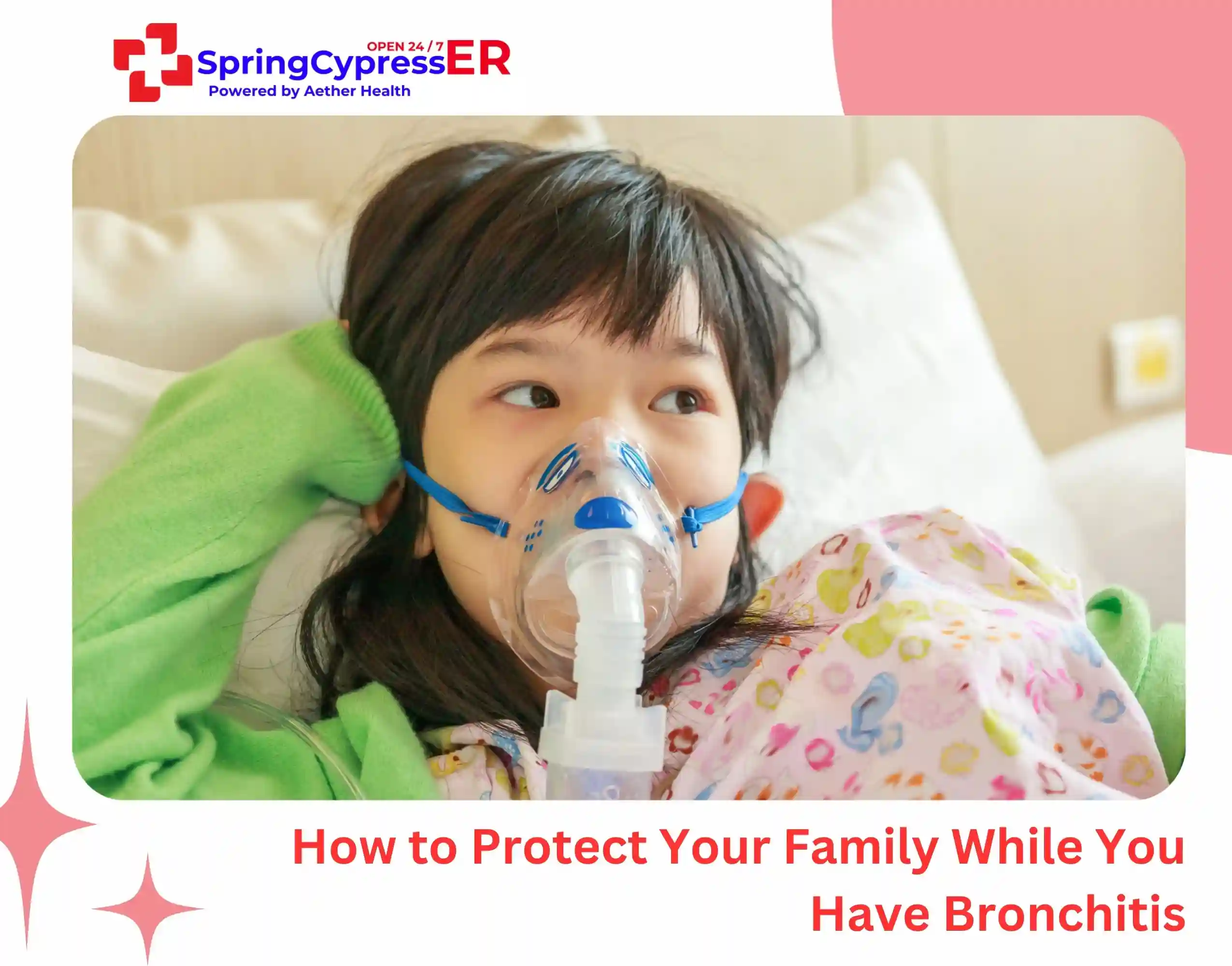
If you have bronchitis and live with others, these practical steps significantly reduce the risk of spreading the underlying infection.
- Wash hands often with soap and water for at least 20 seconds, especially after coughing, sneezing, or blowing your nose.
- Cough or sneeze into your elbow or a tissue, not your hand.
- Throw away used tissues immediately and wash hands afterward.
- Wear a mask indoors around family for the first 5 to 7 days of symptoms.
- Sleep in a separate room if possible, or at least with the door closed and a window cracked for ventilation.
- Do not share cups, utensils, towels, toothbrushes, or bedding.
- Disinfect frequently touched surfaces daily doorknobs, light switches, phones, remote controls, faucets.
- Open windows when weather allows to improve indoor air circulation.
- Limit close contact, including hugging and kissing, until symptoms have substantially improved.
- Make sure family members with high-risk conditions (asthma, COPD, heart disease, immune compromise) stay extra alert for symptoms.
How to Avoid Catching Bronchitis From Someone Else
If someone in your household, classroom, or workplace has bronchitis, these steps reduce your chance of getting it.
- Wash hands often, especially before eating and after being around the sick person or shared spaces.
- Avoid touching your face eyes, nose, and mouth are the main entry points for respiratory viruses.
- Wear a mask in shared indoor spaces, especially during peak respiratory season.
- Keep some physical distance from the sick person, even within a household.
- Ventilate shared spaces open windows when possible, use HEPA air purifiers in the home.
- Get your annual flu shot and stay up to date on COVID-19 and pneumonia vaccines.
- Get enough sleep a well-rested immune system handles exposures dramatically better.
- Quit smoking and avoid secondhand smoke smokers catch respiratory infections more easily and have worse symptoms.
- Manage allergies and asthma uncontrolled airway conditions make you more susceptible.
- Disinfect shared surfaces phones, keyboards, remote controls, doorknobs — regularly while a household member is sick.
When to See a Doctor and When to Come to the ER

Most bronchitis is mild and manageable at home. But certain symptoms mean it has progressed to something that needs medical evaluation, including for the people around you who may now be at risk.
- Fever over 100.4°F that lasts more than 3 days or returns after improving.
- Cough lasting longer than 3 weeks without improvement.
- Coughing up blood any amount.
- Shortness of breath at rest or with light activity.
- Sharp chest pain that worsens with breathing or coughing.
- Symptoms worsen after a few days of improvement a classic sign of pneumonia.
- Wheezing that doesn’t respond to a rescue inhaler.
- Confusion, drowsiness, or extreme weakness.
- Persistent vomiting that interferes with fluid intake.
- Symptoms in infants, older adults, or anyone with COPD, asthma, heart failure, or a weakened immune system.
Concerned about how serious it is?: At Aether Health Spring Cypress ER, on-site chest X-ray, lab work, respiratory virus testing, and breathing treatments are available 24/7 with no wait. We can identify the specific cause and give you a clear answer on when you’ll stop being contagious. Call +1 (713) 528-8703 or come to 8929 Spring Cypress Rd, Spring, TX 77379.
Frequently Asked Questions
Can I kiss my partner if I have bronchitis?
Not while you still have active symptoms and likely for at least a week after they begin. Kissing transfers respiratory droplets directly one of the fastest transmission routes. Wait until you have been fever-free for 24 hours and symptoms are clearly improving.
Is bronchitis contagious before symptoms appear?
Often yes. Many of the viruses that cause bronchitis including influenza, COVID-19, and common cold viruses are contagious 1 to 2 days before symptoms start. This is why respiratory infections spread so easily; people transmit them before they know they’re sick.
Can children go back to daycare or school with bronchitis?
Children should be fever-free for 24 hours without medication and clearly improving before returning to school or daycare. Some childcare centers have stricter policies check with yours. A lingering cough alone, after fever and other symptoms have resolved, is usually not a reason to keep them home.
Is bronchitis more contagious at night?
Not biologically. The virus doesn’t behave differently at night. But people often cough more at night because lying flat makes mucus pool which means more virus-carrying droplets released into the bedroom air. Sleeping in a separate room and ventilating the space reduces household spread.
Does antibiotic treatment shorten how long bronchitis is contagious?
Only for bacterial bronchitis. Whooping cough patients, for example, become non-contagious about 5 days after starting effective antibiotics. For viral bronchitis which is most cases antibiotics don’t shorten the contagious period because they don’t work on viruses at all.
Will my insurance cover an ER visit for bronchitis?
Aether Health – Spring Cypress ER accepts most commercial insurance plans and works directly with your insurer to avoid surprise billing. We do not currently accept Medicare, Medicaid, or Tricare. Call us before or during your visit if you have coverage questions we are happy to help.
Need Care for Bronchitis in Spring, TX? Open 24/7, No Wait
Whether you need an evaluation, want to know what’s actually causing your illness, or are worried about the people in your home fast access to expert care makes the difference. At Aether Health – Spring Cypress ER, on-site chest X-ray, respiratory virus testing, breathing treatments, and clear discharge instructions are available 24/7.
- Address: 8929 Spring Cypress Rd, Spring, TX 77379
- Phone: +1 (713) 528-8703
- Hours: Open 24 hours, every day of the year
- Insurance: Most commercial plans accepted. No surprise billing.
Call Now: +1 (713) 528-8703 — speak to our team in under 30 seconds. Or walk in any time at 8929 Spring Cypress Rd, Spring, TX 77379.