The short answer is yes but the bigger picture is more hopeful than most people realize. Blood clots can absolutely be life-threatening, and they cause more deaths each year in the United States than breast cancer, AIDS, and motor vehicle accidents combined. At the same time, blood clots are also one of the most treatable medical emergencies in modern medicine. The patients who survive and recover fully are almost always the ones who recognize the warning signs and get to an ER fast.
This guide explains exactly how serious blood clots are, where they form, the warning signs that mean emergency care, who is most at risk, and what we do at Aether Health – Spring Cypress ER to diagnose and treat clots quickly. It’s written by our emergency care team for Spring, Klein, and Cypress residents who want a clear, honest answer — not vague reassurance and not unnecessary panic.
Quick Answer: Is a Blood Clot a Serious Problem?
Yes — blood clots can be serious or even life-threatening, depending on where they form and how quickly they’re treated. Clots in deep veins (DVT) can travel to the lungs and cause a pulmonary embolism. Clots in arteries supplying the brain cause strokes; clots in heart arteries cause heart attacks. Together, these account for an estimated 100,000+ deaths annually in the United States.
The encouraging news is that most blood clots — even severe ones — respond well to treatment when caught early. The single most important factor in outcome is how fast the patient gets to an emergency room. Warning signs like sudden swelling in one leg, chest pain, severe shortness of breath, or stroke-like symptoms should be treated as medical emergencies.
What Blood Clots Are and Why They Can Be Dangerous
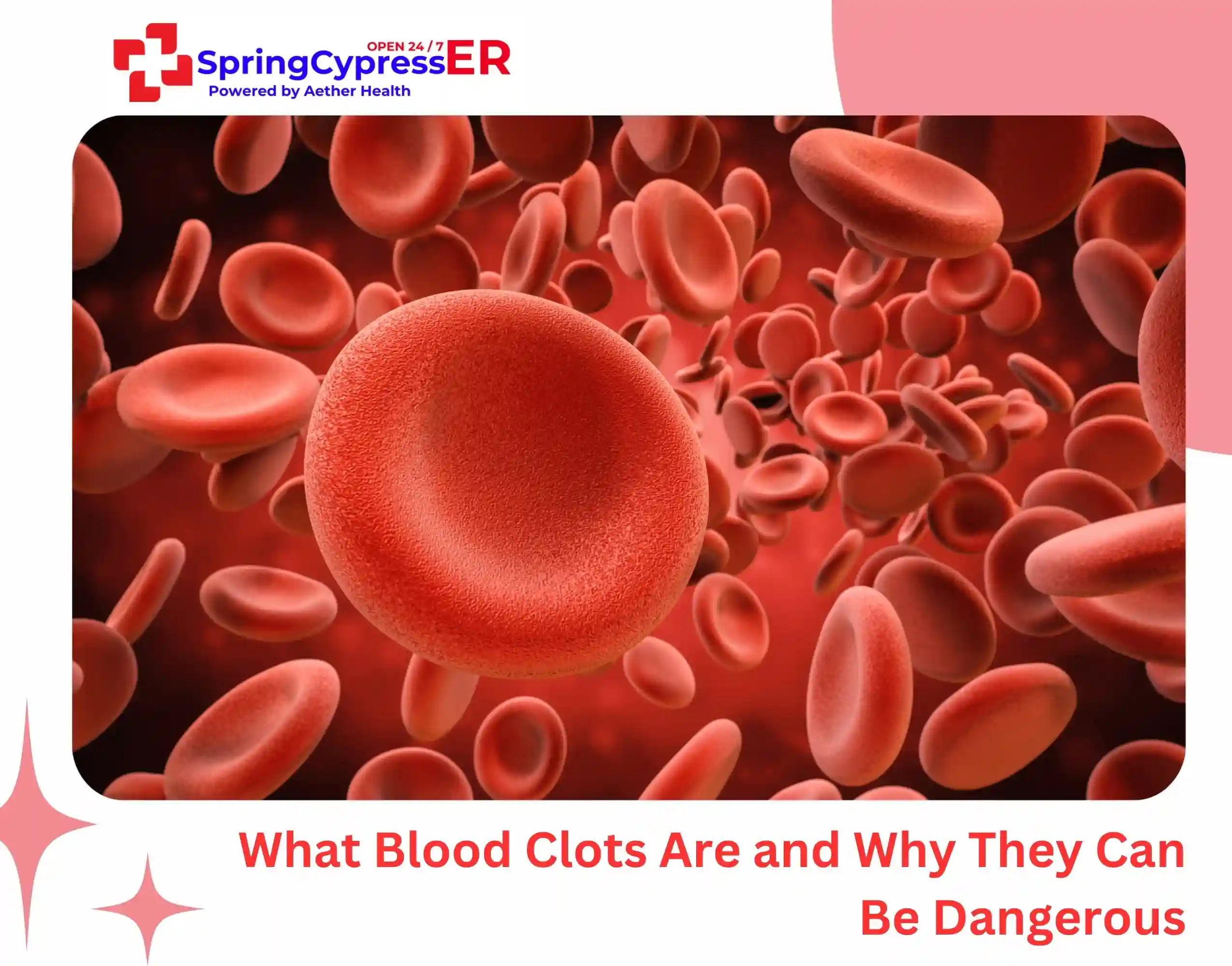
Blood clotting is one of the body’s most important survival functions. When you cut yourself, platelets and clotting factors rush to the wound to stop the bleeding. Without this system, even small injuries would be fatal.
The problem starts when clots form when they shouldn’t — inside an intact blood vessel, with no injury to repair. These abnormal clots block blood flow. And because blood carries oxygen to every organ, any blockage starves the tissue downstream. Within minutes, brain cells, heart muscle, lung tissue, or limb tissue begin to die. The faster blood flow is restored, the better the outcome.
Clots become especially dangerous when they break loose from where they formed and travel through the bloodstream — a process called embolism. A clot that forms in a leg vein, for example, can travel through the heart and lodge in the lung arteries, where it causes a pulmonary embolism that can be immediately fatal.
The Main Types of Blood Clots and How Serious Each Is
Not all blood clots are equal. The danger depends on where the clot is, what tissue it’s depriving of oxygen, and whether it has the potential to travel. This table summarizes the most common types.
| Clot Type | Where It Forms / What It Affects | Seriousness |
| Deep Vein Thrombosis (DVT) | Deep veins, usually in the legs or pelvis | Serious — can travel to lungs |
| Pulmonary Embolism (PE) | A clot that has traveled to the lung arteries | Life-threatening — call 911 |
| Ischemic Stroke | A clot blocking blood flow to the brain | Life-threatening — call 911 |
| Heart Attack (coronary thrombosis) | A clot blocking a heart artery | Life-threatening — call 911 |
| Mesenteric Thrombosis | A clot in the arteries supplying the intestines | Life-threatening — emergency care needed |
| Renal Vein Thrombosis | A clot in the veins of the kidneys | Serious — needs urgent treatment |
| Superficial Thrombophlebitis | A clot in a surface vein, just under the skin | Usually mild — but watch for spread |
Important: Even “less serious” clots can become life-threatening if they grow, spread, or travel. Any suspected blood clot should be evaluated by a medical professional — not watched from home.
Warning Signs of a Blood Clot — by Location
Different clots cause different symptoms. Knowing the warning signs for each location helps you recognize them early — when treatment is most effective.
Deep Vein Thrombosis (DVT) — Usually in the Leg
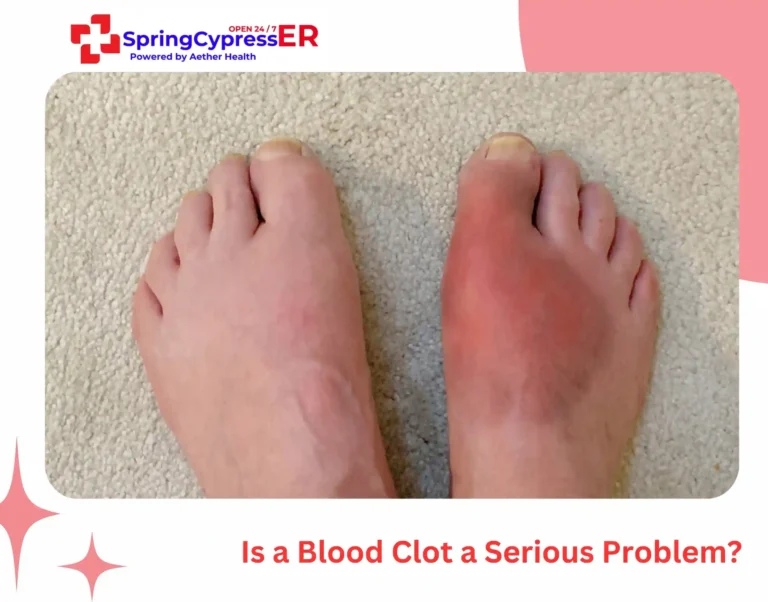
- Swelling in one leg, often the calf or thigh — typically not both legs.
- Pain, tenderness, or aching that often starts in the calf.
- Warmth in the affected area.
- Redness or skin discoloration.
- Pain that worsens when you flex the foot upward or stand.
Pulmonary Embolism (PE) — Clot in the Lungs
- Sudden, severe shortness of breath, often without obvious cause.
- Sharp chest pain that worsens with deep breaths or coughing.
- Rapid heartbeat or palpitations.
- Coughing up blood or pink, frothy mucus.
- Lightheadedness, fainting, or sudden anxiety.
- Sweating or pale, clammy skin.
Stroke — Clot in the Brain
- Sudden weakness or numbness on one side of the face, arm, or leg.
- Slurred or confused speech.
- Sudden vision changes — blurred, double, or lost vision.
- Severe sudden headache with no known cause.
- Loss of balance, coordination, or dizziness.
Heart Attack — Clot in a Coronary Artery
- Chest pressure, tightness, squeezing, or pain — often in the center or left side.
- Pain that radiates to the jaw, neck, left arm, back, or upper abdomen.
- Shortness of breath.
- Cold sweats.
- Nausea or vomiting.
- A sense of impending doom.
Don’t wait. Call 911.: Any of these symptoms could be life-threatening. Do not drive yourself to the ER — paramedics can begin assessment and treatment in the ambulance. For non-emergency questions, call Aether Health – Spring Cypress ER at +1 (713) 528-8703.
Who Is Most at Risk for a Blood Clot?
Anyone can develop a blood clot, but some people face significantly higher risk. If multiple factors apply to you, talk to your doctor about prevention strategies — and watch carefully for warning signs.
Medical Risk Factors
- Recent surgery, especially orthopedic (hip, knee, spine) or abdominal.
- Recent hospitalization with prolonged bed rest.
- Previous blood clot or family history of clotting disorders.
- Cancer or active cancer treatment.
- Heart failure or atrial fibrillation.
- Inflammatory bowel disease.
- Pregnancy and the 6 weeks after delivery.
- Use of estrogen-containing birth control or hormone replacement therapy.
- Inherited clotting disorders (factor V Leiden, prothrombin gene mutation, etc.).
- COVID-19 infection — both acute illness and the months that follow.
Lifestyle Risk Factors
- Smoking or vaping.
- Long-distance travel — flights or drives longer than 4 hours.
- Sedentary lifestyle or long periods of sitting at a desk.
- Dehydration, especially in Texas heat.
Demographic Risk Factors
- Age over 60 — risk rises significantly with each decade.
- Pregnancy, especially during the third trimester and postpartum.
When to Come to the ER for a Suspected Blood Clot
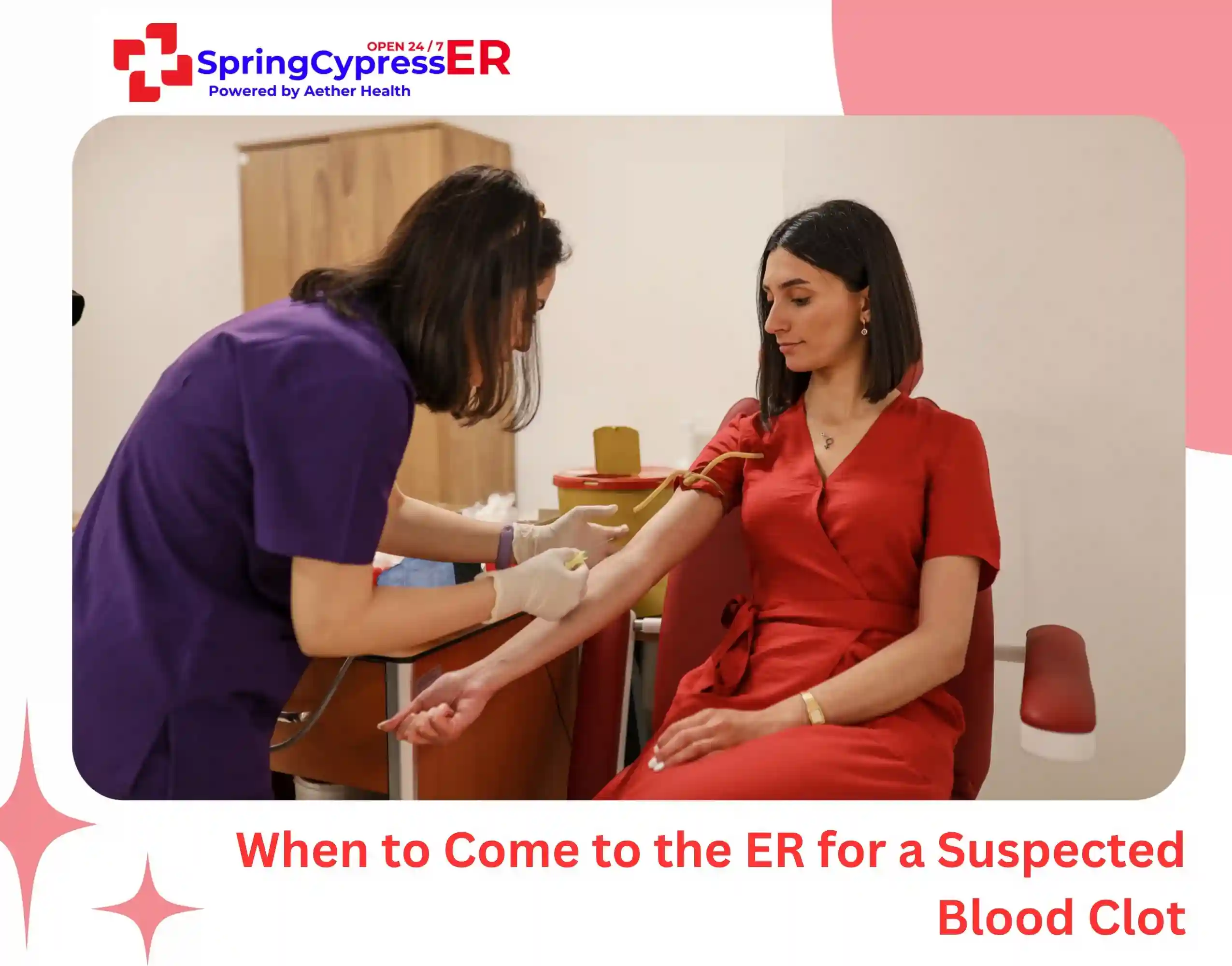
Time is the single most important factor in blood clot outcomes. Come to Aether Health – Spring Cypress ER — or call 911 — at any of these signs.
- Sudden swelling, pain, or warmth in one leg — possible DVT.
- Sudden shortness of breath without a clear reason — possible pulmonary embolism.
- Chest pain, especially with sweating, nausea, or radiating arm or jaw pain — possible heart attack.
- Sudden weakness, slurred speech, vision changes, or facial drooping — possible stroke.
- Sudden severe abdominal pain that is out of proportion to physical findings — possible mesenteric clot.
- Coughing up blood or pink frothy mucus.
- Fainting or near-fainting episodes.
- Symptoms in someone who recently had surgery, was hospitalized, or completed a long flight.
- Symptoms in pregnancy or the 6 weeks after delivery.
- Sudden severe leg or arm pain along with cold, pale, or blue skin — possible arterial clot.
The cost of waiting: Untreated pulmonary embolism kills roughly 1 in 4 patients within minutes to hours. Untreated stroke kills 2 million brain cells per minute. The patients we see with the best outcomes are the ones who came in early, even when they weren’t sure their symptoms were serious. When in doubt, come in.
How We Diagnose and Treat Blood Clots at SpringCypress ER
Speed and precision matter most in blood clot care. Our 24/7 freestanding ER in Spring, TX is fully equipped to evaluate, diagnose, and start treatment for blood clots on site — and to coordinate immediate transfer when more advanced procedures are needed.
Rapid Diagnostic Tools
- D-dimer blood test — a screening test that helps rule out blood clots quickly.
- Ultrasound of the legs — the standard test for diagnosing deep vein thrombosis.
- CT pulmonary angiography — on-site CT imaging that can confirm a pulmonary embolism within minutes.
- Brain CT — available immediately for any patient with stroke symptoms.
- 12-lead EKG and cardiac markers — for suspected heart attack.
- Pulse oximetry and arterial blood gases — to assess oxygen levels in patients with breathing trouble.
Time-Critical Treatments
- Anticoagulant medications — blood thinners like heparin and direct oral anticoagulants are started immediately to stop the clot from growing and prevent new ones.
- Clot-busting medications (thrombolytics) — for large or life-threatening clots, IV medications like tPA or tenecteplase can dissolve the clot. These are time-window dependent — earlier is dramatically better.
- Oxygen and breathing support — for patients with pulmonary embolism affecting breathing.
- Hemodynamic support — IV fluids and medications to maintain blood pressure during a massive clot event.
Coordinated Specialty Care
For patients who need advanced procedures — mechanical thrombectomy for large strokes, catheter-directed thrombolysis for massive PE, or surgical clot removal — we coordinate immediate transfer to a comprehensive stroke or cardiac center with complete documentation. No time lost in handoff.
How to Reduce Your Risk of a Blood Clot
Many blood clots are preventable with consistent habits, especially during high-risk periods like after surgery, during pregnancy, or on long flights.
Everyday Prevention
- Stay active — at least 150 minutes per week of moderate exercise.
- Maintain a healthy weight.
- Quit smoking and avoid secondhand smoke.
- Stay hydrated, especially in Texas heat.
- Manage blood pressure, diabetes, and cholesterol.
During Long Travel
- Walk every 1 to 2 hours during long flights or drives.
- Do calf raises and ankle pumps while seated.
- Drink water steadily — avoid excess alcohol and caffeine.
- Wear loose-fitting clothing; consider compression stockings for high-risk patients.
After Surgery or Hospitalization
- Take prescribed blood thinners exactly as directed — never skip doses.
- Move and walk as soon as your doctor allows.
- Use prescribed compression devices or stockings.
- Stay hydrated.
If You Have Atrial Fibrillation
- Take prescribed anticoagulants as directed — these reduce stroke risk by approximately 60%.
- Get regular blood work if you take warfarin.
- Manage blood pressure aggressively.
- Treat sleep apnea if present.
Frequently Asked Questions
Can a blood clot go away on its own?
Sometimes — small superficial clots can dissolve naturally as the body’s clot-busting enzymes break them down. But waiting for a serious clot (DVT, PE, stroke, heart attack) to resolve on its own is dangerous. The body cannot reliably dissolve large clots fast enough to prevent damage, and an untreated clot can travel or grow. Always have suspected blood clots evaluated.
Are all blood clots life-threatening?
No. Superficial clots — those in surface veins near the skin — are usually mild and resolve with warm compresses and anti-inflammatory medication. Deep vein clots, lung clots, brain clots, and heart artery clots are all serious and need urgent treatment. The danger depends entirely on location and the potential for the clot to travel.
Can young, healthy people get blood clots?
Yes. Although the risk rises with age, young adults can and do develop clots — particularly after surgery, with certain birth control pills, during pregnancy, after long flights, after COVID-19, or with inherited clotting disorders. Symptoms should never be dismissed because of age.
How long does it take a blood clot to dissolve with treatment?
With anticoagulant treatment, most clots stabilize within days. Full dissolution can take weeks to months as the body reabsorbs the clot. Anticoagulants prevent the clot from growing and new clots from forming during this process. Some patients need long-term or lifelong anticoagulation depending on the cause and recurrence risk.
What does a blood clot in the leg feel like?
Most often, swelling in one leg (not both), pain or tenderness that may start in the calf, warmth, and sometimes redness. The pain often feels deeper than a muscle cramp and may worsen when you stand or flex your foot upward. Not all DVTs have classic symptoms — some are silent until they cause a pulmonary embolism, which is why suspicion matters.
Will my insurance cover an ER visit for a suspected blood clot?
Aether Health – Spring Cypress ER accepts most commercial insurance plans and works directly with your insurer to avoid surprise billing. We do not currently accept Medicare, Medicaid, or Tricare. Insurance concerns should never delay seeking care for a suspected blood clot — call us at +1 (713) 528-8703 or come straight in.
Suspect a Blood Clot? Get Care Fast in Spring, TX
Time is the single biggest factor in blood clot outcomes. At Aether Health – Spring Cypress ER, on-site CT imaging, ultrasound, lab work, and immediate clot treatment are available 24/7 with no wait — and we coordinate transfer to comprehensive centers when advanced procedures are needed.
- Address: 8929 Spring Cypress Rd, Spring, TX 77379
- Phone: +1 (713) 528-8703
- Hours: Open 24 hours, every day of the year
- Emergency: If symptoms are severe, call 911 — paramedics can begin treatment en route.
Call 911 Now: For severe shortness of breath, chest pain, stroke symptoms, or fainting — call 911 immediately. For urgent but non-emergency concerns, call Aether Health – Spring Cypress ER at +1 (713) 528-8703 or come to 8929 Spring Cypress Rd, Spring, TX 77379.