
Food poisoning can come on suddenly or take days to appear, depending on what caused it. Many people expect symptoms to start immediately after eating something bad, but the reality is more complex. The timing varies based on the type of bacteria, virus, or toxin involved, and how your body reacts.
This comprehensive guide explains how fast does food poisoning start, why timelines vary, and what symptoms to expect at each stage.
How Fast Does Food Poisoning Start?
Food poisoning can begin:
- As fast as 30 minutes after eating contaminated food.
- Commonly within 4 to 24 hours.
- Sometimes after several days or even weeks.
Most typical cases start within a few hours to one day, but certain infections take longer because they need time to develop inside the body. If you are experiencing food poisoning symptoms, it’s better to opt for the accidental food poisoning treatment asap.
Why the Onset Time Varies So Much

The speed at which food poisoning starts depends mainly on what contaminated the food. Some foods contain toxins that affect your body immediately, while others contain bacteria or viruses that need time to multiply.
If toxins are already present in the food, your body reacts quickly because it doesn’t need to “fight” an infection. In contrast, infections caused by bacteria or parasites take longer because the organisms must grow inside your digestive system before symptoms appear.
Your immune system, age, and overall health also influence how quickly symptoms develop. Two people eating the same food may experience symptoms at different times.
Timeline Breakdown: From Minutes to Weeks
Quick Onset (30 Min To 8 Hour)
This is the quickest type of food poisoning. It usually happens when food contains preformed toxins, meaning harmful substances are already present before you eat it.
Common causes include:
- Improperly stored foods
- Contaminated dairy or meats
- Foods left out too long
Symptoms often include:
- Sudden nausea
- Vomiting
- Stomach cramps
These reactions feel intense and start quickly because the toxins irritate your stomach almost immediately.
Typical Onset (4 to 24 Hours)
This is the most common timeline for food poisoning. Many bacterial infections fall into this category.
According to medical data, most cases begin within a few hours after eating contaminated food
Symptoms may include:
- Diarrhea.
- Abdominal pain.
- Nausea and vomiting.
- Fever.
This is the time scale that people most associate with food poisoning.
Delayed Onset (1 to 3 Days)
Some bacteria take longer to cause symptoms because they need time to multiply inside your body.
Examples include:
- Salmonella (6 hours to 6 days).
- Escherichia coli (E. coli): 1 day to 4 days, sometimes longer
The symptoms are usually more serious and can include:
- Persistent diarrhea.
- Fever.
- Dehydration.
The onset time can make it more difficult to determine which food was the source of illness.
Long Incubation (Several Days to Weeks)
Some infections appear much later. These are rare, but they cause serious illness.
Examples include:
- Listeria (2-3 days to several weeks)
- Hepatitis A (up to 15–50 Dias)
These symptoms may be initially mild, but can progress to severe in people at risk of worse disease.
Common Symptoms of Food Poisoning
No matter how quickly it develops, food poisoning is typically accompanied by the following digestive symptoms:
- Nausea and vomiting
- Diarrhea (sometimes bloody)
- Stomach cramps
- Fever
- Weakness or dehydration
In rare cases, it can affect the nervous system, causing symptoms like blurred vision or muscle weakness.
Why Some People Get Sick Faster Than Others
Not everyone reacts to food poisoning at the same speed. Several factors influence how quickly symptoms appear:
The amount of contaminated food consumed plays a major role. A higher dose of bacteria or toxins can trigger symptoms faster.
Your immune system strength also matters. People with stronger immune systems may take longer to show symptoms or may experience milder illness.
Age is another factor. Children, older adults, and people with underlying health conditions often develop symptoms more quickly and more severely.
Can Food Poisoning Start Immediately After Eating?
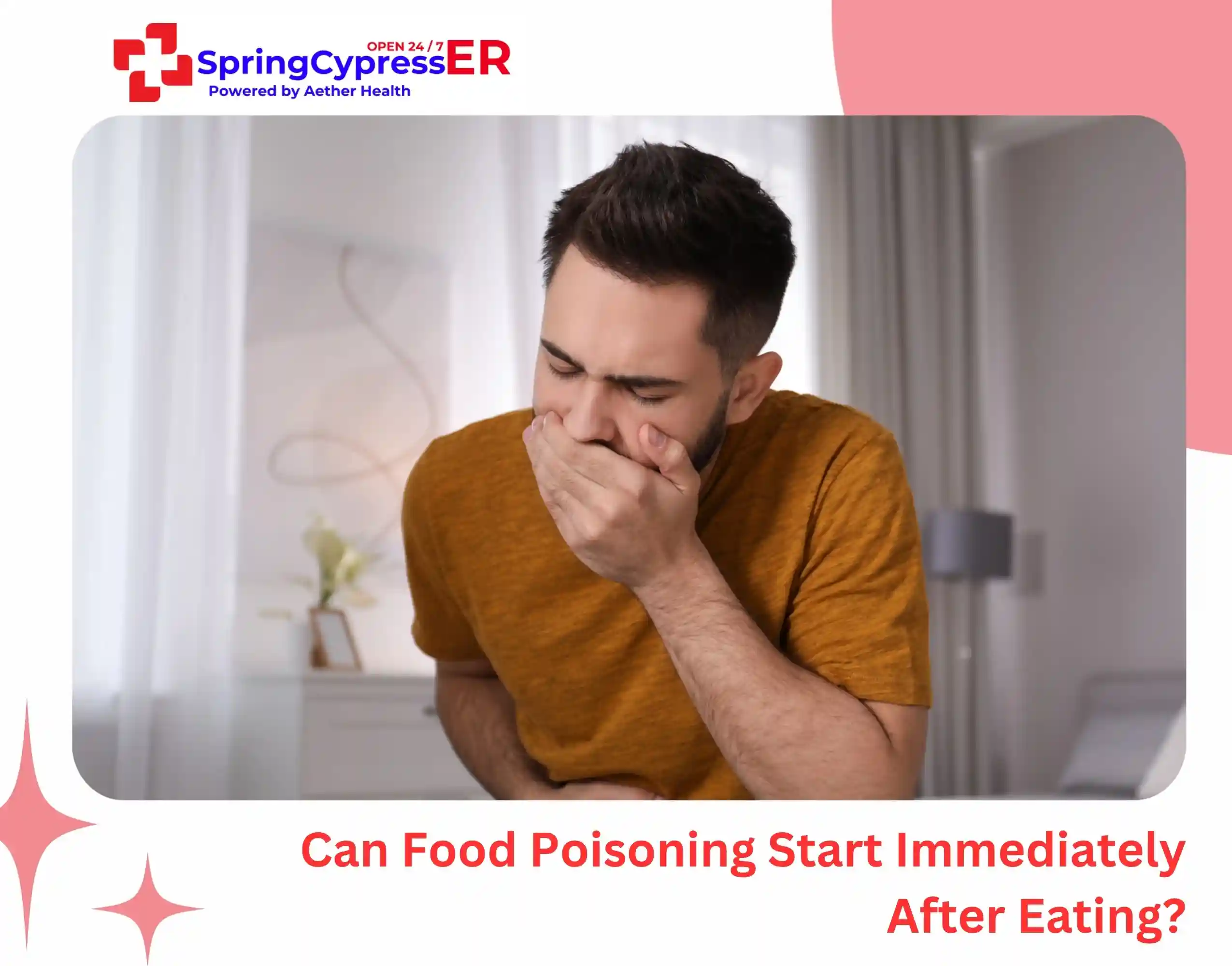
Yes, but it depends on the cause. Immediate symptoms, within an hour, usually point to toxins already present in the food, not a growing infection.
If symptoms start instantly, it does not always mean the last meal caused it. In some cases, symptoms may be linked to food eaten earlier, especially if the timeline is longer.
How Long After Eating Should You Be Concerned?
If symptoms appear within a few hours to a day, food poisoning is likely. However, if symptoms start days later, it can still be food-related, especially with certain bacteria.
You should pay attention to:
- Timing of symptoms.
- Severity of illness.
- Recent food history.
This helps identify the cause and decide whether medical care is needed.
When to Seek Medical Attention

Most cases of food poisoning resolve on their own, but some require medical care. You should seek help at the nearest emergency room, if you experience:
- High fever
- Severe dehydration
- Blood in stool
- Persistent vomiting
- Symptoms lasting more than a few days
These signs may indicate a more serious infection.
Final Thoughts
So, how fast does food poisoning start?
It can begin within 30 minutes, but most commonly starts within 4 to 24 hours after eating contaminated food. In some cases, symptoms may take days or even weeks to appear, depending on the cause.
Food poisoning does not always happen immediately, and delayed symptoms are still possible, so timing alone does not rule it out.
FAQs
How quickly can food poisoning start after eating?
It can begin in as little as 30 minutes, but most cases start within a few hours to 24 hours.
Can food poisoning start the next day?
Yes, many infections cause symptoms 12 to 48 hours after eating contaminated food.
What is the fastest type of food poisoning?
Toxin-related food poisoning, such as from improperly stored food, can start within 30 minutes to a few hours.
Can food poisoning take days to show up?
Yes, some bacteria like E. coli or Listeria can cause symptoms several days later.
Does food poisoning always happen right after eating?
No, symptoms can be delayed depending on the type of contamination and how the body responds.