

Almost everyone experiences stomach pain at some point, from gas or indigestion to cramps and bloating. Most cases are harmless and resolve with simple home care. But sometimes stomach pain can signal a serious or life-threatening problem that requires immediate evaluation and treatment in a 24/7 emergency room.
Knowing when to seek emergency care, versus when urgent care or your doctor is enough can protect your health and even save your life.
Why Stomach Pain Can Be Serious
The abdomen houses many vital organs, including the stomach, liver, pancreas, spleen, kidneys, and intestines. Pain in this area can come from digestive issues, infections, inflammation, blockages, injuries, or internal bleeding. Sometimes the pain is isolated; other times it’s a symptom of a systemic emergency like appendicitis, bowel obstruction, or aneurysm.
The pattern and severity of pain, associated symptoms and risk of complications help to determine if you should go to the 24/7 Emergency Room, since chronic disorders from the gastrointestinal system can all cause somewhat similar symptoms.
When to Go to ER for Stomach Pain

You should visit the emergency room if your stomach pain comes with any of these warning signs:
Severe, Sudden, or Worsening Pain
If the pain is severe, occurs suddenly or is worsening over time, don’t wait. Some Serious Causes of severe abdominal pain are:
- Appendicitis.
- Gallbladder attack (gallstones).
- Pancreatitis.
- Bowel obstruction.
- Ectopic pregnancy.
- Perforated ulcer.
- Kidney stones.
- Abdominal aneurysm.
These are usually conditions that require rapid imaging and intervention that only the ER can provide.
Signs of Internal Bleeding
Get emergency medical help if you have:
- Black, tarry stools.
- Bright red blood in the stool.
- Vomit (may contain blood that looks like coffee grounds).
- Fainting, dizziness, or weakness.
These can be signs of internal bleeding and should be evaluated in the ER right away.
Pain With Fever and Vomiting
If you have stomach pain, fever and vomiting more than three to four times a day for several hours, it could be a sign of an infection or inflammation of the lining of your abdomen (peritonitis), that we call peritoneal irritation. This can be caused by organs like the appendix, gallbladder or pancreas.
Dehydration is a concern if you can’t even keep fluids down, in which case everything just gets that much more complicated.
Distended Or Hard Abdomen With Pain
A bloated, stiff or hard abdomen, especially a tender one should be a red flag. It can happen with bowel obstruction, peritonitis or significant infection. In these situations, EMG assessment is crucial.
Chest, Shoulder, or Back Pain With Abdominal Pain

What is often mistaken for stomach pain is seldom related to the stomach (or belly):
- Pain in the upper abdomen with heaviness in your chest could be a heart attack.
- Radiating back pain can mean pancreatitis or a problem with the gallbladder.
The abdominal pains, however, should not be taken lightly when they start overlapping or are sharing the organ systems and need to be examined in an ER immediately.
Difficulty Breathing, Fast Heartbeat, or Confusion
Severe stomach pain with:
- Shortness of breath.
- Rapid pulse.
- Confusion or altered mental status.
- Pale, cold, or clammy skin.
These could be a sign of shock, sepsis or a life-threatening infection, all requiring ER care.
Inability to Evacuate Stool, Gas, and Urine
If you cannot pass gas and/or don’t have a bowel movement in a long period of time and experience much pain too, this could be an obstruction. Urinary complaints and lower abdominal ache could also be a urinary or renal emergency.
Severe Pain After Abdominal Trauma
If pain started after you fell, were kicked in the abdomen or experienced an accident of any kind, head to the E.R. now. The injury and bleeding of internal organs may not always be obvious at first.
What Happens at the ER
If you arrive at the emergency room with stomach pain, healthcare professionals will typically:
- Take vital signs.
- Inquire as to when the symptoms were first noticed, and their history.
- Perform a physical exam.
- Order blood tests.
- You may use imaging like X-ray, ultrasound, or CT scan.
- Obverse in severe or unstable symptoms.
ERs have the capacity to perform these tests and treatments 24/7 because many of these conditions requiring a timely diagnosis and intervention are more serious abdominal diagnoses.
Tips to Communicate Your Symptoms
To assist in your evaluation, the doctor or other health care provider is likely to ask:
- When does the pain start?
- Where is it located?
- Whether it moves or radiates?
- What makes it better or worse?
- Associated symptoms (fever, vomiting, blood).
Clear communication may help expedite diagnosis and treatment.
Quick Summary: When to Go to ER for Stomach Pain
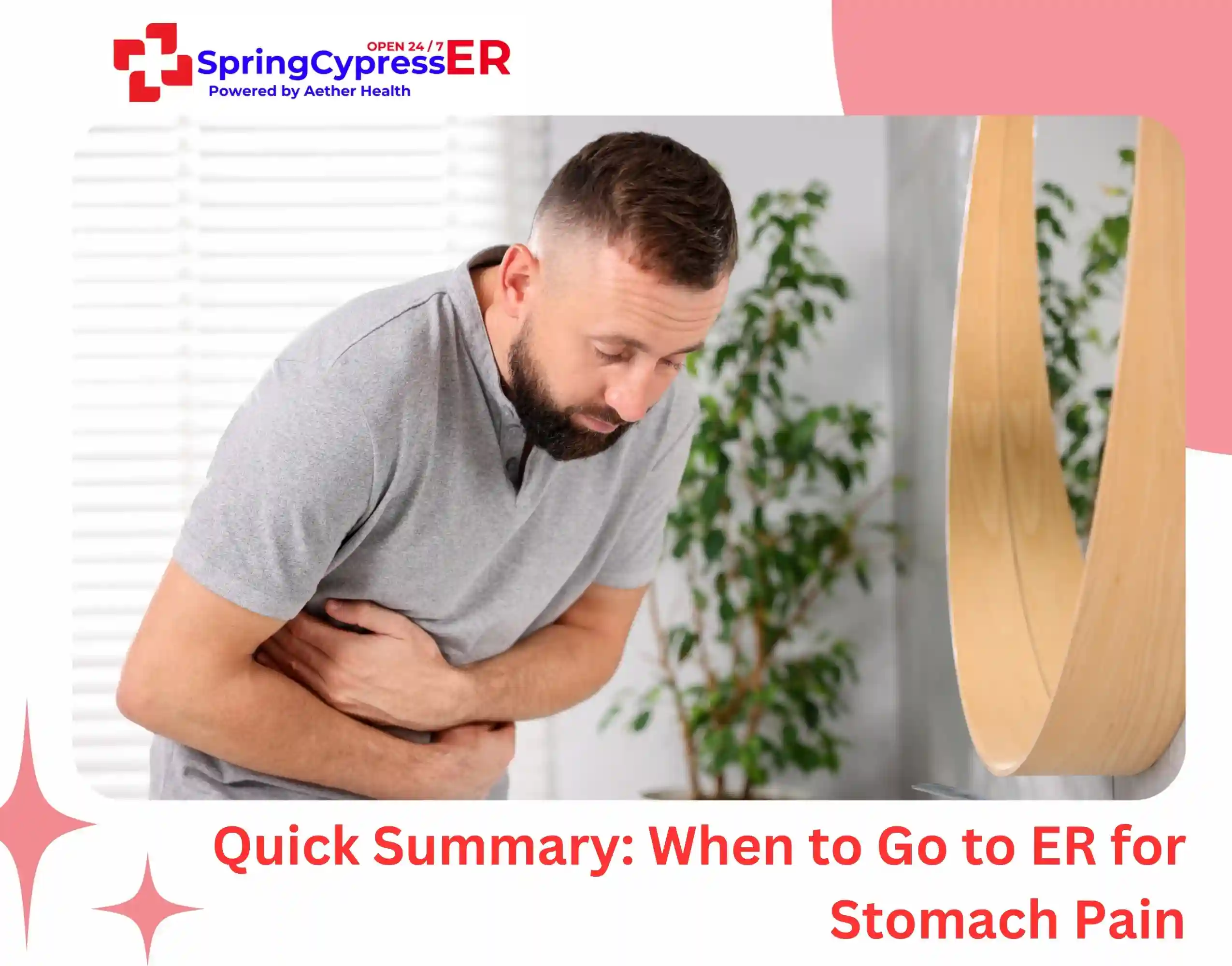
Go to the ER right away if your stomach pain is:
- Severe or worsening.
- Accompanied by fever and vomiting.
- Paired with blood in stool or vomit.
- With a rigid abdomen.
- With chest or back pain.
- With shortness of breath or confusion.
- After trauma.
If pain is mild, has a clear cause (like gas or mild indigestion), and improves with home care, urgent care or a primary doctor visit may be a good first step. Don’t hesitate to seek emergency care if your symptoms escalate or concern you, it’s better to be safe when internal organs are involved.
Frequently Asked Questions (FAQ)
1) Should I go to the ER for stomach pain with fever?
Yes, especially if the fever is high and vomiting persists, as this may indicate infection or inflammation.
2) Can heart problems feel like stomach pain?
Yes, pain in the upper abdomen with chest discomfort, shortness of breath, or sweating could indicate a heart issue. ER evaluation is necessary.
3) What does painful bloating mean?
Bloating with mild discomfort often relates to gas or indigestion, but severe or persistent bloating may need further evaluation.
4) Is it an emergency if I can’t pass gas and have abdominal pain?
Yes, inability to pass gas along with severe pain might signal bowel obstruction, a condition requiring prompt care.
5) What if my pain is mild but doesn’t go away?
If mild pain persists beyond 24–48 hours or gets worse, a doctor or ER visit is advisable.