
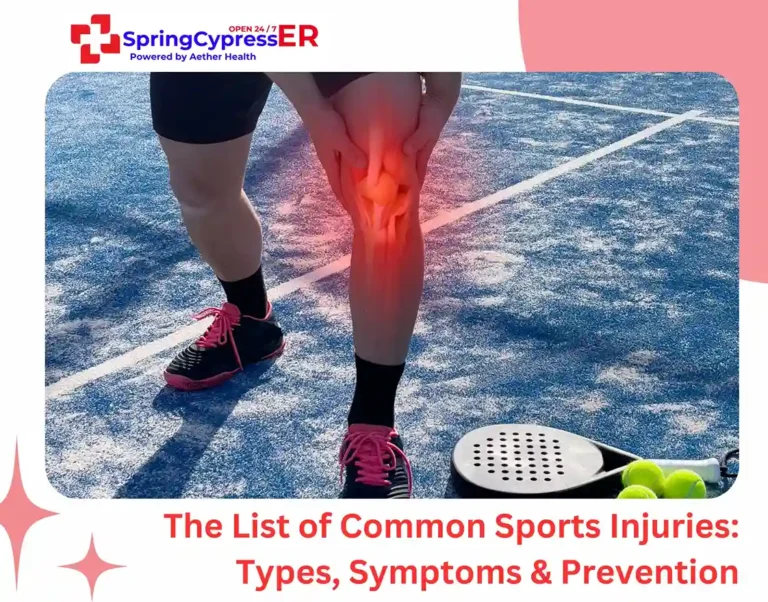
Sports and physical activity are excellent for fitness and overall health, but they also come with a risk of injury. Whether you’re a weekend warrior, a high school athlete, or someone who just enjoys staying active, knowing the most common sports injuries can help you prevent them and recognize when to seek care.
So you might want to ask that list some of the most common injuries that can occur from sports. Well, in this guide, we’ll review the typical injuries athletes experience, how they happen, common symptoms, and tips for prevention.
List of Common Sports Injuries
Here’s the list of some of the most common sports injuries and their prevention:
1) Sprains and Strains
Sprains: A stretching or tearing of ligaments (the tissue that connects bones at a joint).
Strains: Stretching or tearing of a muscle, or tendon (tissue connecting muscle to bone).
Common Areas
Ankle sprains and hamstring strains are also particularly common in sports which involve rapid changes of direction or sprinting.
Symptoms
- Pain and swelling.
- Limited range of motion.
- Muscle spasms.
Prevention Tips
Warm up, strengthen surrounding muscles Stretch Sculpt those upper leg and buttock muscles with specific exercises, use supportive shoes.
2) Tendonitis
Tendonitis is an inflammation in a tendon, often caused by repetitive movements or overuse.
Common Areas
- Achilles tendonitis (rear of the heel).
- Patellar tendonitis (knee).
Symptoms
- Local joint pain and tenderness.
- Pain that worsens with movement.
Prevention Tips
Mix up your training, take rest days and do regular stretching.
3) Fractures (Broken Bones)
A fracture is a break in the bone. This may be a slight crack, or it might be a complete break.
Common Causes
Contusions and concussions from contact sports, falls, and high-impact incidents. Some sports, including football, soccer and skateboarding follow with overtaking rates.
Symptoms
- Severe pain.
- Deformity or inability to use the extremity.
Prevention Tips
Wear appropriate protective gear, make your bones stronger with weight-bearing exercise and follow safety guidelines.
4) Dislocations
A dislocation is when the ends of your bones are no longer appropriately aligned (usually at a joint like the shoulder or fingers).
Symptoms
- Intense pain.
- Visible deformity.
- Limited movement.
Prevention Tips
Work on the joint muscles and avoid high-energy impacts when you can.
5) ACL Injuries
The ACL, located in the knee, helps stabilize the joint. ACL injury is frequent in sports with a cutting, pivoting and change of direction movements.
Symptoms
- A “pop” at the time of injury.
- Severe pain and swelling.
- Pain and “giving way” of the knee.
- Difficulty walking.
Prevention Tips
Risk can be reduced with neuromuscular training, good landing technique and strength training.
6) Shin Splints
The Shin splints injury is pain down the front of the protective shin bone that is worse at the beginning of exercise and gets much better as the workout goes on, are a common cause in runners or other athletes who have increased their activity too quickly.
Symptoms
Tenderness along the shin bone.
Mild swelling.
Pain during or after activity.
Prevention Tips
There should be an increment of training intensity, try wearing running shoes with cushion and avoid hard surfaces to run.
7) Meniscus Tears
The meniscus is a shock-absorber cartilage in the knee. Twists frequently result in tearing, particularly with one foot planted.
Symptoms
- Pain when twisting or squatting.
- Locking and catching of the knee.
Prevention Tips
Conditioning of the muscles in the leg and keeping adequate flexibility.
8) Concussions
A concussion is a traumatic brain injury that occurs when the head is jarred or shaken violently.
Symptoms
- Dizziness or balance problems.
- Confusion or fogginess.
- Nausea or vomiting.
- Sensitivity to light/noise.
Prevention Tips
But apply the right kind of helmets, follow the safety rules and try not to be hit in the head.
9) Ankle Sprains
An ankle sprain is when the ligaments around the ankle stretch or tear, common in sports that include running, jumping, and sudden pivots.
Symptoms
- Pain around the ankle.
- Swelling and bruising.
- Difficulty walking.
Prevention Tips
Stretch, warm up properly and use supportive footwear and perhaps ankle braces if you have a history of sprains.
10) Shoulder Injuries (Rotator Cuff Strain/Tendonitis)
The rotator cuff is a collection of muscles and tendons in the shoulder. Strains or tendinitis can occur from overhead motions.
Symptoms
- Pain with overhead movements.
- Weakness or loss of movement.
- Pain that is either dull or stabbing in the area of the shoulder.
Prevention Tips
Power Up Your Shoulders, Strengthen shoulders and prevent ‘overuse’ by repeated overhead activity without rest.
11) Stress Fractures
Stress fractures are small cracks in bone caused by repeated impact, often found in athletes who run long distances or ramp up their training too quickly.
Symptoms
- Deep pain that is gradually developed and intensified by activity.
- Tenderness at a specific spot.
- Little to no swelling.
Prevention Tips
Gradually increase the intensity of your trainings, you should wear good sneakers and give yourself enough recovery time between the training sessions.
When to Seek Medical Care

With the exception of severe or serious sports injuries rest, ice, compression and elevation (RICE) vs activity modification can be effective treatments. But you should call an ambulance for a 24/7 emergency room or have someone drive you to get medical help right away when:
- Severe pain that doesn’t improve.
- You can’t use the joint or put weight on it.
- Numbness or tingling.
- Visible deformity.
- Infection signs such as fever and redness.
- Head injury accompanied by stupor or confusion or fainting.
Emergency services can take new imaging and diagnostics in order to treat you correctly and rule out more serious conditions.
How to Avoid the Most Common Sports Injuries

Preventing injuries isn’t about not training; it’s about training smart:
Warm Up Before Activity
A good warmup provides more blood flow and flexibility to muscles and help decrease risk of injury.
Use Proper Technique and Equipment
From the footwear on their feet to the helmets on their heads, or just sport-specific gear in general, safety equipment is important.
Cross-Train and Strengthen
Balanced training allows all muscles to perform in concert, relieving strain on any one set.
Rest and Recovery Are Essential
Injury is dominantly caused by overtraining and fatigue. Pay attention to your body and schedule rest days.
Take Away
The more common sports injuries are the following:
- Sprains and strains.
- ACL injuries.
- Shin splints.
- Meniscus tears.
- Ankle sprains.
One of the keys to staying active and healthy year-round is identifying these injuries early and doing everything possible to avoid them. Hopefully, you now have the answer to list some of the most common injuries that can occur from sports.
Frequently Asked Questions (FAQ)
1) What is the most common sports injury?
Sprains and strains are among the most frequent, especially in the ankle, knee, and wrist.
2) Can most sports injuries be prevented?
Many injuries can be reduced by proper warm-ups, strength training, good equipment, and allowing adequate rest.
3) When should I see an ER for a sports injury?
Seek emergency care if you have severe pain, inability to move a joint, numbness, or signs of a break, infection, or head injury.
4) Are concussions serious?
Yes, concussions are brain injuries and require proper evaluation, rest, and often a gradual return to activity.
5) Can a stress fracture heal on its own?
With rest and reduced activity, many stress fractures heal, but they should be evaluated to prevent worsening.